Immersive trails designed around the destination
Interactive Passport
When attractions, museums, businesses and landscapes remain separate stops, we design a bespoke mission that gives people a reason to travel between them, makes partners essential and turns the journey into something you can understand.
from EUR 29.900 excl. VAT
Protagonist, mission, StoryKey, stops, content and technology grow from the places and objectives of the project.
What changes
From separate places to a story that moves people.
Experience Passport turns a collection of points of interest into a journey with a reason to start, continue and reach the ending.
The visit stays around the main attraction and ends before people reach the rest of the destination.
Visitors have a reason to continue.
A mission connects the stops and makes every movement necessary to reach the ending.
Museums, businesses and hosts feel like side recommendations or commercial detours.
Every partner enters the story.
Encounters, actions and clues give each place a real role in completing the mission.
It is difficult to see where visitors stop and which places truly take part in the journey.
The trail provides readable signals.
Starts, reached stops, completions and aggregated activations help improve the experience.
Designed each time
The method is recognisable. Every trail is different.
We do not fit a destination into a prefabricated story. We build the journey around its identity, the people who live there and the behaviour the project needs to create.
Protagonist and mission
Character, conflict, clues and ending grow from local history and the audience the project wants to involve.
Geography and stops
Distances, access, visit times, opening patterns and seasonality determine pace and structure.
Partners and content
Museums, operators, businesses, archives and communities join only when they have a useful role in the mission.
Interactions and technology
StoryKey, installations, digital content and measurement are chosen after the places and objectives have been reviewed.
Three concrete scopes. Base, Plus and Hero indicate reach, production and starting investment. They do not predetermine the story, the form of the stops or the technology.
The experience
People do not simply visit places.
They enter a story.
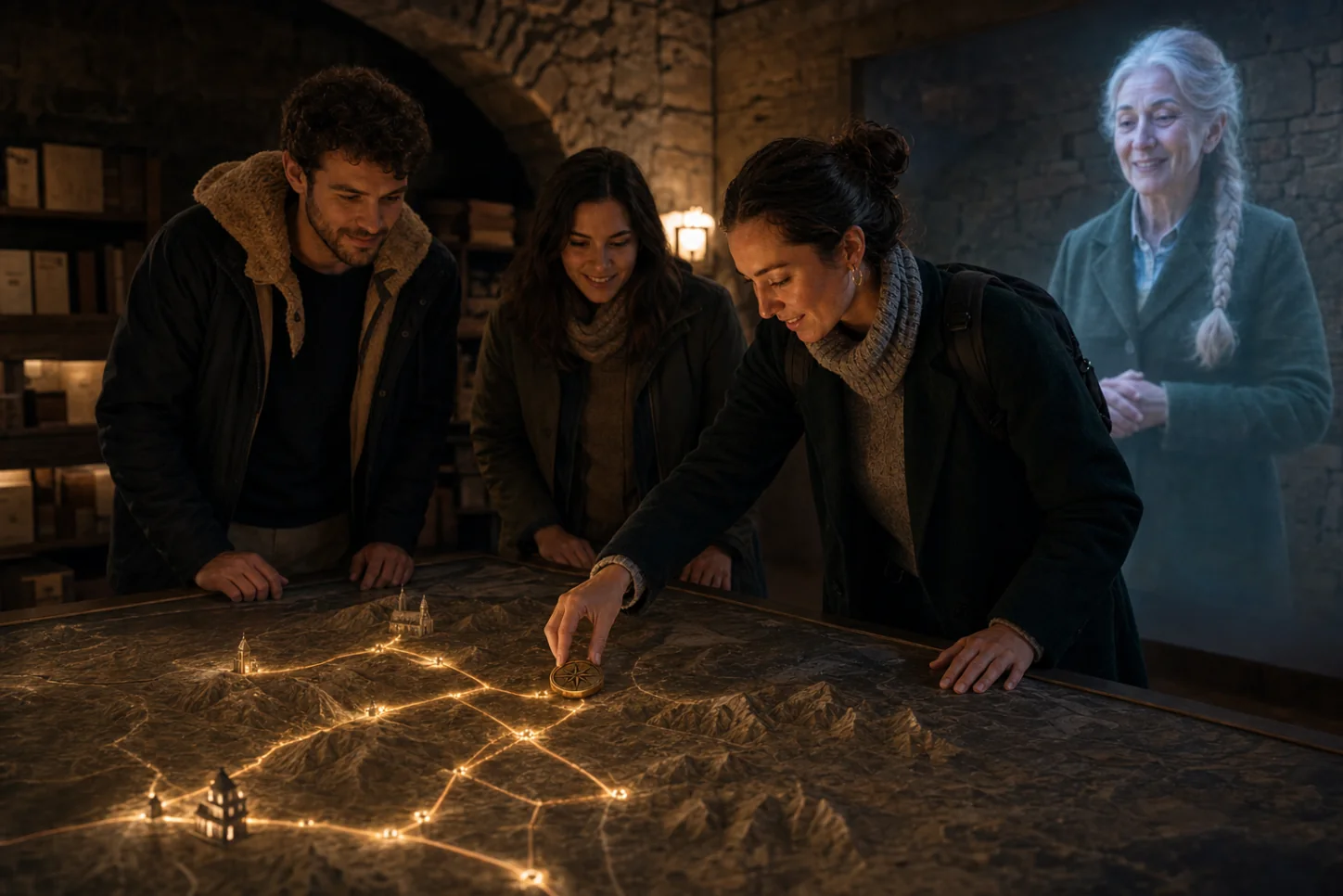
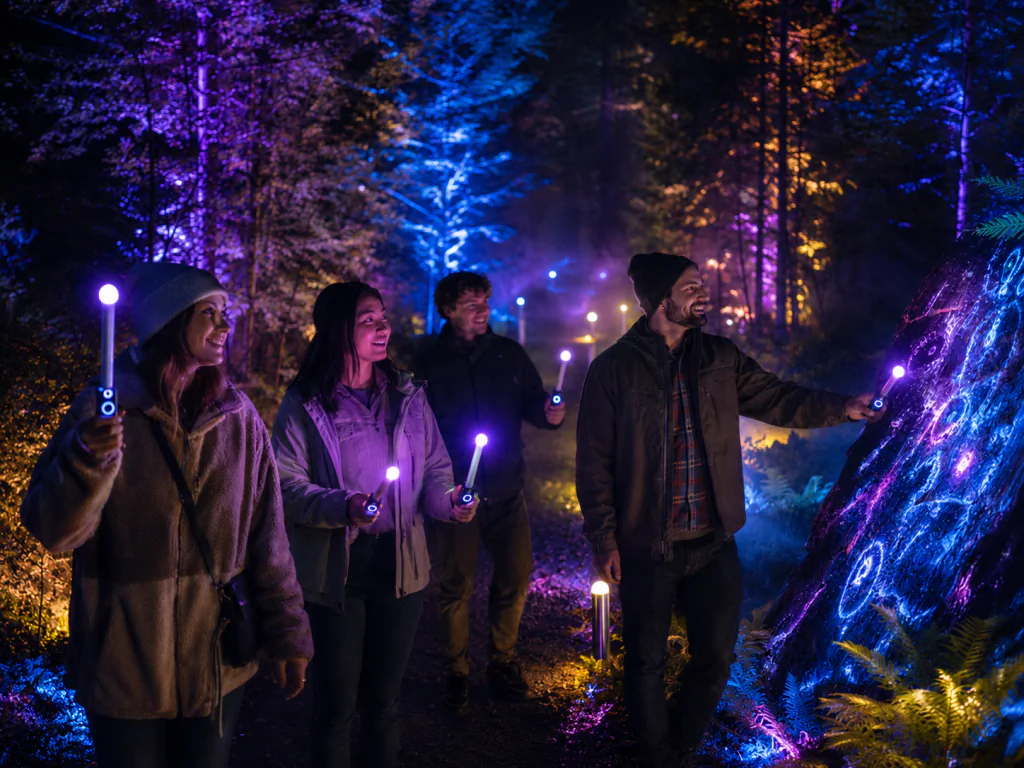
Visitors meet a character, receive a mission and travel through the destination to complete it.
The official film
See the experience come to life.
The complete journey: meeting the character, receiving the StoryKey, exploring the real-world stops and reaching a true ending.
Take a closer look
Every detail moves the story forward.
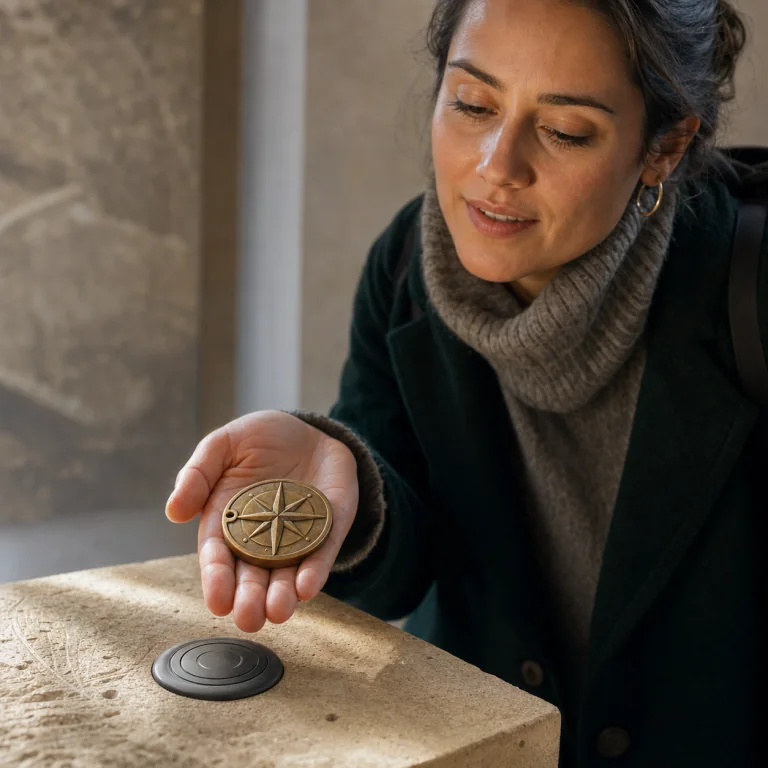
The NFC StoryKey
Visitors simply hold it near a stop. It can be a key, coin, medal, card or another object designed for the story, with no app to configure.
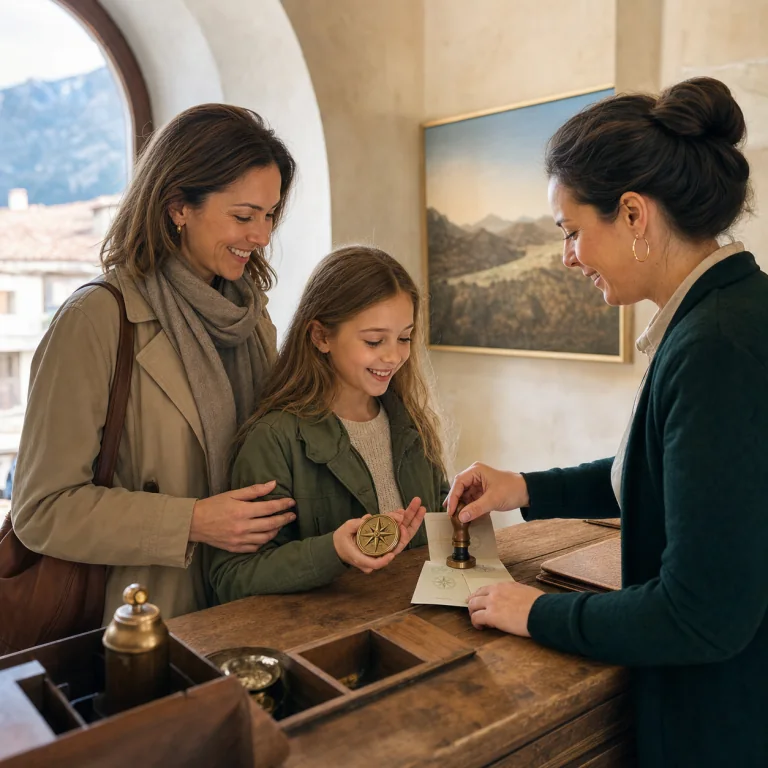
The passport
It makes the mission, clues and progress visible. Every mark has a role in the narrative and prepares the ending.
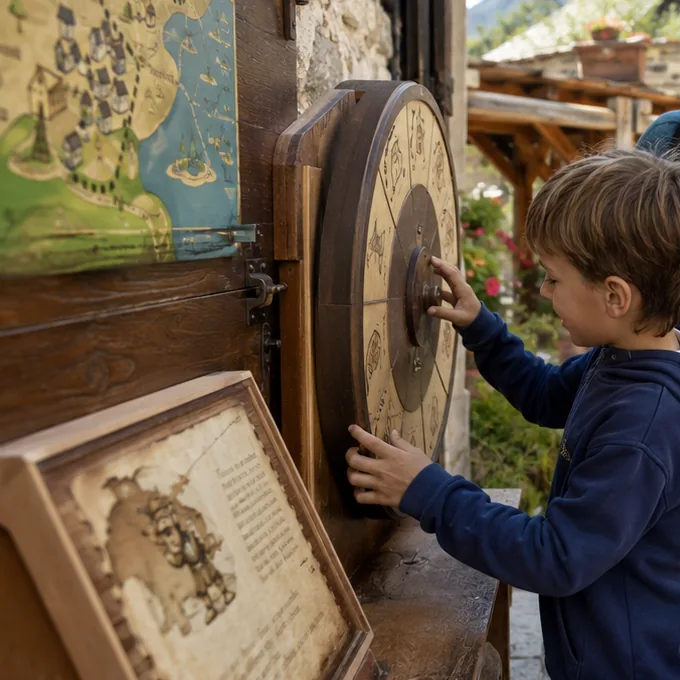
Active stops
Every place asks for a clear action: observe, choose, search, meet someone or activate a detail.
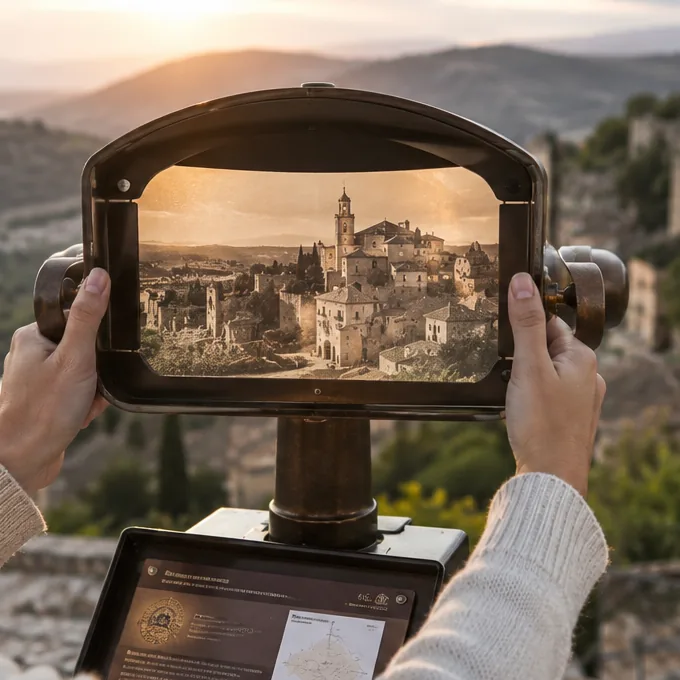
The place changes
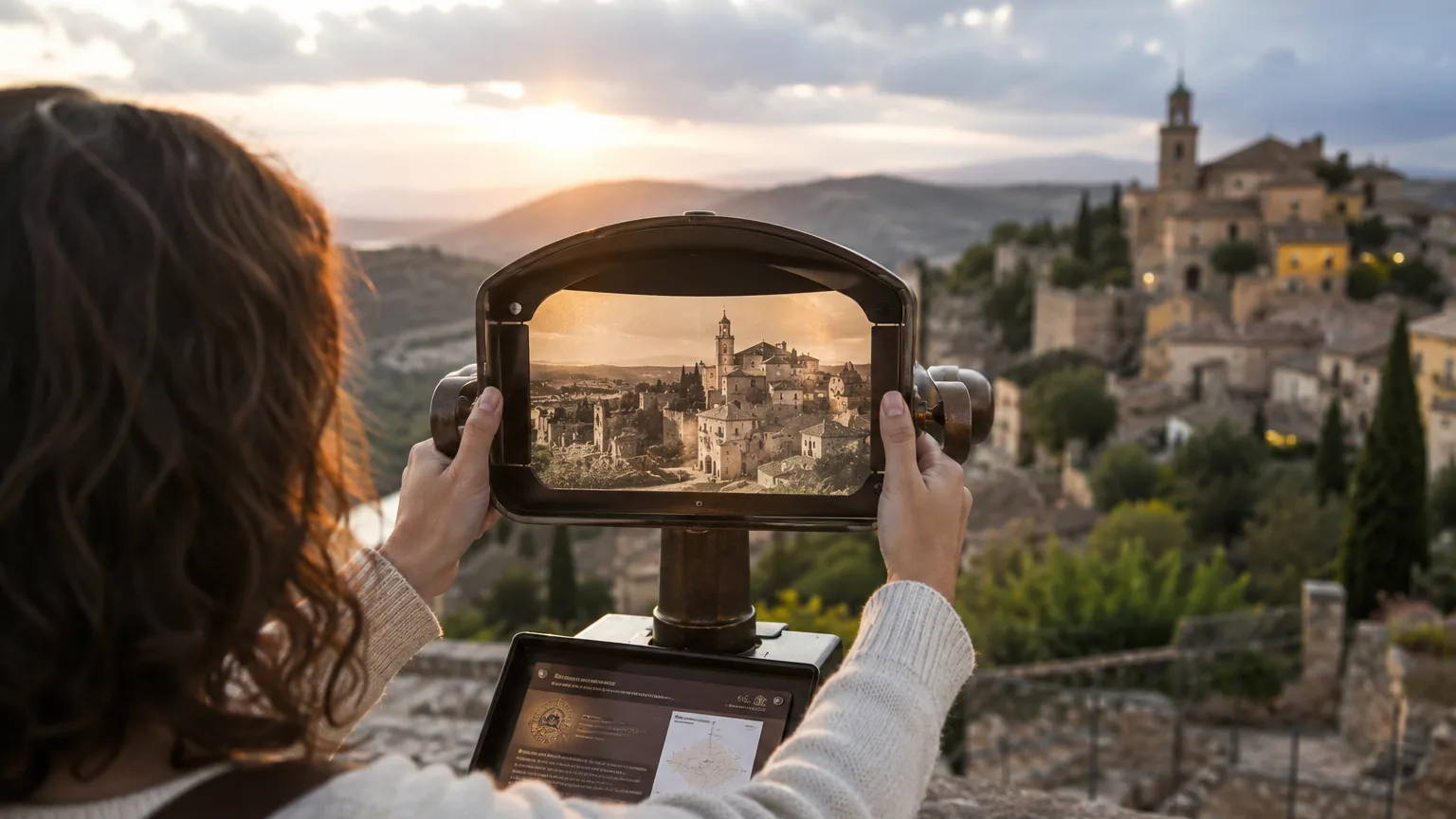
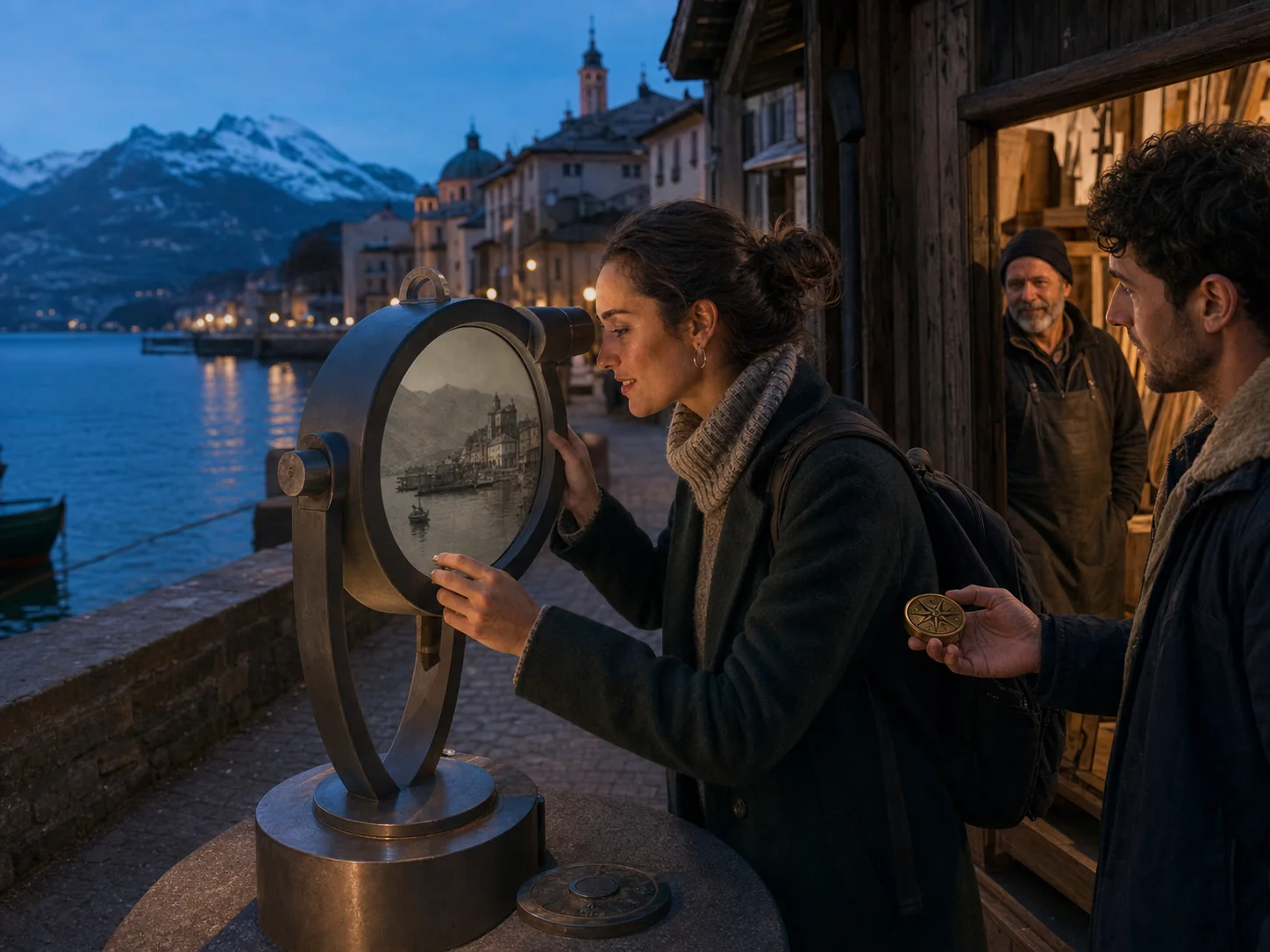
A scene can reveal the past within today’s panorama. Visitors understand why this exact point matters to the story.
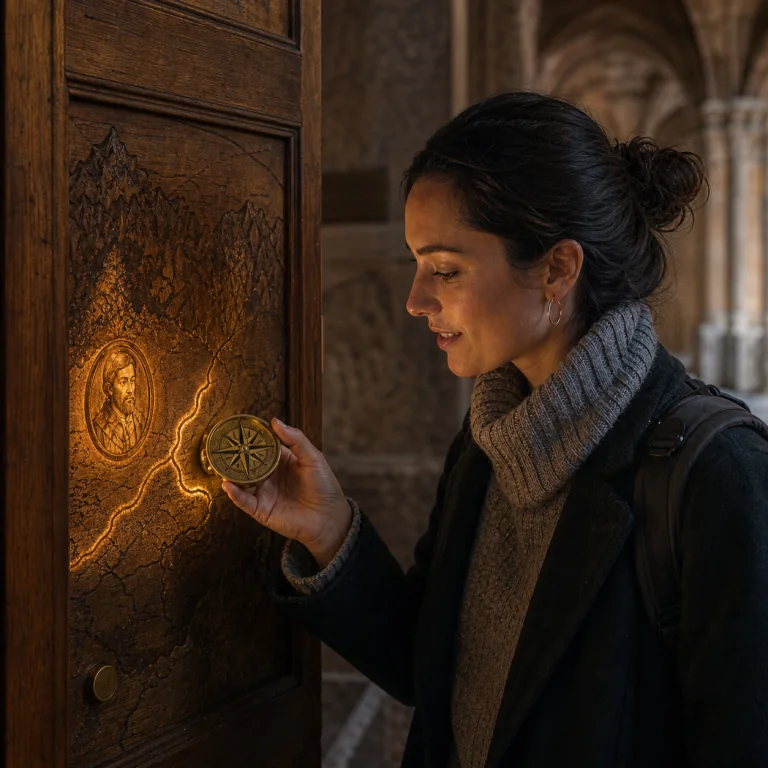
Clues are revealed
Light, materials and narrative transform a map or real object. The effect always serves what visitors need to discover.
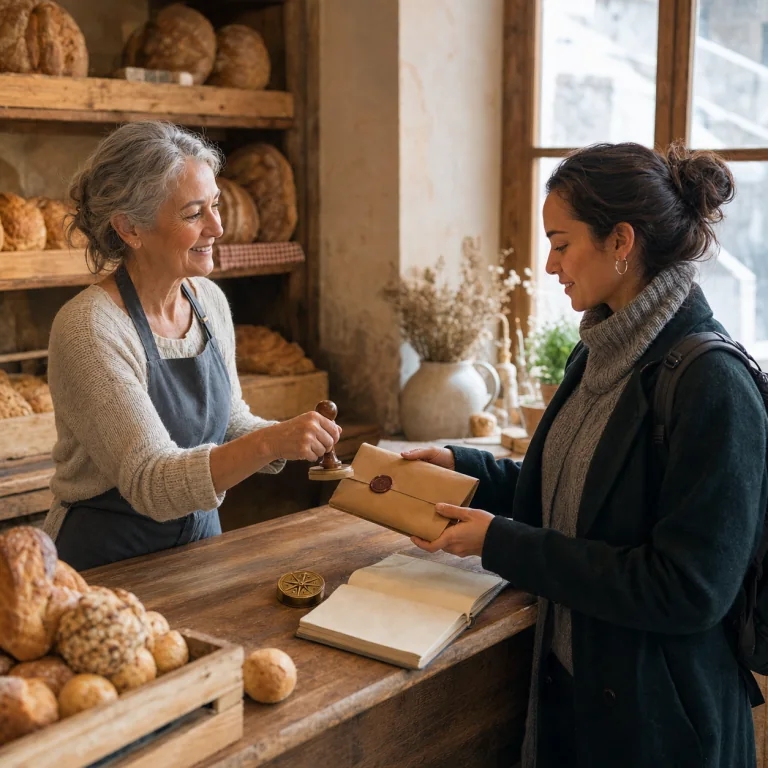
People from the place
Museums, businesses and hosts are not detours: they hold a testimony or step that is essential to continue.
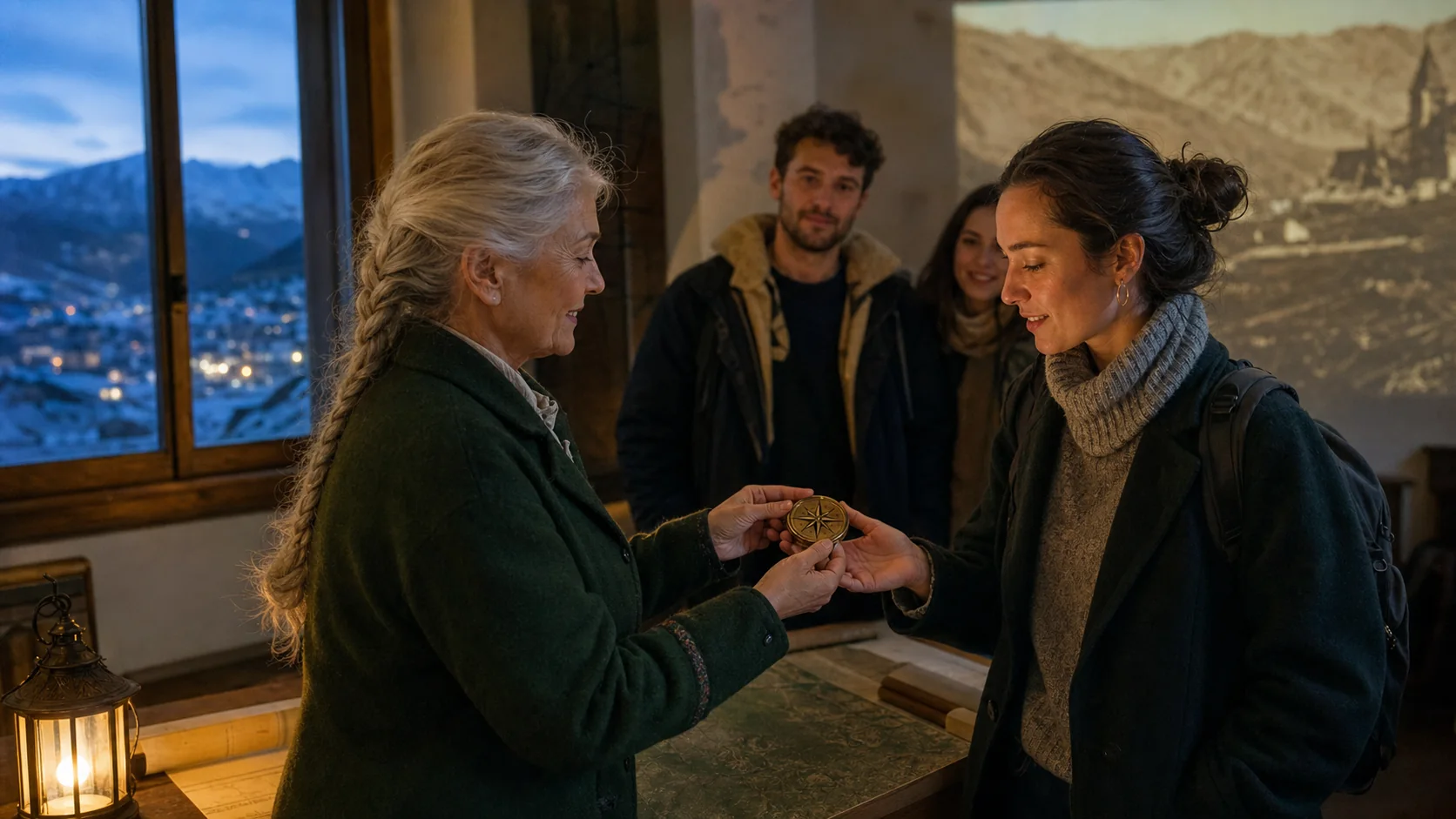
Someone who needs help
The story begins with a person.
A postwoman, a cartographer, a miller. A recognisable character gives visitors a mission that can only be completed by exploring real places.
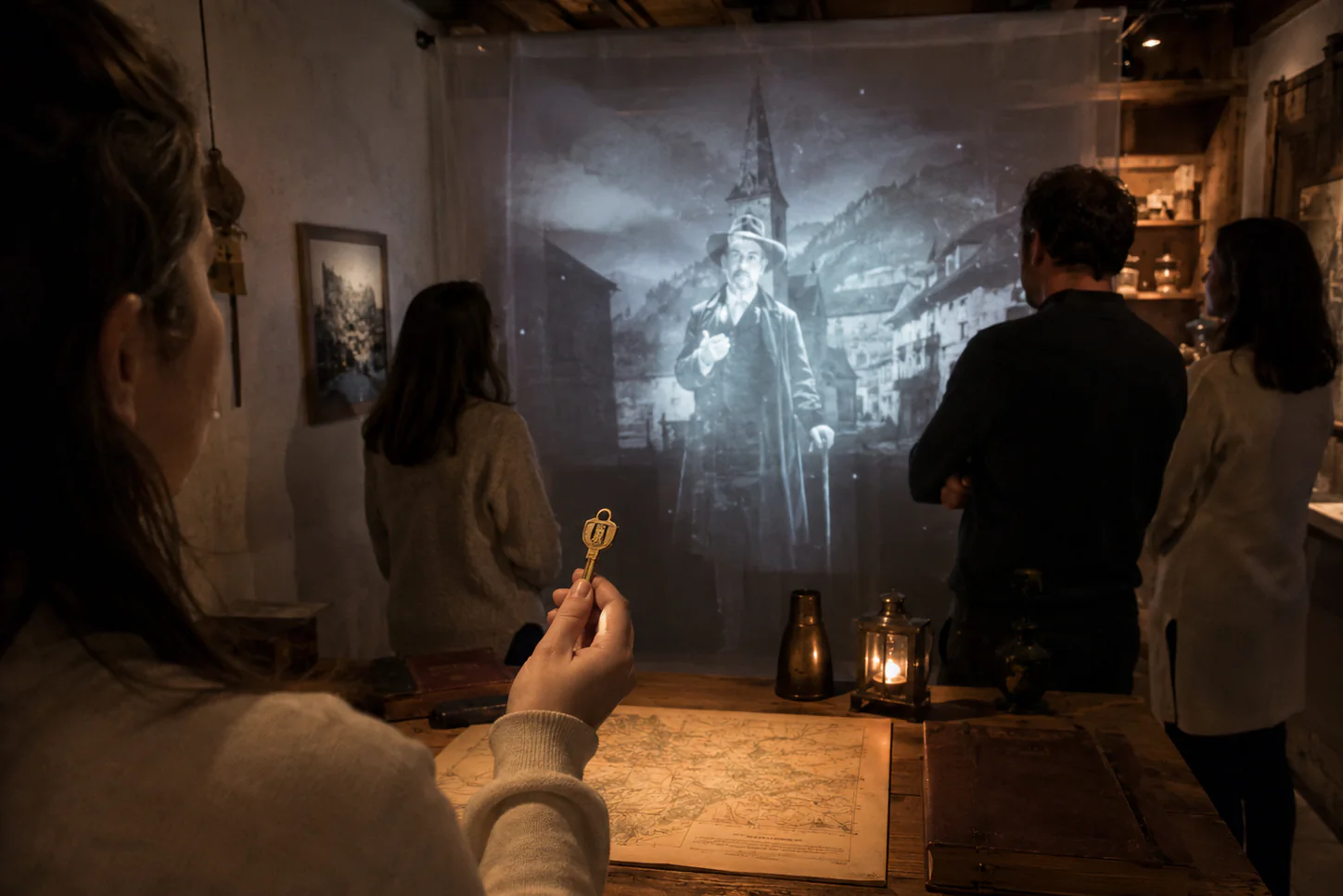
The StoryKey
NFC inside. Your story’s own shape outside.
A key, coin, medal, card or another object designed for the narrative. Hold it near a stop to be recognised and continue, with nothing to configure.
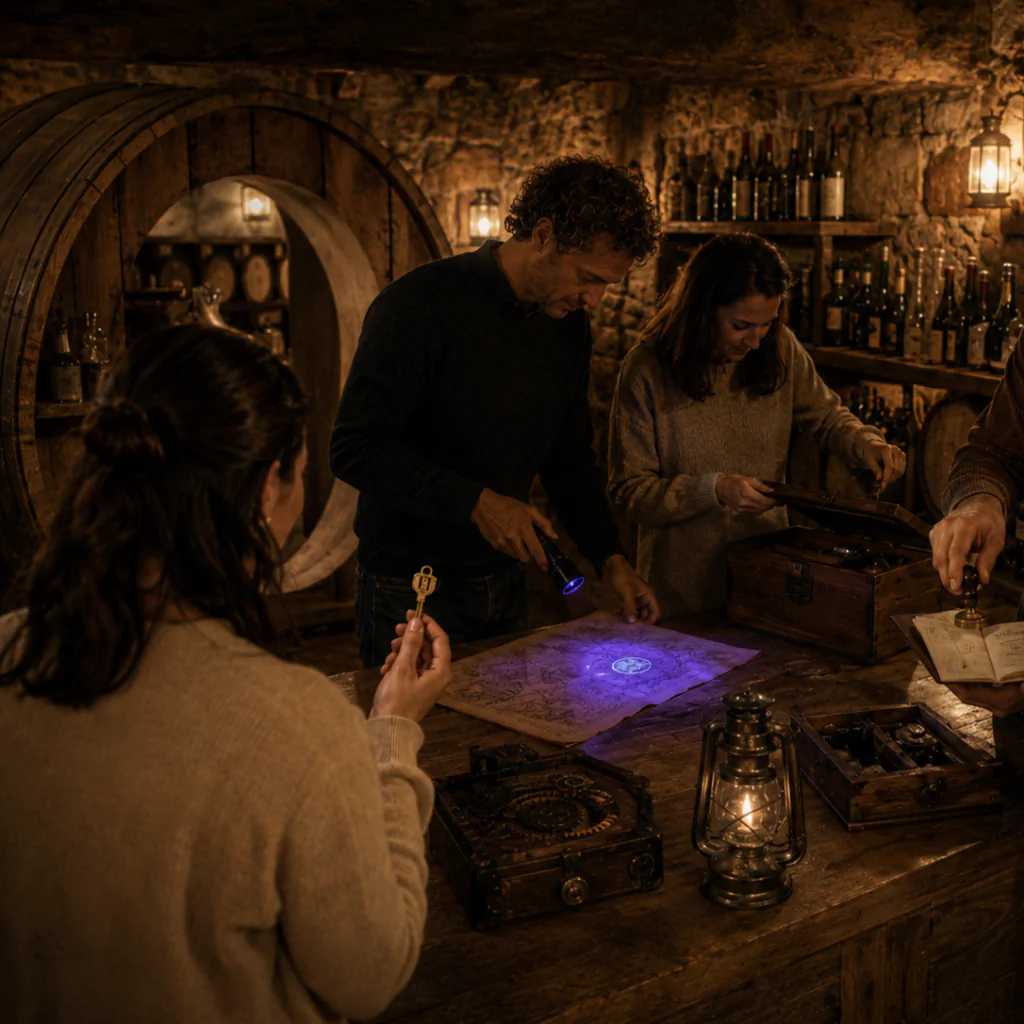
Every stop is active
The place responds.
At every location, visitors observe, decide or perform an action that advances the story. Some stops use details and encounters; others respond to the StoryKey.
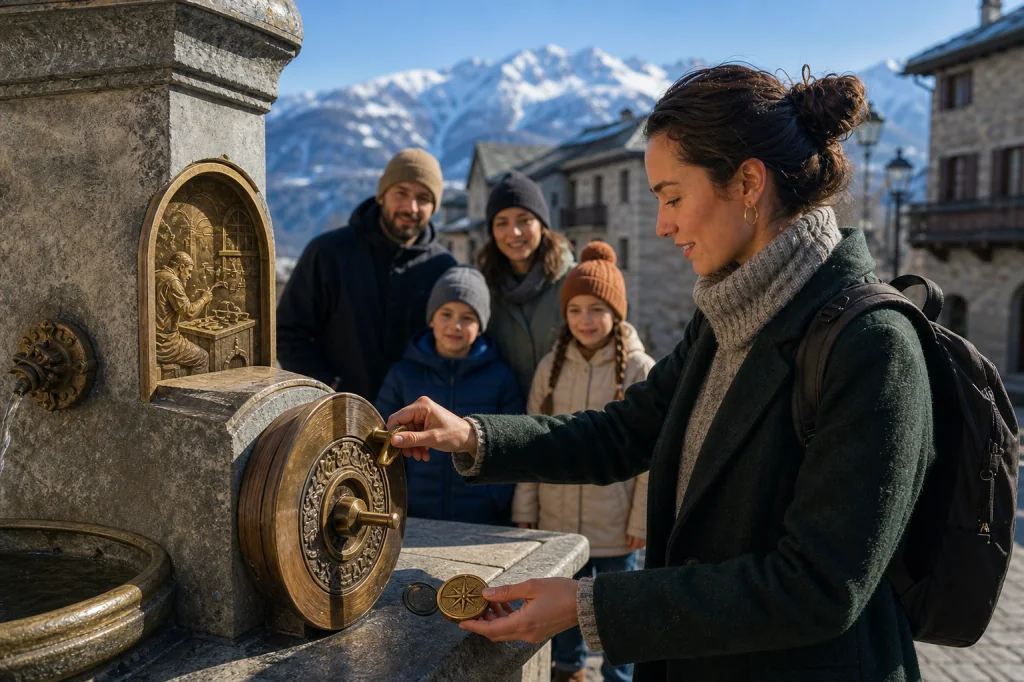
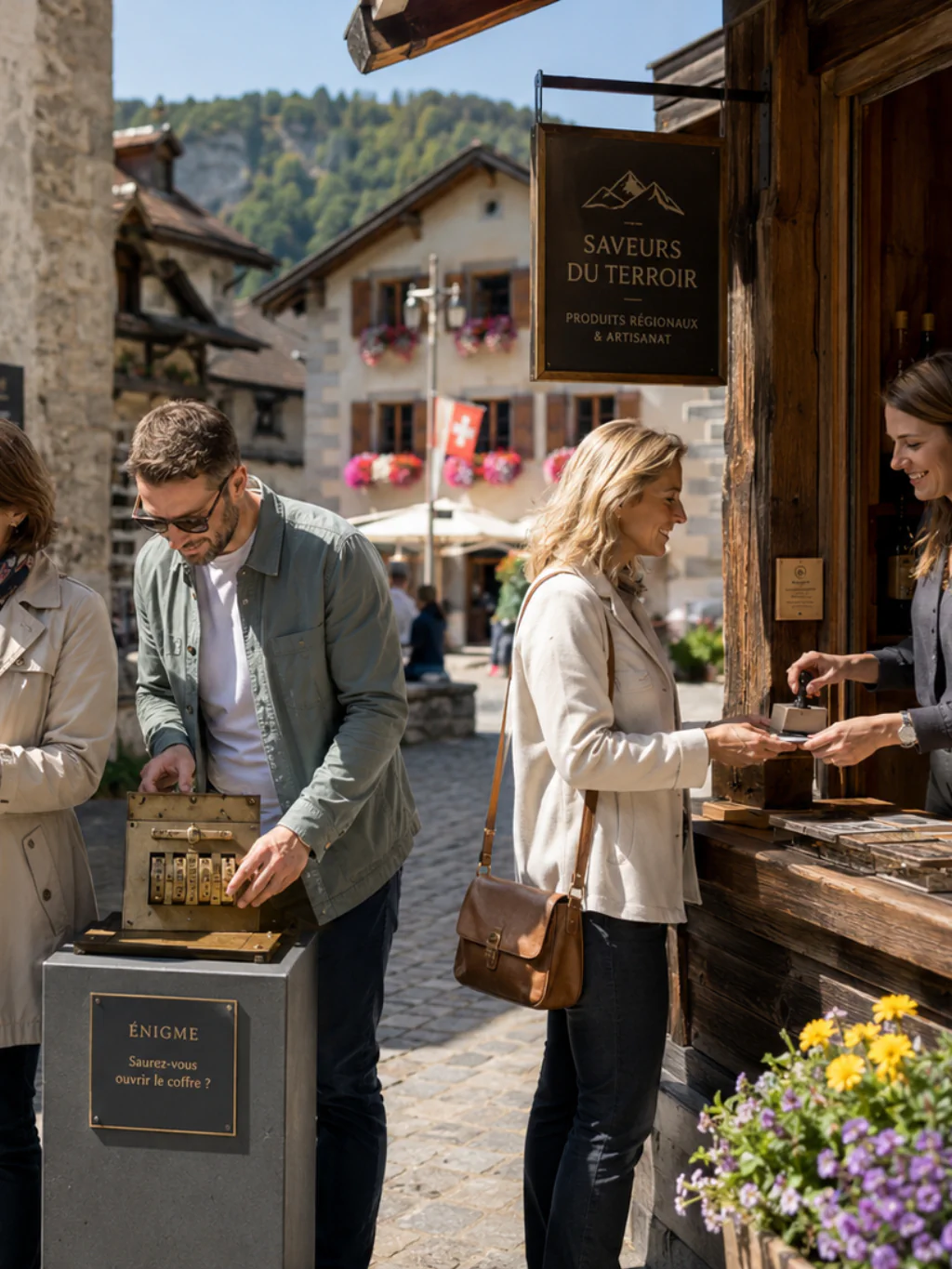
A true ending
Every clue falls into place.
The trail does not end because the map is finished. It ends when the mission is complete and every location’s purpose becomes clear.
What we deliver for you
From idea to opening-ready trail.
We begin with your places and objectives. We write the story, design every stop, and produce and install everything required. You approve important decisions before they become costs.
- 01
We define the change you want
Audiences, places, partners, objectives and constraints are agreed with the people who know the destination.
Objectives and scope - 02
We build the story and trail
We choose a human protagonist, their mission, the action at every stop and an ending that gives the journey meaning.
Story for approval - 03
We produce everything required
Content, NFC StoryKey, passport, installations, web experience and the agreed dashboard.
Production design - 04
We install and open
We test in the real locations, train staff and partners, and review the first visits after opening.
Opening-ready trail
Before production, you approve the visitor experience, our deliverables and the final price.
Within the project team
We join the work at the point it has reached.
We can start from an open objective or join an existing masterplan, itinerary, visitor centre or exhibition project.
Destination and strategy
We connect objectives, audiences, the local network and the operating sustainability of the trail.
- Destination managers and DMOs
- Tourism and destination consultants
- Local development agencies
- Masterplan, funding and cultural-project teams
Place and heritage
We respect interpretation, conservation, access, landscape and the existing visitor plan.
- Curators, museum planners and heritage interpreters
- Landscape architects and urban designers
- Experience, exhibit and visitor-centre designers
- Cultural itinerary designers
Identity and systems
Narrative, identity, content and infrastructure work as one journey.
- Brand and destination designers
- Multimedia production studios
- Audiovisual and digital integrators
- Service and visitor-experience designers
The brief, responsibilities, technical constraints and decisions already approved remain visible throughout the project.
Reduce risk before scaling
A verifiable pilot, in the real location.
When the project needs validation first, we can quote a contained pilot. A representative sequence is tested on site with real people, agreed criteria and a decision record. The wider roll-out starts only after the outcome is shared.
Observable scope
We select an opening, a significant stop and an outcome that represent the trail’s central behaviour.
Audience test
We observe comprehension, timing, accessibility, daily operation and handovers between staff and partners.
Documented decision
We deliver evidence, issues, corrections and the conditions required to extend, change or stop the project.
The images and scenarios on this page are project visualisations, not photographs or results from an Experience Passport installation already in operation. A pilot is a separate phase, scoped and quoted before it begins.
Versions and prices
Three scopes. No prefabricated story.
Base, Plus and Hero define scale, deliverables and starting investment. The protagonist, mission, places, partners and interactions remain specific to the project.
Bring one place to life
Base
Turn up to six locations into a complete, clear story that is ready to welcome visitors.
from EUR 29.900 excl. VAT
- One protagonist, one mission and a true ending
- Up to 6 stops, each with an action
- Immersive opening, StoryKey and passport
- Web experience in 2 languages
- Focused partner involvement
Connect the destination
Plus
Connect up to eight places and several partners in a richer story that can evolve with the seasons.
from EUR 44.900 excl. VAT
- A richer, multi-chapter story
- Up to 8 stops, each with an action
- Immersive opening, StoryKey and passport
- One surprise scene along the trail
- Web experience in 3 languages
Create a signature attraction
Hero
Connect up to ten places in a trail that culminates in a unique scene designed specifically for the destination.
from EUR 64.900 excl. VAT
- A story built around a signature scene
- Up to 10 stops, each with an action
- A more elaborate immersive opening
- Surprise scene and bespoke grand finale
- StoryKey, passport and web experience in 3 languages
Compare every detail
| Includes | Base | Plus | Hero |
|---|---|---|---|
| Places connected | Up to 6 | Up to 8 | Up to 10 |
| Story | Complete | Multiple chapters | Built around the signature scene |
| Special moments | 2 purpose-built installations | 3 installations + surprise scene | 3 installations + surprise scene + signature scene |
| Partners | Focused involvement | Network embedded in the mission | Complete destination network |
| Languages | 2 | 3 | 3 |
| Measurement | Essential indicators | By route and partner | Advanced dashboard |
| Seasonal update | — | 1 included | 1 included |
Indicative prices, excluding VAT. After the site survey, you receive a precise scope and final price for approval before production begins.
Lifetime cost and responsibilities
The initial price is not the full operating cost.
The quotation separates initial investment, recurring services, updates and local activities. This lets municipalities, DMOs and partners estimate life-cycle cost and assign every responsibility before procurement.
In the initial project
- Research, story and trail design
- Production included in the chosen scale
- Installation, testing and training
- Platform, dashboard and technical support in year one
Quoted after year one or by usage
- Hosting, monitoring and technical support
- Planned maintenance and on-site call-outs
- Spares, StoryKeys, passports and consumables
- New languages, stops, seasons or content
- Changes required by locations or third-party systems
Client and local partner responsibilities
- Permits, site availability and works not listed in the quotation
- Rights for supplied materials and historical/editorial approvals
- Opening, welcome, daily checks and fault reporting
- Named contacts for privacy, accessibility, safety and integrations
- Keeping opening times, closures and partner availability current
Amounts, service levels, response times, content ownership, data retention and equipment end-of-life are stated in the final offer. No recurring cost is treated as included unless it is written there.
Decision document
One sheet for leadership, technical teams and procurement.
It brings together objectives, Base/Plus/Hero scales, deliverables, prerequisites, life-cycle costs, responsibilities, pilot criteria and the questions to settle before writing a specification.
Illustrative scenarios
One concept for each project scale.
The three main scenarios make Base, Plus and Hero easier to compare. They are narrative hypotheses created to explain the product — not client cases or prefabricated stories.
Illustrative scenario
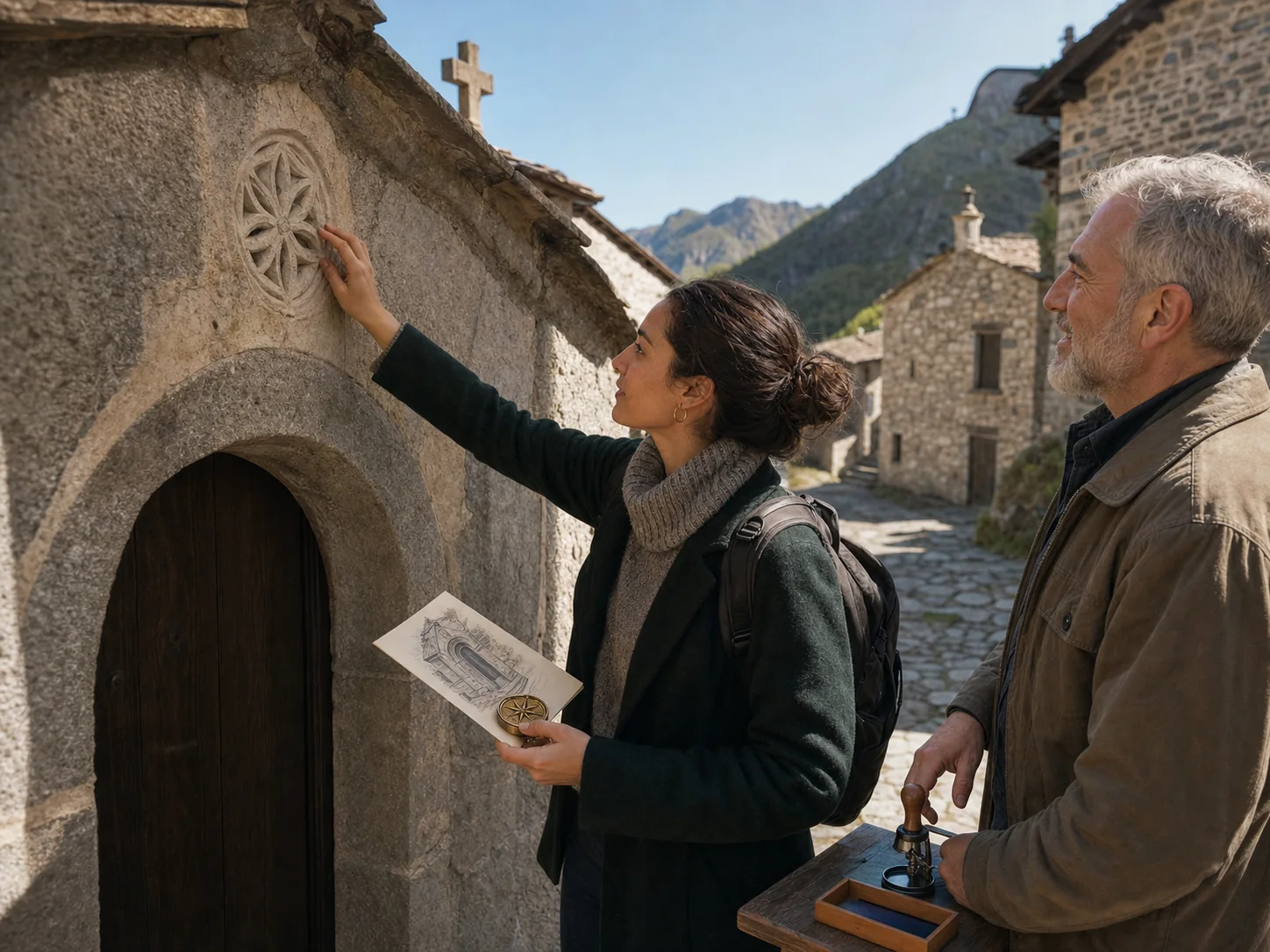
Base · Historic town, archive and local businesses
Bianca’s last letter
Bianca, a young postwoman in 1921, was unable to deliver her final letter before the town changed forever.
- How it starts
- At the archive, Bianca gives the visitor a seal-shaped StoryKey and an incomplete address.
- How it ends
- The letter opens, Bianca’s voice completes the story and the visitor receives a printed map of the reconstructed town.
- What you receive
- A self-guided trail connects the archive, square, heritage and two businesses, with data on starts, stops and completed journeys.
See every stop
- Archive: identify Bianca in a photograph and find her departure date.
- Square: align the old photograph with the buildings to locate the missing house.
- Fountain: find the postmark carved into the stone and copy it into the passport.
- Bakery: hear a testimony and choose which recipient knew Bianca.
- Workshop: compare three seals and receive the correct imprint.
- Town hall: put the name, street and number in order and finally deliver the letter.
Version Base · from EUR 29.900
Illustrative scenario
Plus · Wine region, town and four partners
Elena’s harvest
Elena, a young winemaker, is looking for the notebook in which her grandmother recorded the harvest that saved the village.
- How it starts
- In the cellar, Elena shows three blank pages and hands over a medallion-shaped StoryKey.
- How it ends
- The notebook reappears and the recipe becomes a map collected from the final partner. A new chapter can open in autumn.
- What you receive
- Eight connected stops, four partners embedded in the narrative, readable activations and a planned seasonal chapter.
See every stop
- Vineyard: identify the row shown in a family photograph.
- Dry-stone wall: find the symbol carved by Elena’s grandfather.
- Press: choose the right sequence of actions by observing the tools.
- Bakery: match a scent to the festival and receive a word from the recipe.
- Workshop: compare the colours of the cloths used to mark the baskets.
- Viewpoint: reconstruct the harvesters’ path between the plots.
- Inn: collect the missing testimony and complete the second page.
- Courtyard: Elena’s unexpected voice reveals where the notebook is hidden.
Version Plus · from EUR 44.900
Illustrative scenario
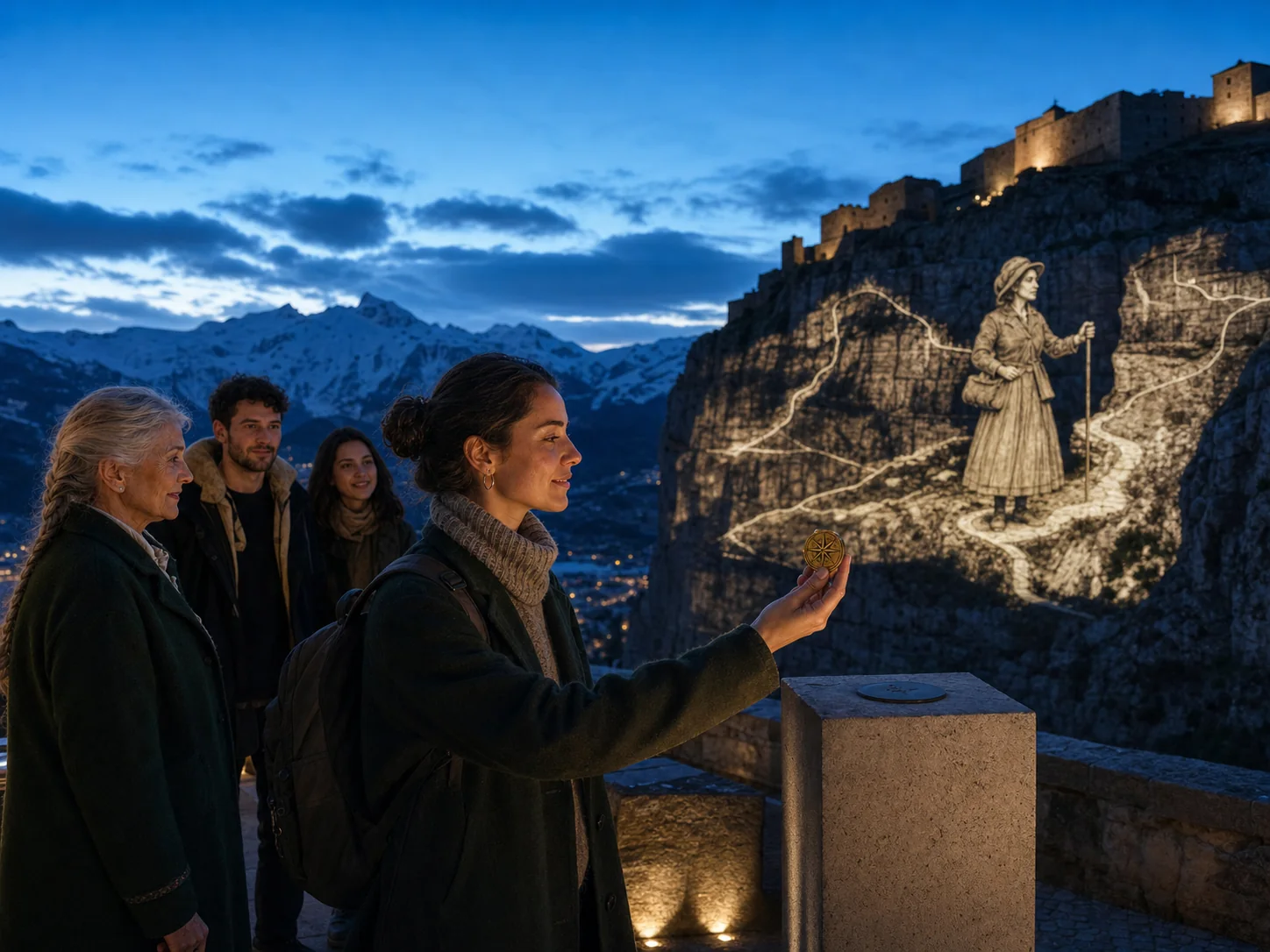
Hero · Alpine destination and major viewpoint
Anna’s map
Anna, a cartographer in 1928, drew a village that no longer appears on any map.
- How it starts
- An immersive scene recreates her studio during a storm and gives visitors Anna’s compass-shaped StoryKey.
- How it ends
- The signature scene transforms the panorama and shows the village as Anna saw it while her voice completes the map.
- What you receive
- A recognisable destination attraction, ten active stops and a final scene designed around the real panorama.
See every stop
- Archive: identify Anna in the expedition and recover the first coordinate.
- Square: follow the church tower’s shadow to establish the time in her notebook.
- Chapel: find the family name from the lost village.
- Trail: choose the junction by comparing the peaks with Anna’s drawing.
- Quarry: match a rock to the map symbol.
- Mountain hut: meet the host and hear the story passed down by their family.
- Old customs post: decipher the village’s former name in the register.
- Valley museum: assemble map fragments and obtain the final elevation.
- Intermediate viewpoint: overlay the clues on today’s landscape.
- Main viewpoint: complete the coordinates with the StoryKey.
Version Hero · from EUR 64.900
Explore three more concepts
A second example for Base, Plus and Hero, kept here so the main comparison stays concise.
Illustrative scenario
Base · Waterside village, trail and production site
Pietro’s mill
Pietro, the miller, must discover why the water no longer reaches the mill on the morning it is due to reopen.
- How it starts
- At reception, visitors receive Pietro’s magnifying glass and an incomplete sketch of the channel.
- How it ends
- The mill symbolically starts moving again and the passport reveals the water’s complete route.
- What you receive
- A self-guided trail connects landscape, working heritage and a local business open to visitors.
Illustrative scenario
Plus · Railway valley, distributed museum and local businesses
David’s last train
David, the stationmaster, must send out the last train before the line closes.
- How it starts
- At the old ticket office, David hands over an incomplete ticket and a watch-shaped StoryKey stopped at 18:42.
- How it ends
- Visitors stamp their ticket, complete the list and symbolically restart the line on the large valley map.
- What you receive
- An eight-stop cultural and commercial route in three languages, ready for a renewable seasonal mission.
Illustrative scenario
Hero · Industrial district, company museum and workers’ neighbourhood
Luca’s first shift
Luca, an apprentice in 1954, must finish his first shift without losing the notebook entrusted to him by his supervisor.
- How it starts
- In the reconstructed changing room, Luca receives his number and gives visitors a StoryKey inspired by his badge.
- How it ends
- The signature scene brings sound, people and movement back to the hall; Luca completes his shift and visitors receive a reproduction of the notebook.
- What you receive
- Ten stops across museum, neighbourhood and company become a visitable, measurable industrial heritage attraction.
Technology stays behind the scenes
You approve what should happen.
We decide how to make it work.
Together we develop the protagonist, mission, stops and ending. We then survey the locations and design the right tools within the agreed budget. Visitors only need to understand what to do.
What we check during the site survey
Spaces, access, light, power, connectivity, safety and maintenance. The approved solution and responsibilities are set out in the quotation before production.
If the trail needs to grow
Further stops, partners, languages, seasonal chapters, a second route, a signature scene or extended support can be considered later — when they genuinely improve the project.
Trail, stops and operation
Feasibility is verified in the real places.
Before production design, we translate the story into distances, timing, infrastructure, daily operation and verifiable responsibilities.
- Reach
- 6–10 stops depending on scope
- Access
- NFC StoryKey and dedicated interactions
- Languages
- 2–3 included depending on scope
- Insight
- dashboard and agreed indicators
Geography and flow
Distances, duration, access, opening times, seasonality and audience distribution define the real sequence.
Installations and operation
Power, connectivity, fixings, safety, maintenance and opening constraints are checked during the site survey.
Content and platform
Languages, editorial roles, seasonal updates and dashboard indicators are established in the project.
Testing and handover
We test stops and StoryKey on site, train staff and partners, and hand over documentation and operating responsibilities.
Final distances, equipment and performance are confirmed after the site survey and technical review.
Results you can read
Understand where the journey continues.
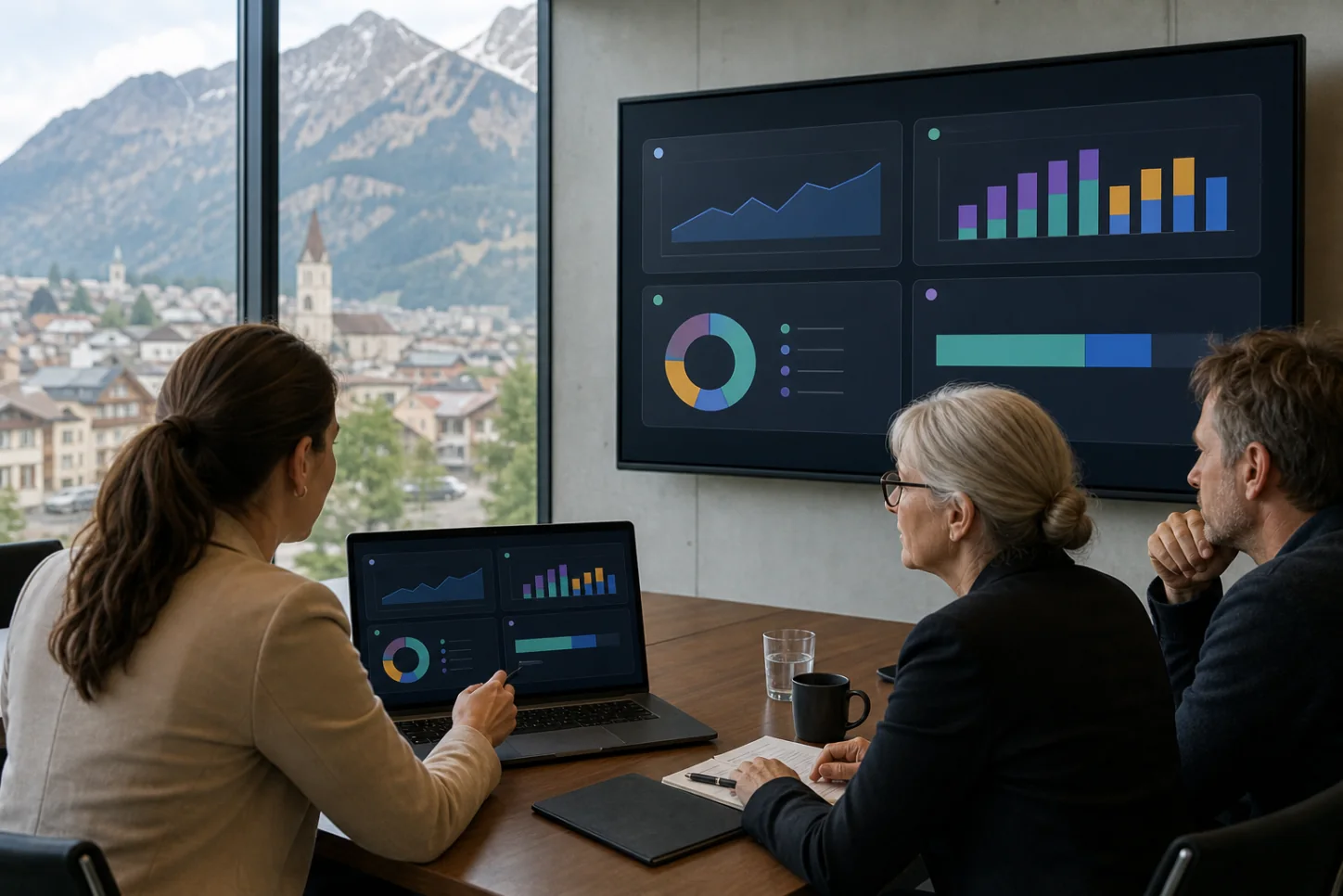
The dashboard connects indicators to agreed objectives: not only how many people started, but which stops they reached and where they completed the story.
- Trails started
- Stops reached
- Completions
- Partner activations
Frequently asked questions
The essential answers.
Do visitors need to download an app?
No. The digital layer can run in a browser. A smartphone provides the map, content and accessibility features without replacing the physical interactions.
Is this only for museums?
No. The trail can begin at a tourist office, castle, company, park, winery, hotel or any place able to open the story.
Can we start with Base and expand later?
Yes. Base is a complete experience. Stops, partners, languages, seasonal chapters or a second route can be added later.
How is the hardware selected?
We do not ask you to choose devices. Once the story and route are approved, we survey the locations and propose the right means for the solution and budget.
Can the price change after the site survey?
The published figure is indicative. You then receive a precise scope and final price for approval. Any later variation requires an agreed change to the project.
References
Verifiable criteria, not sales formulas.
The sheet accounts for data governance, accessibility and life-cycle cost. The contracting authority must still verify legal requirements and procurement procedure in its own jurisdiction.
We begin with the place
What do you want people to experience?
Tell us which places should be connected and what is missing today. You do not need to arrive with a story or technology already selected.