Dear Mayors, dear Councillors, we have all been there. Walk the streets of your municipality, the one you work for day and night, and you see it. The old cinema, its doors barred for decades, a ghost of laughter and collective dreams. The former industrial area on the outskirts, once the beating heart of the local economy, now a skeleton of rust and silence, part of the vast portfolio of underused public property that burdens our communities. The historic square which, after 8pm, becomes a melancholic desert, an empty stage illuminated by weak street lamps. These are the “black holes” of our urban fabric: spaces full of potential and memories, but today only a liability on the balance sheet and an open wound in community pride.
I know what you're thinking, because these are the thoughts that keep dedicated public officials like you up at night. “I want to regenerate it, but budgets are what they are, and every penny has to be justified.” "A serious redevelopment project takes years, a labyrinth of bureaucracy, planning permits, complex tenders and endless construction. And my mandate? Will I be able to see it finished, cut the ribbon?" And the most terrible question of all: “How can I be sure that a multimillion-dollar investment to remake the square will really bring new life and not just be an expensive, useless embellishment, criticized by citizens and the opposition?” These are real, tangible frustrations that paralyze the best intentions.
We live in a paradoxical era. On the one hand, we have historic opportunities such as the NextGenerationEU recovery plan , which makes resources available on a scale not seen for generations. On the other hand, traditional urban regeneration mechanisms are slow, cumbersome and often completely disconnected from the speed with which the world changes and from the real needs of people. These traditional processes, which require years of planning and huge investments, create a temporal and economic vacuum in which degradation accelerates and citizens' distrust grows.
What if I told you there was another way? An agile, intelligent, almost surgical approach. A method to test the potential of that empty space and transform it into a magnet for people and economic activities. This strategy is called rapid urban reactivation . It's not magic; it is a methodology for using funds in a more strategic way: first you test on a small scale, you validate the hypotheses with real data, and only then you invest on a large scale, with confidence. It all begins with a story of courage and vision, from a small town that decided it no longer wanted to wait.
The case study (the inspiration)
I'll take you to Revine Lago, a municipality of just over two thousand souls in the province of Treviso, Italy. An enchanting place, like many in Europe, but which faces the same challenges we have just discussed. Here, the Mayor Massimo Magagnin did not give up on the idea that certain spaces were condemned to abandonment. Instead of remaining trapped in the tunnel of a decade-long renovation project, it has adopted a different, more dynamic and bold philosophy: reactivation.
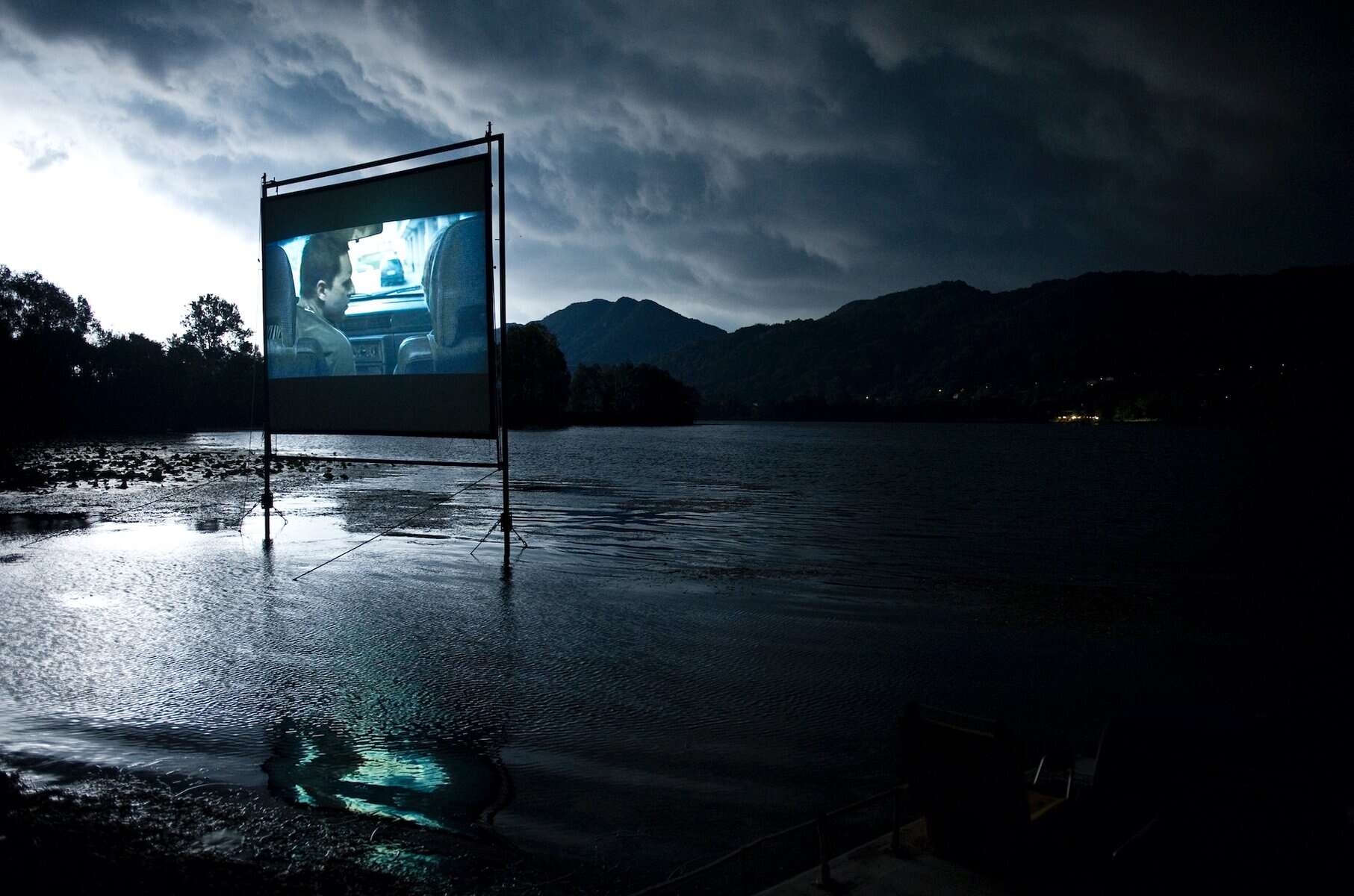
Magagnin looked at forgotten community spaces, such as old dance halls or disused social clubs, and saw not a problem to be solved, but a latent opportunity to be reawakened. He understood a fundamental principle: before investing significant capital in bricks and mortar, he had to invest in the collective imagination. It had to demonstrate the value of those spaces, almost like a form of urban "market testing". As? Through the universal language of culture and creativity. It has promoted innovative projects, transforming these ghost places into lively temporary hubs for artistic residencies, often in collaboration with local cultural bodies such as the association that organizes the renowned Lago Film Fest , an international independent film festival that enlivens the town every summer. Artists from all over Italy were invited to live and work in these spaces, to reinterpret them, to fill them again with their creative energy.
This seemingly small and niche move turned out to be a stroke of strategic genius. First, it generated immediate media attention, as local press coverage shows , highlighting the administration's innovative vision. Second, it physically brought people back to those places, shifting their perception from “a place to avoid” to “an interesting place where things happen.” Third, and most importantly, it produced tangible results. The initiative was so successful that it attracted interest and resources at a national level, leading the municipality to win important grants from the Ministry of Culture, such as those from the “Attractiveness of Villages” program (a program that could be compared to aspects of the EU's Creative Europe programme ), designed precisely for this type of intervention.
Magagnin's strategy in Revine Lago has become a case study in how political vision, combined with targeted and unconventional actions, can generate enormous and measurable territorial value. It proved that you don't need a colossal budget to spark change; you need the right spark. The Revine Lago experience is definitive proof that temporary reactivation can act as an incredible catalyst, a market test that validates and justifies future structural investments, forever changing the perception of a place in the eyes of citizens, investors and institutions.
From the case study to the strategic principle (the lesson)
The story of Revine Lago isn't just an uplifting anecdote to share at conferences. It is the embodiment of a revolutionary strategic principle that every public administrator should have written in large letters on their desk: territorial transformation can and must start with light, temporary and data-based interventions.
The key lesson of Revine Lago is that the process of rapid urban reactivation is a powerful alternative to traditional planning. We have been trained for decades to think that value is created with concrete, with permanent, "heavy" interventions. This old model is slow, expensive and extremely risky in a world that changes at the speed of light.
The new principle, which we at the usual neXt have placed at the center of our philosophy, is that a well-designed event can change the perception of a place and serve as a "market test" for future structural investments . This approach, known as tactical urbanism , is a key component of rapid urban reactivation, relying on quick, low-cost actions to test solutions and gather direct feedback, as brilliantly explained by experts like Mike Lydon .
Think like a 21st century entrepreneur. No entrepreneur would launch a product by investing millions in mass production without first creating a “Minimum Viable Product” (MVP). The rapid urban reactivation approach is the MVP applied to the territory. It's a way to ask questions of your local area ("Could this abandoned building function as a youth center?") and get answers based on real usage data, not committee opinions.
A temporary event, an immersive art installation, a pop-up festival: these are the most effective and economical ways to answer these questions. If the event is a success, you have a “smoking gun”: irrefutable data to present to the board. This allows you to measure not only economic returns, but also Social Return on Investment (SROI) , an increasingly crucial metric.
This is what we mean when we talk about immersive events as a strategic tool: not entertainment as an end in itself, but a measurable investment with a very high return. This is the power of a well-executed rapid urban reactivation project.
Technology as an enabler (the indirect solution)
How, in practice, do you transform an anonymous facade or a deserted square into a memorable and magnetic attraction in a weekend? The answer lies in the intelligent use of temporary immersive technologies. This is where the "magic" we talk about becomes engineering, and where the rapid urban reactivation strategy becomes a tangible project.
The most versatile and impactful technology for this strategy is undoubtedly architectural video mapping . We're not talking about projecting slides onto a wall. We are talking about a sophisticated technique that "sculpts" any surface with light, transforming it into a dynamic canvas, as demonstrated by world-famous events such as the Fête des Lumières in Lyon or the Festival of Lights in Berlin . In just a few hours of setup, the facade of the town hall or the ruins of an old factory can become a narrative portal that tells the story of the place, generating priceless organic promotion.
Another powerful solution are temporary immersive structures , such as geodesic domes whose invention we owe to the visionary genius of Buckminster Fuller. Cutting-edge solutions like our THOLUS DOME allow you to create, from scratch, a real "cinema of the future" in any square or disused area. They are perfect for presenting a large public project to the community in a way that generates enthusiasm instead of skepticism.
The crucial thing to understand is that access to these technologies does not necessarily require a prohibitive initial investment. Today's market offers flexible rental and leasing models . This is an absolute game changer, as it transforms a potential capital expenditure (CAPEX) into a manageable operating expenditure (OPEX), a financial logic increasingly adopted by the public sector to increase flexibility. It means that you can "rent" the transformation, reducing the risk of your territorial development strategy and optimizing every public euro.
These technologies are not the end goal, but the strategic enabler for any rapid urban reactivation project. They are the tools that make it possible.
Practical advice for administrators (the action)
Enough theory, let's move on to practice. If this vision has sparked an idea, here are three concrete actions to apply the rapid urban reactivation strategy in your municipality, starting now.
- Launch a “Latent Potential Mapping” initiative: Instead of the usual real estate census, create an agile task force with your urban planning, cultural leaders and a representative of youth or business associations. Use tools like “Community Asset Mapping” to create not a list of problems, but an “opportunity map”. For each space you identify, answer this question: "If we had no limits, what incredible story could this place tell? What unique experience could it offer?" .
- Design a “Pilot Event” with a Controlled Budget (and Integrated Metrics): Choose the location with the highest potential from your map and design a single 48-hour “pop-up” event. Use the rental options for a video mapping projection or other temporary immersive installation. Define your Key Performance Indicators (KPIs) for the event in advance: for example, “reach 1,000 visitors”, “get 50 mentions on social media with the hashtag #Rinascita[IlTuoComune]”, “collect 200 responses to a survey via QR code”. A small but targeted budget for a measurable and defensible result.
- Create a “Relaunch Dossier” for Each Test: Treat each pilot event as a research project. Collect the data (attendance, origin of visitors, time spent, media coverage, qualitative feedback) and package them in a "Relaunch Dossier". This streamlined yet data-rich and visually impactful document will become your most powerful tool. Use it to present your findings to the board, but more importantly, use it to support your funding request. It will be the definitive proof to attach to a grant application or to convince a local company to invest in the permanent project.
Conclusion (the vision)
For too long we have thought of our cities and towns as something static, a heritage to be preserved or, at most, slowly restored with reverential awe. But places, like people, are living organisms. They breathe, they change, they have a soul. And sometimes, that soul just needs a spark to awaken, to find its voice and start telling stories again.
The rapid urban reactivation strategy, enabled by technology and guided by a strategic vision, is not just a more efficient way to redevelop. It's a paradigm shift. It is a new "Renaissance" for our territories, a digital and participatory Renaissance. It is the promise that no place is lost forever and that the rebirth of a community can begin this weekend, with a beam of light, a courageous idea and the will to measure the results. It is the power to transform emptiness into wonder, silence into applause, and a liability in the balance sheet into an engine of economic, social and civic pride.
And this, my friends, is not a utopia. It is the future of territorial development. And it's already here, at your fingertips. We just have to have the courage to try.