Close your eyes for a moment. Imagine opening them in a dark corridor where every door hides a secret. You are not sitting comfortably in an armchair watching a distant spectacle. You have become part of the action, protagonists of a story that unfolds around you. Welcome to the magical world of immersive theater , an artistic revolution that is completely transforming our relationship with performing art.
This revolutionary form of entertainment eliminates all barriers between actors and audience. It also creates experiences so immersive that each viewer becomes a co-creator of their own unique version of the story. To fully understand this epochal transformation, it is necessary to explore the profound dynamics that characterize this artistic evolution.
The in-depth information presented in this article is mainly taken from the book “ Immersive Events ” by Dario Riccio, CEO and founder of the usual neXt . This comprehensive text explores how immersive theater is radically redefining contemporary performing arts. We will discover together how this artistic form transforms spectators from passive observers into true active protagonists of the theatrical experience.
The Artistic Revolution: Beyond the Fourth Wall
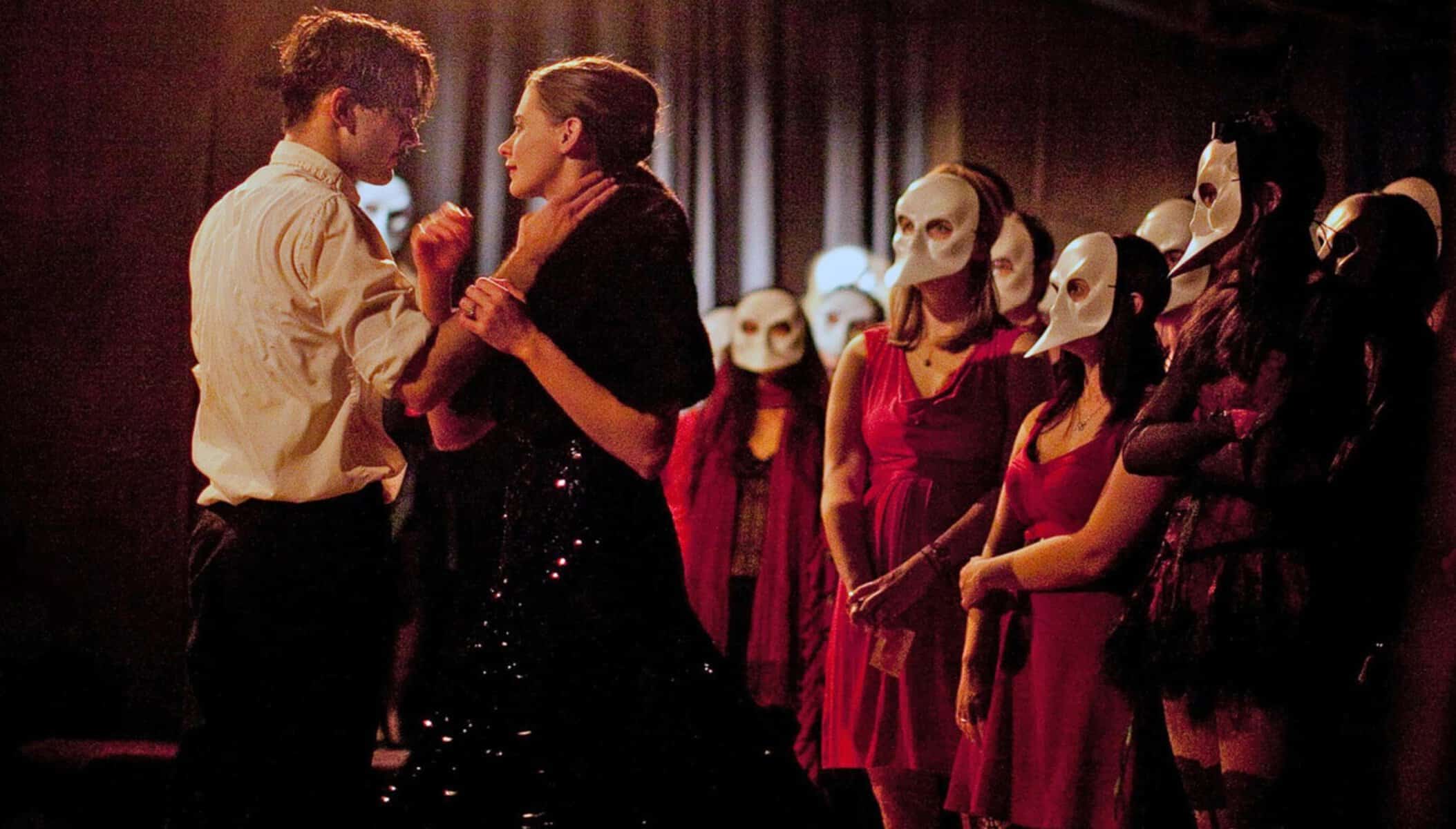
Immersive theater eliminates the traditional separation between stage and audience. This transformation, however, goes beyond the simple physical involvement of the public. Imagine finding yourself in a mysterious hotel at night. Each room tells a different story while you wear a white mask. You are completely free to explore dark corridors and open mysterious doors.
You can follow enigmatic characters who move fluidly between different rooms. You are no longer simple spectators sitting passively in an armchair. Instead, become an integral part of the overall artistic experience. As a result, this revolutionary form transforms you into co-creators of your own version of history.
Like Secret Cinema , this innovation also completely revolutionizes artistic enjoyment. This evolution represents one of the most radical transformations of contemporary performing arts.
The Revolutionary Productions that Made History
Sleep No More: The Hotel of Lost Dreams of Immersive Theatre
When Punchdrunk debuted with “Sleep No More” in New York, it literally revolutionized everything. This reinterpretation of Shakespeare's Macbeth through a film noir lens has completely transformed the building. An entire building has become a labyrinthine immersive fictional hotel. Each room has been meticulously furnished to create an immersive parallel world.
Spectators become silent ghosts recognizable by the characteristic white masks that maintain anonymity. They are free to roam countless rooms as they explore this artistic universe. They can follow Lady Macbeth in a hypnotic dance or witness intimate scenes. Each visit is unique because each visitor chooses their own personal path.
After years of sold-out reruns that attracted audiences from around the world, Sleep No More celebrated its final performance on January 5, 2025. It left a lasting legacy and inspired dozens of similar productions.
Then She Fell: The Extreme Intimacy of Immersive Theatre
If Sleep No More demonstrated potential on a grand scale, “ Then She Fell ” instead explored extreme intimacy. This Third Rail Projects production, inspired by the life of Lewis Carroll, involved just 15 spectators per performance. It has created an almost dreamlike experience in the contemporary immersive landscape.
Participants often explored the rooms alone, discovering hidden scenes and meeting performers in one-to-one moments. They gathered clues that illuminated a veiled story as they experienced this more intimate art form. The experience also included unique multi-sensory elements such as skeletal keys to access protected secrets. Participants could even drink personalized elixirs during this unique experience.
From 2012 to 2020, the opera ran for 4,444 performances in Williamsburg, Brooklyn, winning numerous awards including a prestigious Bessie Award.
The Fundamental Elements of the Immersive Experience
Meticulously Designed Environments for Immersive Theater
The productions transform unconventional spaces into detailed, explorable worlds. Every corner, alcove and corridor can hide a scene or a precious clue. The scenography is no longer a simple backdrop but becomes a three-dimensional environment to explore. The smallest details contribute to the overall narrative of the experience.
Nonlinear Narration in Immersive Theatre
Unlike traditional theatre, where the story develops sequentially, this artistic form fragments the narrative. Simultaneous scenes are strategically distributed throughout the space to create multiple paths. This structure allows the audience to construct their own version of the artistic experience. Viewers can follow different narrative threads while discovering personal connections between events.
Spectator Agency in Immersive Theatre
Freedom of movement and choice gives viewers an active role in determining their own experience. It turns them into co-creators of their own version. This agency transforms the audience from passive observers to active and responsible participants. Each person is responsible for their own discoveries and their own emotional journey.
Intimacy and Personalization in Immersive Theatre
The limited number of spectators allows personal interactions and one-to-one moments between performers and audience. This intimacy creates deep connections and unique memories for each participant. It makes every experience completely unrepeatable and personally meaningful.
The Technical and Organizational Challenges
Logistics and Security in Immersive Theatre
Managing the free movement of the public in complex spaces requires detailed safety protocols. Sophisticated wayfinding systems are needed for these innovative experiences. Manufacturers must consider every possible path and interaction while ensuring security without compromising exploratory freedom.
Actors' Resistance in Immersive Theatre
Actors often have to repeat their scenes multiple times during each performance. This happens for different groups of spectators in this artistic context. This demand for physical and mental endurance is significantly greater than traditional theatre. It requires specialized training and specific energy conservation strategies.
Economic Sustainability of Immersive Theatre
The high costs of locations, detailed sets and the necessarily limited number of tickets present significant challenges. Many immersive theater productions struggle to find a balance between artistic quality and economic viability. It is crucial to develop sustainable business models for this art form.
The Invisible Sound Architecture in Immersive Theatre
An often overlooked but crucial element of immersive theater is advanced sound design. If light sculpts visible space, sound builds its invisible architecture. It sets the mood, drives the emotions and completes total immersion in the experience.
Sound design in immersive experiences goes far beyond just a traditional soundtrack. It is a precisely designed part of the narrative that creates acoustic “rooms” instinctively perceptible by the audience. Even in the open spaces of immersive theater , a skilled sound designer can direct attention and evoke specific emotions. It can also provide interactive feedback to viewers' actions.
Spatialized audio technologies, such as Dolby Atmos, allow you to create three-dimensional soundscapes. They integrate perfectly with the visual elements of the artistic experience. Cutting-edge venues like Dolby Live in Las Vegas demonstrate how sophisticated sound systems with hundreds of speakers can completely transform the performance experience.
Towards More Inclusive and Accessible Experiences
One of the most significant evolutions of this contemporary art form is the growing attention to accessibility and inclusiveness. Creators are developing multi-sensory approaches that don't rely solely on sight. They design installations that can be used by people with reduced mobility, creating experiences that take into account different abilities.
The public is increasingly involved not only as users but also as co-creators of the experience. The installations change based on collective interaction while the performances integrate real-time inputs. This evolution reflects a fundamental shift towards a more democratic and participatory model.
The Technological Future of Immersive Art
This revolutionary form continues to evolve, continually experimenting with new technologies and innovative storytelling approaches. Mobile audio labs are democratizing access to advanced immersive technologies. They bring sophisticated experiences to contexts where previously it would have been unthinkable, from small communities to independent festivals.
The growing integration between this art form, digital technologies and spatial design is opening up previously unimaginable creative possibilities. The fundamental human element always remains at the center: the magic of the live meeting. The unpredictability of interaction and the thrill of shared discovery still characterize these innovative experiences.
Conclusion: The Art of Total Experience
This revolutionary form represents more than just an evolution of the traditional theatrical form. It is a true revolution in the way we conceive of performance art and the active role of the public. Transforming viewers from passive observers to active explorers, these experiences create deep memories and unique emotional connections.
As the medium continues to mature and spread globally, one thing remains certain. This art form has demonstrated that there is a deep desire for immersive artistic experiences. In an age dominated by screens and digital interactions, it reminds us of the transformative power of live art.
As highlighted in the book “ Immersive Events ” by Dario Riccio, the future of this art form promises to continue to challenge our expectations. It invites us not only to look at art, but also to experience it, explore it and become an integral part of it. This artistic revolution will continue to evolve, democratizing access to transformative artistic experiences for all.