Colleagues, administrators, let's be clear, as people who face concrete problems every single day. How many times, while reviewing your municipal budget, have your gaze fallen on the item "removal of architectural barriers" with a mixture of resignation and frustration? It's a common feeling, I know. Your mind immediately goes to the ramp to be built or the elevator to be installed, and you sigh, thinking of limited funds.
This point of view, however humanly understandable, is the biggest obstacle to the most extraordinary development opportunity that our territories are facing in the 21st century. It's a legacy of 20th-century thinking, which forces us to see inclusivity as a burden and not what it truly is: a powerful and undervalued strategic asset . What if I told you that this same “mandatory spending” on accessibility could be transformed into the biggest driver of economic growth and differentiation for your municipality? What would happen if I told you that there is a way to go beyond making a place simply "visitable" and instead transform it into a unique destination without market competitors, capable of attracting new, richer, more loyal and, above all, seasonally adjusted tourism?
It may seem like magic, a word we love to use in the usual neXt. But as I always say, our "magic" is never abstract; it is always linked to measurable results, a tangible economic impact and a growing political consensus. I'm not talking about utopias or academic theories, but about a concrete strategy, already tested with world-renowned success, right here in a small town in Southern Europe. A story that proves, once again, that lasting success comes not from marginally improving the existing game, but from completely changing the rules . Let's learn how inclusive tourism can be an economic driver.
The case study (the inspiration)
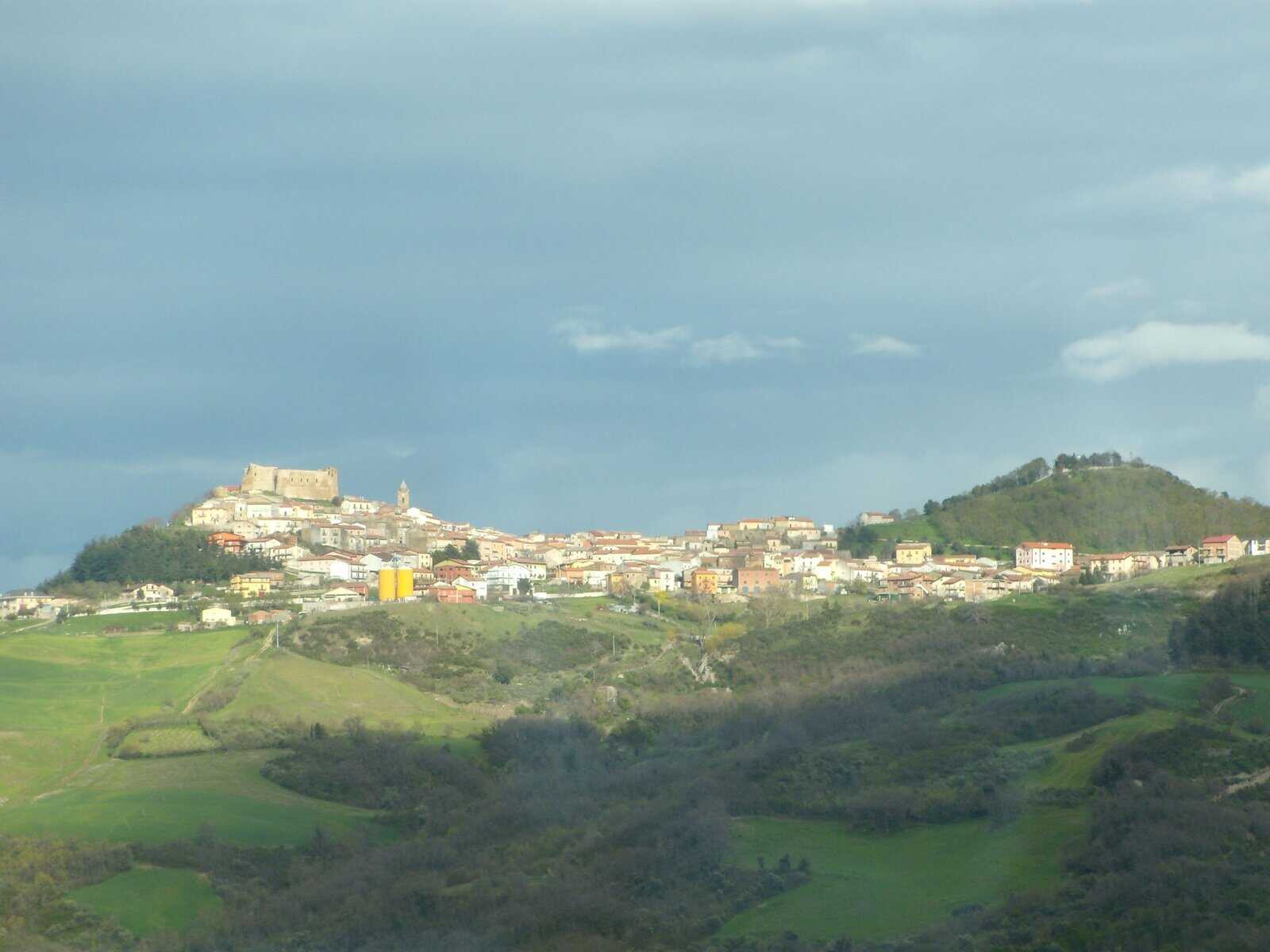
For a moment, imagine a small town in the green and pulsating heart of Irpinia , called Monteverde . A beautiful place, certainly, but on paper only one of the many wonderful European cities at risk of depopulation, with just 740 inhabitants . His story, before this transformation, was similar to hundreds of others. Now, imagine that this same city, almost invisible on traditional tourist maps, becomes a beacon of innovation studied throughout Europe, a global case study. This place is Monteverde, and the architect of this revolution is a visionary mayor, Antonio Vella .
Your journey, friends, did not begin with the pragmatic idea of “adding a ramp.” It started with a much more powerful design thinking question: “How can I make my city an unforgettable and completely autonomous experience for people who, today, can't even dream of visiting it?”. The answer to this question has transformed Monteverde into the “most accessible city in Europe”.
What did Vella do in practice? He turned a legal obligation into an obsession with excellence. Instead of settling for the bare minimum, he aimed for the absolute maximum. It has implemented 5 km of tactile paving based on the advanced LVE (Loges-Vet-Evolution) system, "intelligent" paths integrated with almost 8,000 information points that use fiber optics and wireless technologies to communicate with visitors. Its masterpiece, however, is the medieval castle. Thanks to an ingenious and pervasive system of RFID (Radio-Frequency Identification) sensors that communicate via Bluetooth with special sticks equipped with antennas, Vella has created the only castle in the world that can be experienced in complete autonomy by people with visual and hearing disabilities . Not a “facilitated” visit, but a truly independent exploration.
The result? An unprecedented international recognition. In 2019, Monteverde won the Access City Award , the highest and most prestigious award given by the European Commission for urban accessibility. But the awards, however prestigious, are only part of the story. The real, great victory was the transformation of the economic and social fabric of the city. Monteverde has ceased to be one of the many "hidden gems" of Italy and has become a unique destination in the world, a "category in itself". It has started to attract a specific tourist segment with high spending power and a desperate need for places designed in this way. He proved to the world that inclusivity is not charity. It's business. And what a business. This is a great example of inclusive tourism as an economic driver .
From the case study to the strategic principle (the lesson)
Monteverde's story is not an isolated, romantic and unrepeatable episode. It is the practical, measurable and replicable demonstration of a universal strategic principle that every public administrator, every DMO manager, should have imprinted on their desk: transforming diversity into a strategic economic resource .
We have to make a mental leap. Let's stop thinking about accessibility as a problem to be solved. It is, to all intents and purposes, a market to be conquered. And the numbers, which always matter to us practical administrators, are simply staggering. The accessible tourism market is huge. In Europe , there are approximately 133 million people with disabilities or chronic conditions . Of these, as many as 50 million are frequent travelers who, together with their families and companions, fuel a sector worth 400 billion euros a year . The potential in a single large country like Italy is estimated at over 27 billion euros per year. It's not a typo: twenty-seven billion euros of untapped potential.
These are not average tourists. Travelers with specific needs have characteristics that make them the perfect target for any territory aiming for smart and sustainable growth.
First: they have greater spending power . A tourist with a disability spends, on average, two to four times more than a traditional tourist. This is not a whim, but a structural necessity. They need more spacious hotel rooms and therefore higher category accommodation, they rent larger and better equipped vehicles, they require specific services (from specialized guides to accessible transport) and they are willing to pay a premium price for the guarantee of a smooth, safe and hassle-free experience. And, a crucial economic factor, they almost never travel alone , bringing with them family, friends or companions who multiply the economic impact of every single visit.
Second: they are the most powerful weapon against seasonality . People with disabilities and the elderly, for obvious reasons of comfort and health, tend to travel during the low season, when there are fewer crowds, the climate is milder and the services are more attentive. This means filling hotels and restaurants in March, April, October and November. It is the strategic solution to the problem of seasonality , the dream of every tourism councilor. Embracing inclusive tourism as an economic driver directly counters this challenge.
Finally, loyalty . This is a point that traditional marketing often underestimates. When a traveler with specific needs finds a destination that does not simply "welcome" him passively, but makes him feel wanted and allows him an autonomous, fulfilling and memorable experience, not only will he return to that place several times , but he will become your most powerful and credible ambassador. The positive word of mouth generated within these communities is invaluable and creates a competitive advantage that your neighbors will never be able to match by simply lowering prices. Therefore, designing for inclusiveness is not just a social duty. It is the smartest and most forward-thinking tourism marketing strategy.
Technology as an enabler (the indirect solution)
At this point, a question arises spontaneously: "Dario, the principle is very clear, but how did a small city like Monteverde, with limited resources, manage to create such a technological marvel?". The answer, as often happens in our industry, lies in technology, used not as an expensive end in itself, but as a powerful and strategic enabler of experiences.
The Monteverde model was made possible by the intelligent and almost “invisible” integration of immersive and sensorial technologies. RFID sensors and tactile paving are just the tip of the iceberg, the physical interface of a much more complex system. What they really did, by applying the principles of design thinking , was to create a constant "dialogue" between the environment and the visitor, a dialogue that, for the first time in the history of cultural tourism, is not based exclusively on the sense of sight, which for centuries has been the undisputed master of every artistic experience.
This, my friends, is the turning point. Today there are mature and accessible technologies capable of creating all-encompassing experiences that involve all the senses, breaking down barriers in a much deeper and more significant way than simply removing a step. Think about 3D spatial audio : imagine being able to guide a visually impaired visitor through an archaeological site, making him "feel" the majesty of a column that no longer exists, perceiving the sound as if it came from a twenty meter high object to his right. Imagine making him hear the voice of an ancient Roman legionary coming from the exact spot where he was two thousand years ago. This is not a simple audio guide, but a sensorial time machine.
Think interactive multi-sensory installations that use vibrating floors, scent dispensers, and variations in temperature and humidity to tell a story or describe a work of art. This is the category of solutions that changes the cards on the table. It is no longer a question of "adapting" what already exists to make it usable, but of creating something radically new and richer. This is where our research and development work in the usual neXt finds its maximum expression. When we design our immersive experiences in geodesic domes like the THOLUS DOME , we don't just think about the 360-degree visual impact. Let's think about how that space can become a complete sensory universe. The integration of immersive projections, directional sound design and other sensory technologies allows us to build narratives that anyone can appreciate, regardless of their physical abilities. We follow the principles of Universal Design , an approach which, as I explain in my book “ Immersive Events ” , aims to create better solutions for everyone by designing for the most complex needs from the beginning.
Technology, therefore, becomes the tool for creating a tourist offer that literally has no competitors. While everyone else is struggling to compete on the same overcrowded playing field of the "most beautiful village", you can build a completely new one, where you are the only one playing. And this, my friends, is the definition of an unassailable and lasting strategic advantage, demonstrating that inclusive tourism as an economic driver is the future.
Concrete ideas for administrators (the action)
I know what you're thinking: "Very interesting, Dario, but tomorrow morning I have a board meeting and I have to bring concrete proposals to the table. What do I do?". You're right. From vision to action. Here are three practical steps, inspired by the Monteverde model, that you can discuss and start immediately.
- Launch an “Audit of market opportunities for inclusiveness”, not a census of barriers. The first step is a radical change of perspective. Stop asking “how much will this ramp cost us?” and start asking “how much does it cost us not to be an inclusive destination?”. Task your offices with simple but powerful market analysis . The goal is not to count the steps, but to quantify the opportunity. Answer questions like: “What is the potential market value of accessible tourism for our municipality if we captured just 0.01% of the €400 billion European market?”. “How many of our accommodation facilities are truly ready to welcome this target audience, beyond the legal certification?”. “What funds from the NextGenerationEU recovery plan, dedicated to digitalisation and social inclusion, can we secure with such a project?”. Use this data to engage local operators and to guide future funding requests: you will not ask for money to "complie", but to "invest in a new and profitable market segment".
- Create a “Unique Experience Lab” instead of a public works plan. Put the traditional barrier removal plan on hold and create a permanent working group dedicated to innovating the tourism experience. Select the 3-4 main cultural or natural assets of your area (the castle, the local museum, the nature trail, the main square) and launch a creative challenge: "How can we transform this place into a memorable and autonomous experience for a visually impaired person? Or for a person with hearing problems? Or for an elderly person with reduced mobility?". Involve not only municipal technicians, but also artists, sound designers, storytellers and local technology startups . The goal is not to "patch" what already exists, but to use technology to design new sensory experiences from scratch which, as demonstrated by the Universal Design philosophy, will end up being richer, more exciting and more engaging for all visitors, without exception.
- Build a certified supply chain network, not just isolated infrastructure. Monteverde's success is not just technological; it is a community success. A municipality cannot do it alone. The third and decisive step is to create a territorial alliance for inclusiveness. Organize a working table and invite all the stakeholders in the supply chain: disability associations (they are the real experts, their advice is invaluable), hoteliers, restaurateurs, tourist guides, traders, local associations. Define the quality standards of hospitality together and work to obtain a certification recognized at national and international level, such as that of Village for All – V4A . This brand is not just a piece of paper; it is a guarantee of quality for tourists and a powerful marketing tool. When the entire tourism supply chain moves in a coordinated way, the impact multiplies exponentially. Public investment in infrastructure is enhanced and amplified by private investment, creating a virtuous circle that attracts visitors, creates jobs and generates widespread and lasting prosperity.
The conclusion (the vision)
We started this dialogue by talking about a budget item, a legal obligation perceived as a burden. I hope, at the end of this long reflection, to have convinced you that it is not an expense. Today, it is the most important and strategic investment you can make in the future of your municipality.
Inclusivity, dear administrators, is not the final destination. It's the engine. It is the strategic principle that allows us to stop competing in a saturated and worn-out market and start creating authentic value where others only see problems. It is the key to unlocking annual tourism flows, attracting loyal, high-spending visitors, providing vital oxygen to our local economy and, above all, building more just, cohesive and sustainable communities.
The true, great magic of the Monteverde model is not the talking castle; is having irrefutably demonstrated that empathetic and intelligent design generates extraordinary economic and social returns. The legacy we can leave to our children is not only made up of restored squares and beautifully illuminated monuments. It is, above all, made of living places that speak to everyone, that leave no one behind and that transform the wonderful human diversity into their greatest and most unforgettable spectacle, achieving true regional innovation .
Accessibility opens a door. Strategic inclusiveness, my friends, builds a highway to the future of your territory. It's time to start the journey and embrace inclusive tourism as an economic driver .