Introduction: The Transformative Power of Immersion in Contemporary Education
Immersiveness today represents the most advanced frontier of global educational innovation. In fact, immersive technologies are completely transforming the traditional learning landscape. However, this revolution based on immersion is no longer science fiction but a tangible reality in contemporary classrooms.
Therefore, as the book " Immersive Events " by Dario Riccio carefully documents, educational immersion offers unprecedented opportunities. Additionally, this seminal text explores how immersive technologies democratize access to quality education. As a result, educational institutions can finally overcome the traditional spatio-temporal limitations of teaching through immersion.
Subsequently, as highlighted in our previous study on the state of immersion in Italy , the national educational sector is experiencing an epochal transformation. Therefore, immersion is no longer the exclusive prerogative of large international institutions but becomes accessible to everyone.
Mobile Planetariums: How Immersion Transforms Traditional Classrooms
Clearly, mobile planetariums represent the most concrete example of educational immersion accessible today. In fact, these revolutionary systems can transform any ordinary classroom into a complete immersive space. However, their versatility goes far beyond the traditional astronomy that characterized planetariums of the past.
Mostly, a single mobile planetarium can accommodate twenty to one hundred and twenty students simultaneously. Furthermore, the installation takes less than forty-five minutes to be fully operational. Therefore, immersion finally becomes accessible even to schools with limited resources and limited spaces.
Above all, these environments enable educational experiences previously impossible to achieve. For example, students can virtually explore the human circulatory system during biology lessons. Next, they can travel across oceans for geography or walk in ancient Rome for history.
Of course, the immersiveness of mobile planetariums significantly surpasses the effectiveness of traditional face-to-face lessons. As a result, students with special educational needs finally find inclusive and stimulating environments. Evidently, this democratization of immersion represents a critical step toward global educational equality.
The Shared Experience: Why Collective Immersion Outperforms Individual Virtual Reality
Certainly, collective immersion offers superior pedagogical advantages compared to traditional individual viewers. Indeed, fulldome systems create shared experiences that maintain the fundamental social dimension of learning. However, many institutions still underestimate the importance of this feature in contemporary education.
Mainly, students do not remain isolated in personal virtual worlds but actively collaborate. Plus, they can immediately discuss immersive experiences they've had together in the same environment. Therefore, collective immersion naturally favors the construction of knowledge through comparison and discussion.
Above all, as Uri Ben-Ari of Athena Fund points out, every teacher should have access to these classrooms. Next, every global student should learn through advanced immersion-based methodologies. Obviously, this ambitious goal requires significant investments in accessible technologies.
Therefore, shared immersion represents the perfect balance between technological innovation and authentic human interaction. As a result, students develop collaborative skills while having memorable and engaging educational experiences.
Experiential Learning: How Virtual Simulations Transform Traditional “Learning by Doing”
Evidently, immersion elevates the principle of “learning by doing” to levels previously unattainable in traditional education. In fact, immersive simulations create a strong sense of psychological "presence" in virtual environments. However, this virtual presence significantly increases the engagement and motivation of contemporary students.
Primarily, the immersiveness of educational simulations offers three key benefits for modern learning. First, it ensures complete safety when navigating complex or potentially dangerous situations. Furthermore, it allows infinite repeatability of the exercises to gradually perfect the skills acquired.
Subsequently, immersion allows complete customization of educational parameters for different learning levels. Therefore, each student can progress at their own natural pace without external limitations. Clearly, this flexibility represents a competitive advantage over traditional methods.
Best of all, student performances can be recorded and analyzed for detailed feedback. As a result, teachers gain valuable data to continuously improve educational effectiveness. Of course, this data-driven approach significantly optimizes the outcomes of immersive learning in modern institutions.
Overcoming Space-Time Limits: Immersiveness as the Ultimate Solution to Geographic Barriers
Certainly, immersion represents the most effective solution for breaking down traditional geographical and temporal educational barriers. In fact, immersive environments allow virtual journeys through different historical eras without physical limitations. However, this capability goes far beyond simply displaying historical or geographic content.
Primarily, students can explore places that are completely inaccessible in contemporary physical reality. For example, they can walk on the sea floor or travel through distant galaxies. Furthermore, immersion allows detailed observations of phenomena at extraordinary microscopic or cosmic scales.
Subsequently, immersion facilitates educational collaborations between students from different schools around the world. Therefore, classes can share simultaneous immersive experiences completely overcoming geographical distances. Clearly, this globalization significantly enriches students' cultural perspectives.
Of course, a planetarium can instantly transform an ordinary classroom into a functioning time machine. As a result, an entire class can travel together through human history or the evolution of the universe. Evidently, these experiences remain imprinted in the memory much more than traditional frontal lessons.
Professional Training: Concrete and Measurable Results of Immersion in Specialized Sectors
Certainly, immersion in professional training produces tangible and extraordinarily measurable results in the contemporary economy. In fact, the medical sector has already documented significant benefits through systematic implementation. However, these results exceed the most optimistic expectations of education experts.
Primarily, immersion revolutionizes surgical training through completely realistic tactile and visual feedback. Furthermore, three-dimensional anatomical visualization allows explorations of the human body from previously impossible perspectives. Subsequently, emergency simulations significantly improve the coordination of professional medical teams.
Therefore, immersion also allows for empathy training by having providers experience the patient's perspective. Naturally, collective environments prove particularly effective for collaborative training. As a result, immersion dramatically improves the quality of healthcare provided to patients.
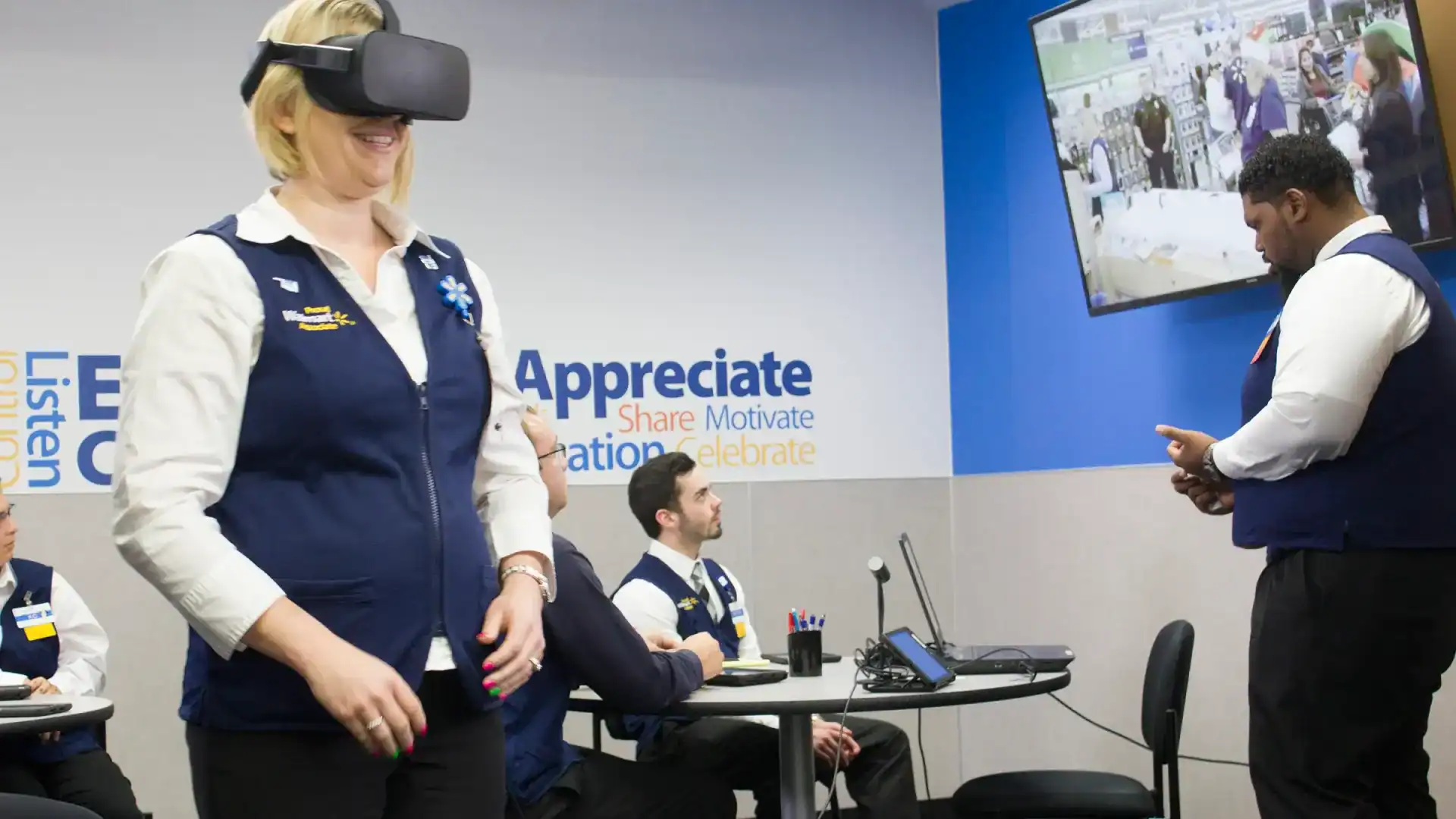
Above all, the industry has achieved amazing results through strategic implementation in modern business training. For example, Walmart reduced staff training time by ninety-six percent using simulations. Additionally, Emirates Airlines has trained over twenty-three thousand crew members through the specialized MIRA platform. Evidently, this data demonstrates the remarkable return on investment that immersion can generate in modern organizations.
Safety and Emergency Management: Prevention Training through Immersion
Clearly, immersion represents an ideal solution for safety training in a controlled environment. In fact, simulating fires, evacuations or critical situations in a realistic but safe way offers incomparable advantages. However, this application requires particular attention to the quality of the simulations to ensure training effectiveness.
Primarily, immersion allows you to train personnel to respond effectively under intense psychological pressure. Furthermore, it allows you to test security protocols in completely realistic conditions without real risks. Next, immersion helps identify vulnerabilities and areas for improvement in existing protocols.
Therefore, immersion significantly reduces the risks and costs of traditional live safety exercises. Of course, this economic efficiency makes it particularly attractive to organizations with limited budgets. As a result, more companies can invest in high-quality safety training.
Obviously, immersion allows infinite repetition of emergency scenarios to refine operational procedures. Therefore, staff can acquire critical skills through intensive practice in safe environments. Evidently, this immersive methodology saves lives through superior preparedness for real emergencies.
Museums and Culture: How Immersion Transforms the Traditional Museum Experience
Certainly, the museum sector is discovering immersion as a precious ally for engaging increasingly demanding visitors. In fact, immersive technologies offer personalized experiences that significantly surpass traditional guided tours. However, implementation requires balance between technological innovation and respect for existing cultural heritage.
Primarily, educational art installations demonstrate the transformative potential in the contemporary cultural sector. For example, “The Tree of Balance” used three-dimensional video mapping to raise visitor awareness of environmental impacts. Additionally, visitors answered questions via tablets while their answers were projected onto the installation.
Subsequently, mass events are completely redefining cultural accessibility in modern cities. Therefore, Shanghai's first “immersive art week” demonstrated the educational potential of public events. Clearly, the GLOW Eindhoven edition used laser projectors to tell stories about the historic facade.
Naturally, these events attract hundreds of thousands of visitors interested in innovative cultural experiences. As a result, immersion democratizes access to culture by bringing high-quality experiences directly to neighborhoods. Evidently, this accessibility radically transforms the relationship between citizens and local cultural heritage.
Democratization: Strategies for Making Immersive Technologies Accessible to All
Certainly, democratizing immersion represents one of the most important challenges for the future of global education. Indeed, making these technologies accessible even to institutions with limited budgets requires creative approaches. However, there are already innovative solutions that are making it economically viable for small organizations.
Mainly, collaborative models emerge as a winning strategy for sharing expensive resources. For example, consortia of schools can share mobile fulldome systems through coordinated schedules. Additionally, community hubs for content creation significantly reduce production costs.
Next, open source educational content libraries are democratizing professional-quality access. Therefore, small museums can use professional content without prohibitive investments in original production. Clearly, peer-to-peer training programs for educators accelerate adoption in local communities.
Above all, environmental sustainability represents a competitive advantage often underestimated by institutions. Of course, the Sydney VIVID Festival demonstrated that spectacular events can have surprisingly low environmental impact. As a result, immersion aligns perfectly with the sustainability goals of conscious modern organizations.
International Case Studies: Pioneering Schools Demonstrating Educational Effectiveness
Evidently, numerous international schools are already successfully integrating advanced education programs into their programs. In fact, the American International School in Guangzhou has implemented shared spaces to improve STEM offerings. However, these pilot projects require significant initial investments and specialized training of teaching staff.
Chiefly, GEMS Dubai American Academy has documented significant increases in student engagement. Furthermore, Prague British International School has integrated additional content into traditional learning with extraordinary results. Subsequently, Dulwich College in Beijing demonstrated how immersion can completely transform the educational experience.
Therefore, all of these institutions reported measurable improvements in the academic performance of regularly exposed students. Clearly, increased engagement directly translates into superior learning outcomes and lasting motivation. Of course, these case studies provide concrete evidence of effectiveness in modern international education.
Obviously, the success of these pioneering projects depends heavily on the adequate training of the teaching staff. As a result, implementing immersion requires parallel investments in professional development and ongoing technical support. Therefore, schools must strategically plan the transition towards educational methodologies based on advanced technologies.
The Inclusive Future: How Immersive Technologies Break Down Barriers and Create Opportunities
Certainly, inclusiveness represents one of the most revolutionary aspects in contemporary and future education. In fact, immersive technologies can overcome architectural barriers through fully accessible virtual reconstructions. However, this inclusive capacity requires careful planning and sensitivity to diverse educational needs.
Primarily, immersion provides content in alternative formats for people with sensory disabilities of various types. Furthermore, it allows virtual tactile experiences of fragile or inaccessible objects in physical reality. Subsequently, immersion naturally adapts to different individual learning styles and cognitive abilities.
Therefore, students with special educational needs find stimulating environments without being stigmatized. Clearly, this natural integration promotes social inclusion while simultaneously improving learning outcomes. Of course, immersion democratizes access to high-quality educational experiences previously reserved for a privileged few.
Obviously, the universal design benefits all students, not just those with special needs. As a result, heterogeneous classrooms can share enriching experiences that value diversity as a resource. Evidently, immersion promotes an educational culture that is truly inclusive and respectful of individual differences.
Conclusion: Immersiveness as the Present of Education and Catalyst of Global Change
Immersiveness does not represent the future of education but already constitutes the present of the most innovative institutions. Indeed, concrete results documented in sectors such as medicine and industry unequivocally demonstrate effectiveness. However, as masterfully highlighted in the book " Immersive Events " by Dario Riccio, this revolution still requires widespread diffusion.
Primarily, training time reductions of up to ninety-six percent and measurable improvements bear out as a strategic investment. Additionally, increasing accessibility through affordable hardware solutions and open source software democratizes access. Therefore, even institutions with limited budgets can implement professional-quality educational experiences.
Next, immersion seamlessly combines the best of the digital world with the fundamental social dimension of learning. Clearly, it is not a question of replacing teachers or traditional methods but of significantly enhancing them. Of course, immersion makes learning more engaging, effective, and inclusive for all students.
Obviously, the “classrooms of the future” are already a tangible reality that transforms contemporary education. Consequently, the question is not whether this revolution will happen but how quickly. Evidently, educational institutions must embrace immersion to provide their students with the best possible opportunities.