Hi, I'm Dario Riccio and welcome to the usual neXt blog.
Today we are talking about a thorn in the side of every local administrator. It's one of those questions that looms over every council meeting, a question that the political opposition is eager to raise: How do we justify our spending on cultural events?
I know the situation well. On the one hand, there is the desire to offer one's community moments of connection, to preserve traditions, to make one's country a vibrant and attractive place to live. On the other hand, there is the reality of budgets, of decreasing funds and the need - often imposed by control bodies such as the Court of Auditors - to demonstrate that every public euro spent is a strategic investment, not just a cost. How many times have you found yourself defending funding for a summer festival or theater festival, only to be told: "we have other priorities"? How many times have you struggled to translate the crowd's enthusiasm into concrete data, into a number that can silence critics and convince even the most skeptical stakeholders?
This challenge is amplified by a phenomenon I have previously called the “free-for-all festival”: a proliferation of standardized events that, in an attempt to compete, end up canceling each other out. Money is spent just to stay put, attracting the same people without triggering any real economic development. The result is palpable frustration: the cultural event is seen as a luxury, an accessory to be cut at the first sign of difficulty, rather than as the potential engine for the regeneration of small municipalities that many Italian communities desperately need.
But what if I told you there was a way to completely reverse this perspective? What if I told you that some visionary leaders have transformed their events from “cost centers” into “profit centers” for the entire community, creating jobs, fighting depopulation and attracting millions of euros in funding?
This is not a utopian dream. It is a precise and strategic methodology. Today, I want to tell you the story of a small town in Molise and its mayor, who not only found the solution to this problem, but created a development model that is now studied and admired throughout Italy. It is a story that demonstrates, with numbers in hand, that a well-planned event can be the most profitable investment that an administration can make.
The case study (the inspiration)
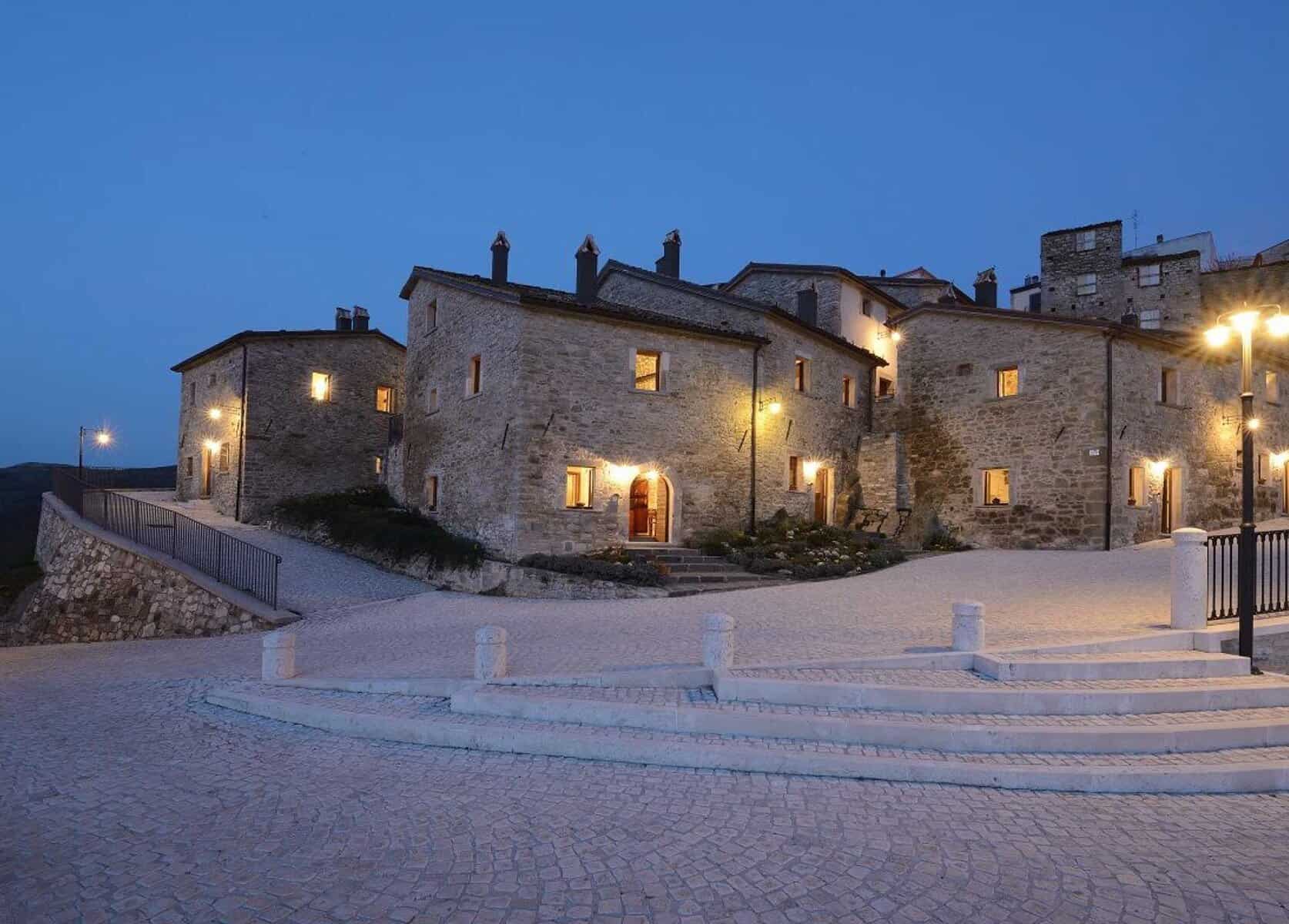
Imagine a small town in the heart of the Molise Apennines, at an altitude of 800 meters . A community of only 308 inhabitants who, like thousands of others in the internal areas of Italy, seemed destined for a slow and inevitable decline. This place is called Castel del Giudice , in the province of Isernia. And its story is living proof that a model for the regeneration of small municipalities is not only possible, but can give extraordinary results.
The architect of this transformation is Mayor Lino Gentile , in office since 1999. He is a leader who has never resigned himself to decline, but has seen opportunities where others only saw problems. Instead of simply managing the crisis, he built an entire ecosystem of rebirth, a model that led to almost incredible results: zero unemployment and the creation of over 130 new jobs. A figure which, in relation to the population, is simply astonishing.
How did he do it? Not with a single project dropped from above, but with a series of interconnected initiatives born from innovative public-private partnerships. In this model, the municipality acts as a catalyst, holding minority shares ( 20-30% ) and leaving operational management to the private sector, thus ensuring economic sustainability and agility.
The journey began in 2001 with a gesture as simple as it was symbolic: transforming the town's abandoned schools into a residential care home, which today employs 30 people ." What was a symbol of depopulation has become a bastion of well-being and employment. But that was only the beginning.
From there, the ecosystem grew, piece by piece. The “Melise” agricultural company was born, which today cultivates 48 hectares of organic apple orchards . Fifty abandoned stables have been restored to create " Borgotufi ", a magnificent hotel with 100 beds , which has become the beating heart of the town's tourist offer. During the “Apple Festival,” one of the flagship events, a craft brewery called “Maltolento” was even inaugurated. “Each new piece was not an island, but an integral part of a larger design.
And cultural events? Far from being an additional expense, they have become the amplifier of this model. The Casteldelgiudice Buskers Festival and the aforementioned Apple Festival are not simple parties; they are powerful territorial marketing tools. They attract thousands of visitors every year, filling the rooms of the Albergo Diffuso, raising awareness of the products of the organic orchards and creating an economic ripple effect that supports the entire community all year round. The event is not the end; it is the means to make the entire ecosystem work.
This strategic and integrated approach has not gone unnoticed. Castel del Giudice has secured the impressive sum of 20 million euros from the Italian National Recovery and Resilience Plan (PNRR) , thanks to its “Apennine (Re)generation Center” project. This project does not only finance public works; consolidates Mayor Gentile's vision by investing in three strategic axes: community well-being, sustainable development and tourist attractiveness , through initiatives such as artistic residencies, agri-food technology incubators and even an Institute for Advanced Studies on Territorial Regeneration.
The history of Castel del Giudice teaches us a fundamental lesson: there is no point in organizing an event if, the next day, visitors don't have a place to sleep, a restaurant to eat, a local product to buy. Success is not measured in tickets sold, but in the ability to transform a one-day visitor into an economic supporter of the entire local value chain.
From the case study to the strategic principle (the lesson)
Lino Gentile's story is powerful, but my goal is not just to inspire you. It is to give you strategic principles that you can apply, tomorrow morning, in your community. The universal lesson that we can extract from the Castel del Giudice model is this: the basis of any successful strategy for the regeneration of small municipalities is to design events not as an end in themselves, but as the engine of an integrated economic ecosystem .
Let's stop thinking of an event as an isolated container, a happy island that lasts a weekend and then vanishes without a trace. We must start designing it as the beating heart of a complex system, the spark that lights and fuels a series of collateral economic activities. The event is the attractor, the magnet. But its true value is measured in the ripple effect it is able to generate.
In the traditional model, the ROI (Return on Investment) of an event is calculated, at most, by comparing its organizational cost with direct revenues (tickets, sponsors). It is a limited vision that condemns most cultural events to be perceived as a cost. In the Castel del Giudice model, however, the event is only the first link in a much longer value chain. The visitor attracted by the Buskers Festival is the same one who stays in the Albergo Diffuso. These are the same people who dine at local restaurants and buy organic apples or craft beer.
This principle is based on the creation of synergies between different sectors. Research shows the incredible potential of this approach. The Albergo Diffuso model, for example, not only recovers the existing building stock, but also demonstrates an average profitability of 16.8% , higher than the traditional hotel sector, and creates an employment multiplier of 1 to 3 in the local economy . Likewise, Community Cooperatives are powerful tools: according to research by Euricse, 70% of them reach economic sustainability within the third year, with a female employment rate reaching 59% (against a national average of 40%) and stopping depopulation in 60% of the municipalities in which they operate. A clear example is Melpignano in Puglia, where the community cooperative lives in symbiosis with the famous Notte della Taranta festival, which attracts 150,000 people . It's a virtuous circle.
The principle, therefore, is to stop asking: "how much will this event cost me?" and start asking: “what economic ecosystem can fuel this event?” This paradigm shift radically transforms the role of the administrator: no longer a simple organizer, but a true "designer of territorial ecosystems". A role that requires vision, networking skills and, above all, the right tools to measure and demonstrate the value created.
Technology as an enabler (the indirect solution)
I know exactly what you're thinking. "That's great, Dario, but how do I demonstrate all this? How do I turn this vision into concrete numbers to present to my board or a potential investor?" This is where technology stops being a gimmick and becomes your most powerful strategic ally. To replicate the success of Castel del Giudice, a data-driven approach is crucial. Technology makes this strategic principle of regeneration of small municipalities not only possible, but measurable and scalable.
We can divide it into two macro-categories: the technology that measures and the technology that attracts.
1. Technology that measures: making the invisible visible
For years, the "social value" of an event has been considered intangible, impossible to quantify. This is no longer the case. Sophisticated frameworks and technological platforms now allow us to track the real impact of each visitor on the territory, transforming the results into an unassailable data dashboard.
The industry standard is the Event ROI Methodology , a framework that analyzes return on investment on six different levels, from immediate attendee satisfaction to tangible economic impact on the community. The classic formula, ROI = (Net Benefits – Costs) / Costs x 100 , is enriched by complex metrics that also calculate socio-cultural and environmental impacts.
Platforms like Zartico , used by major tourism destinations, can integrate geolocation data, credit card spending data and accommodation data to provide predictive analytics. The result? Visit Lake Charles saw a 25% increase in tourism spending using this tool. These are not academic tools; they are strategic weapons. In a context where funding from programs such as the Italian PNRR , in particular, requires specific KPIs and a measurable impact, presenting yourself with this type of data makes the difference. The same goes for international standards such as the UNESCO Culture|2030 Indicators , which offer validated metrics to capture the value of events.
2. Technology that attracts: creating irresistible experiences
How do you capture this high-value audience? Offering them what they are looking for: immersive, memorable and technologically advanced experiences. This is where technologies like the ones we develop at the usual neXt come into play. The global immersive entertainment market is set to explode, reaching $442 billion by 2030.
These technologies aren't just "cool." They are high-yield investments. An immersive installation becomes a destination in itself, a recognizable icon that generates viral word of mouth. An international case study like Meow Wolf in Santa Fe, New Mexico, attracted 400,000 visitors in its first year in a city of just 70,000 people, recouping its entire investment in record time. At the usual neXt , we have developed business models and platforms such as EVENHUBS that allow these strategies to be applied even in small and medium-sized municipalities, guaranteeing a measurable ROI which, in our projects, systematically exceeds 95% , compared to 23% for traditional events.
Technology, therefore, closes the circle. On the one hand, it gives you the tools to measure and demonstrate the value of your ecosystem. On the other hand, it provides you with the most powerful attractor available today to capture quality tourism and make that ecosystem thrive.
Practical advice for administrators (the action)
I know this amount of information may seem overwhelming. But transformation always begins with a single, concrete first step. If I were to distill everything we've discussed into three actions you could discuss at your next council meeting to start a serious small town regeneration project, they would be these:
- Redesign the table, not just the event: Your next event isn't planned in the culture department. It is designed around a table where the director of tourism, the economic development manager and representatives of local hotels, restaurants and craft shops are present. The goal on the blackboard should not be “organize the feast of the patron saint”, but “create an event that increases the average stay of tourists from 1.5 to 2.5 days” and generates a measurable economic impact for the entire local ecosystem. Start with the shared financial goal and build the event backwards from there.
- Establish a “measurement budget”: Stop viewing data measurement as a cost and start seeing it as the most strategic investment you can make. Assign your staff to map technology solutions for monitoring tourism and economic ROI. Allocate a line item in your next budget, however small, for an “impact measurement pilot project.” The data you collect will be your most powerful weapon to justify expenses, obtain citizen consent and, above all, successfully apply for grants from programs such as the PNRR , Creative Europe or ERDF regional funds, which today all require mandatory KPIs and documented impacts.
- Put out a call for “wonder”: Dramatically change the way you acquire culture and entertainment. Your next public announcement should not ask for “a theater review” or “a concert”. It should call for “the design of a unique and memorable immersive experience, capable of becoming a new, iconic attraction for our city”. Introduce evaluation criteria that reward technological innovation, the ability to attract an audience under 35 and the creation of original formats. Instead of funding the replication of what already exists, invest in creating the event that will put your city on the map for the next ten years.
Conclusion (the vision)
The Castel del Giudice model, like that of dozens of other virtuous municipalities in Italy. It teaches us a fundamental truth: the regeneration of the small towns we seek is not a miracle, nor a fluke. It is the result of a strategic vision, participatory governance and targeted investments in innovation. It is proof that even the smallest municipality, the one that the statistics could have given up as doomed, can generate economic prosperity and social cohesion.
I know the challenge you face every day is immense. ISTAT data tell us of a demographic crisis that seems unstoppable, with the internal Italian areas having lost almost 8% of their population and 160,000 young graduates who have fled abroad in twenty years.
Yet, right now, a “perfect storm” of unprecedented opportunity is forming. Funds for action are more available and accessible than ever, from national recovery plans to European programmes. Technologies to measure impact and create immersive experiences are mature, accessible and have proven ROI. And most importantly, the market demand for authentic, experiential and sustainable tourism is growing exponentially.
The question is no longer whether it is possible to reverse the trend, but who will have the courage to do it. Who will be the next Lino Gentile? Who will be the leaders who seize this historic opportunity to transform their communities from places people flee to places they dream of staying or returning?
In the usual neXt , our job is not to sell domes or technology. Our mission is to be a strategic partner to these courageous leaders. We provide our experience, our proven business models and our technologies to help you plan and build the future of your territory.
Because, ultimately, the true return on investment that we all seek is not only measured in euros, jobs or numbers of tourists. It is measured in the smiles of the children who return to play in the squares. In the newfound pride of a community. In the choice of a young person to open his own startup in the same country where his grandparents were born. In the certainty that our traditions will not die, but will be reborn for future generations."
And this is something that no algorithm, no spreadsheet, will ever be able to fully calculate.