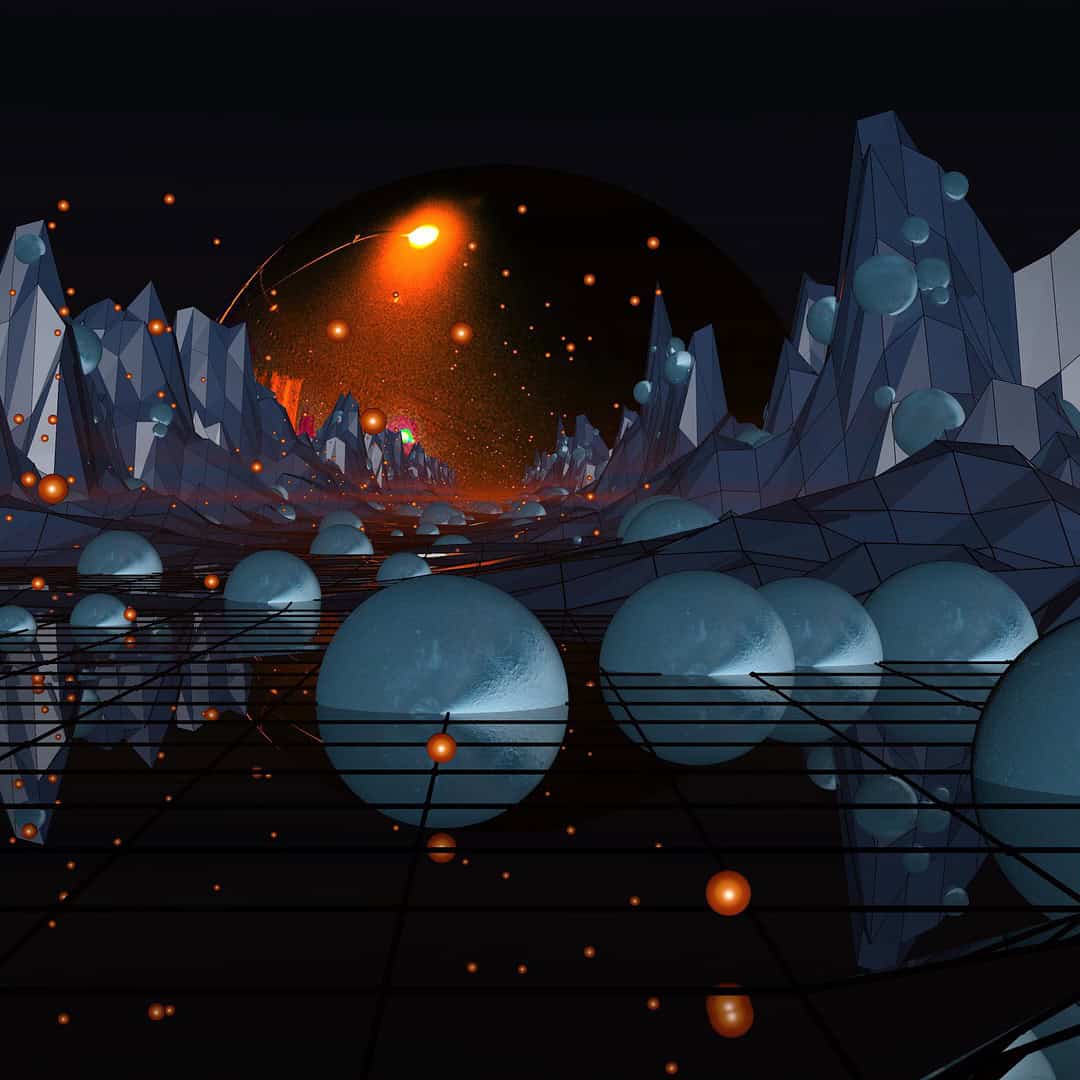
We can describe the cinema of the near future with three simple words: low-cost technology. I don't want to say that large international productions will die completely, on the contrary they will allow the industry to experiment with the latest technologies and innovate the world. But the same technologies are opening the doors to a new revolution: one that bypasses the big studios.
A more democratic cinema
Virtual Production (I also had to write the entry on Wikipedia Italy 😃), motion capture , internet, digital and above all low-cost training, allow you to no longer be blocked by heavy budgets. Even new directors, or technicians, can have their say with a sustainable model. In the past, low-budget often meant super-low-gain . Without the support of public funding (which, especially in our latitudes, only Chippuò 's friends and relatives support), it was impossible to think of producing a cinematographic work, even a medium-level documentary, without losing thousands of euros.
All this was reflected in the costs for the public, dictated by the large lobbies that made it inconvenient for many poor families to enjoy the Seventh Art. A day at the cinema for a family still has a cost comparable to months of Netflix. The benefits of digital distribution are enormous, but this is not intended to be the only method.
Personal skills are more important than budget
A great one-man-band, today he can potentially create a film on his own . And above all, a good quality film. Influencer participation can even help with distribution (I'll do an article on this soon, now that I think about it). It was unimaginable just a few years ago, right?
Of course, it has always been possible to make no-budget cinema. Thousands, perhaps millions, of young directors have done this in the past. But we were talking about very different results: without theaters worth tens or hundreds of thousands of dollars (Red et al.), without international studios, without huge teams of specialized technicians (which were rare and expensive, given the intrinsic difficulties in training), it was at most possible to create films that are not on the market and of a quality tending more towards the low level than the medium. Technical quality, but also limitations in storytelling caused by the technical impossibility of reproducing many ingenious ideas.
Today this is no longer the case. A well-equipped computer, with a top-of-the-line graphics card and a real-time rendering engine (including the most popular in the cinematographic field, Unreal Engine , is distributed free of charge...) allows you to obtain 3D graphics that have little to envy of the greats. And they can help small producers grow a lot in the cinema of the future.
Technologies for the cinema of the future
Let's analyze some of the technologies that could help us in the new cinematographic use. Initially I expected to include more than one in this article, but given the length I preferred to limit myself to talking about the fulldome video here, promising myself an article in the next few days that will continue the discussion.
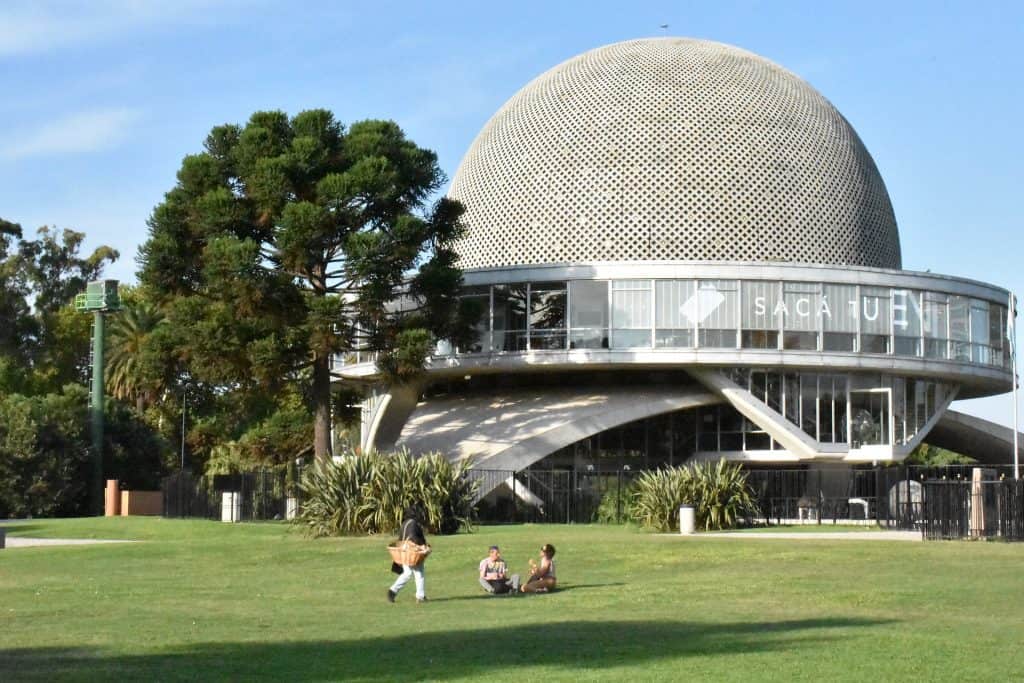
Fulldome videos
Fulldome video projection is a technology I've supported for years. It is the viewing of a video projection on the roof of a dome, to have a hemispherical vision. One of the best ways to feel "inside" a story, without using (and introverting) virtual reality viewers.
Brief history of planetariums
The technology is far from new. It is in fact used for scientific dissemination in planetariums around the world. The oldest dome-shaped construction known today dates back to 500 BC, built by the Etruscans. The history of art, and visits to churches and ancient structures in every corner of the world, teaches us how this form has often been used in various eras to represent the sky, Paradise and the firmament.
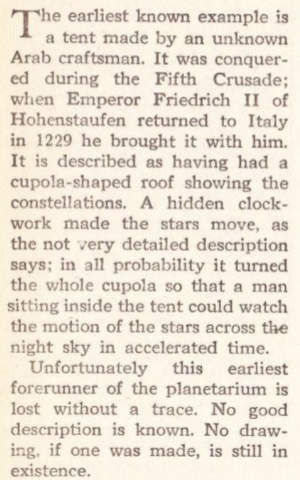
To learn about the first "working" (I mean, moving) planetarium, we had to wait until 1229 when Frederick II of Swabia , Emperor of the Holy Roman Empire , brought back to Italy a tent with a domed roof on which a mechanical planetarium was hung: a clockwork mechanism, with a globe in the center (representing the Sun), from which some arms that supported the then known planets emerged. To learn more about the history of mechanical planetariums, this 1965 book is interesting (reading is free and open).
The main disadvantage, or difference, of the first planetariums was the representation of the sky in reverse: the observer saw the solar system as if he were outside it, and not on Earth. This was still the case in 1774 when the astronomer Eise Eisinga single-handedly built what is now the oldest planetarium still in operation. You can visit it if you pass through the city of Franeker , Netherlands.
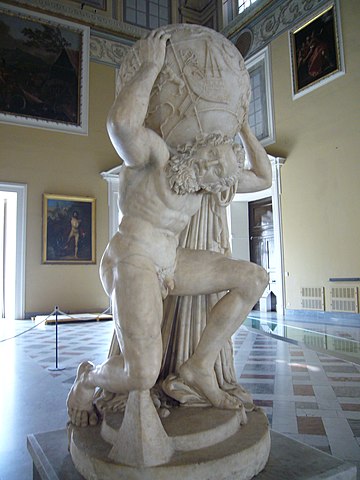
Between the nineteenth and twentieth centuries, innovations were many and rapid. The birth of Carl Zeiss in 1846 drastically increased the quality of optical instruments (which before then were produced without a preliminary design, let's say "by trial and error").
Then we moved on to increasingly precise mechanical planetariums, and the Atwood Globe in Chicago made history. A metal dome of about 5 meters built in 1913, with 692 holes to represent the stars, and a lamp to represent the Sun. For the first time, the concept of the planetarium was a modern one: the spectator saw the sky, as if he were on Earth under the true celestial vault.
The first modern planetariums
During the twentieth century, evolution continued, planetariums went from rare instruments available to kings and scientists to places of scientific dissemination open to all.
The first projection planetarium was built by Zeiss , who tested the first Carl Zeiss planetarium projector in its 16-meter dome in 1923. Even today, obviously updated, they are used by some large planetariums as an alternative to digital systems. In subsequent years, planetariums opened in Munich, Rome, Moscow, Stockholm, Milan, Hamburg and the first non-European: the Chicago planetarium. This continued around the world until 1983, the year of the digital breakthrough. The turning point, which led me to talk about planetariums in an article on the cinema of the future.
How the fulldome video was born
Here we are at a fundamental point: how the fulldome video was born.
1983, we were saying. We are in the United States, in Richmond. More precisely, at the Virginia Science Museum. Here the world sees a digital video projector in a planetarium for the first time. It was different from the projectors we are used to today: the Digistar I , made by Evans & Sutherland , used calligraphic projection. I admit that I am ignorant on the subject, I have never in my life had to deal with this technology. And the short Wikipedia entry isn't much help. Of course, it was a vector projection (therefore, by definition, unrealistic and not very detailed) and monochromatic (created by a single laser beam). Can anyone help us understand the working principle in the comments? It would be interesting, out of pure historical curiosity.
The fact is that then came the 90s with the first DLP and LCD projectors. In 1996, Japan's GoTo Inc. brought to life the Virtuarium , specifically designed for projecting stereoscopic science videos in a planetary dome. Two years later, Sky-Scan introduced SkyVision , the first fulldome digital animation.
The equipment was still prohibitively expensive, but we were close to what is now a fulldome digital planetarium. And which could become the cinema of the future.
Cheap fulldome cinema: is it possible?
The problem with digital planetariums was the cost of the equipment. A high resolution and good contrast video projector in the 90s and 2000s had very high costs, tens or hundreds of thousands of euros. Even more so with a good fisheye lens capable of projecting onto a hemispherical surface without obvious distortions. To solve the problem we must therefore go back a little, or rather a lot... To October 20, 1939, when the New Yorker James S. Conant presented to the patent office what would become patent US2299682A three years later.
Fulldome projection with convex mirror
The patent dealt with a filming and projection system (photographic, for the time) that we could define as "Newtonian", from the name of the inventor of the reflecting telescope. The technique was not used in planetariums until 2003, when Paul Bourke , an Australian university professor, revived it to adapt it to the then-growing business of small digital planetariums.
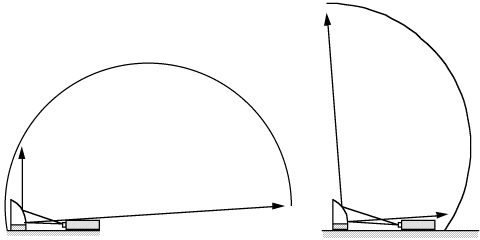
The principle is very simple: the image is projected through a classic lens for flat screens (a normal video projector, so to speak) towards a convex mirror very similar to the surveillance mirrors that until a few years ago could be seen in the corners of every supermarket. This mirror then deflects the image towards the ceiling of the dome, allowing the correct proportions to be maintained.
To maintain good detail, it is important to avoid secondary reflections due to ghosting as much as possible. That's why we usually avoid cheap surveillance mirrors, preferring (better said, making necessary) first-surface mirrors. They are mirrors with a reflective surface (silver, usually aluminum or silver), superimposed on a support. The opposite of what happens in normal mirrors (called second surface ) which have the reflective material behind another transparent one such as glass or acrylic (to protect it). For more information, mirror manufacturer Abrisa wrote an interesting article on the differences between the two types of mirrors.
The problem with these mirrors is their delicacy, and the risk of them blackening (which therefore must be treated periodically). For the purposes of fulldome projection, silvering with aluminum, which is less expensive, would be fine, since the system used for Newtonian telescopes has scientific needs of a very different nature (maximizing the frequencies of the reflected light spectrum).
Doubts from the scientific community
The magazine Planetarian , published by the International Planetarium Society , published various comments in its March 2001 issue on the probable use, in the future, of planetariums as places of entertainment unrelated to scientific purposes. Ken Miller is interesting when he mentions the owner of a small cinema who, after trying various technological innovations, maintained that the cause of bad takings is always a bad film, a bad script and bad acting. The message matters, not the medium. And I partially agree with this. I can argue from my experience that the same message through a better medium remains a better message.
Will the cinema of the future be fulldome?
In this article it is still too early to give a definitive answer. In the coming weeks we will analyze other details and other technologies, but I remain quite convinced that the fulldome can be an excellent compromise in the 21st century. Technology has accustomed us to increasingly immersive tools, and investments in virtual reality and augmented reality in recent years are pushing in this direction.
I used to be very excited about virtual reality, but lately I'm starting to think that its future may be less rosy than expected. I await Apple 's entry into the sector to have a clearer idea, for now the main sponsor is Meta Inc. , aka Facebook, a company that despite common opinion has never stood out for its ability to predict the future. A company that grew thanks to a single good idea of its founder Zuckerberg and its ability to attract investments, but which subsequently developed only thanks to the acquisition of good, almost alternative, ideas that work well in the same sector.
Virtual reality will still be quite successful for the purposes for which it was initially designed. It has strong potential in gaming and cultural and educational contexts, and its media push can serve to increase interest in an innovation of image narration to approach a “collective virtual reality”.
As I imagine the situation today, augmented reality will occupy us most of the time during the day. An analysis of the use of AR for interactivity in the cinema of the future will also be crucial.
As usual, I would be very happy if we could create a debate. I therefore invite you to comment, criticize or give new ideas under this article. And thanking you, I'll meet you in the next few days for a next trip.