
Current cinema, a modern derivation of the ancient analog, has five characteristics: static and linear structure , dual mode , episodic , mainly third-person , and non-interactive . We'll see later what each of these entries means, as I continue to think about what the cinema of the future will be like , about immersive cinema, and how to make a good prototype.
I started this article on a Swiss train, and finished it at the lovely Espai Joliu in Barcelona. I love trains, being able to work or relax while moving between two locations. Among my company benefits is the general season ticket for all means of transport in Switzerland: my luck. A few days off from work, I take the opportunity to reach Domodossola (the first Italian city across the border), or wander far and wide through the country of the Helvetii, which reserves surprises and magical corners almost everywhere.

How important is immersion in the cinema of the future
I am part of the current of thought, now increasingly in vogue, which imagines only one evolution for cinema: immersive cinema . According to purists, or “traditionalists”, cinema should be left as it is. But we have already seen that they are not necessarily right after all.
As you may have noticed, I am not at all regular in publishing articles on my blog. I don't like online editorial plans, I prefer quality over quantity, avoiding in-depth articles just to come out "Friday at 7". This article took me days of research, perhaps more, and blogging is clearly not my primary activity, but the result was a roundup of ideas and characters that I hope is a definitive answer to the question: what will the cinema of the future be like?
Few have seriously tried to innovate it, and in this article we will get to know some of them. Certainly not for lack of market. Rather due to lack of resources, lately increasingly projected towards the lucrative, and more manageable, virtual world.
This article is the sequel to: Innovating modern cinema
Advantages and disadvantages of modern cinema
I reflected on the advantages of cinema as it is conceived today:
- It can be used on the move, even here on the train.
- Other actions can be carried out, delegating the mere role of companion to the audiovisual.
- It can be used in company.
I ask you for other benefits , I really want you to comment. Moving on to the disadvantages:
- The methods of use have not been updated for decades.
- It is not able to “fill” all the senses of the viewer.
We therefore create a system, using existing technology, capable of minimizing these disadvantages.
Analysis of the advantages and disadvantages of modern cinema
1) You can enjoy cinema on the move
Clearly, “old style” cinema by definition is intended for theaters. However, to recover costs, a production must be accessible to as many people as possible. A good substitute for the small screen are virtual reality viewers, which allow you to view 360° stereoscopic videos.
2) You can do other things while watching a movie
Here virtual reality, in its current state, shows all its limits due to the complete isolation it creates. Bypassing this limitation is perhaps possible with augmented reality, or with a serious upgrade of existing virtual reality technology.
3) You can watch a film in company
Planning an update of the cinema system understood as "cinema", for decades there has been a technology used above all in scientific dissemination: the fulldome , or projections in a dome. However, the same system is not new to cinematic experimentation, even by the great masters of the past.
4) The methods of use have not been updated for decades
The first disadvantage of cinema is rather an observation. If, on the one hand, great directors or companies have brought immense innovations in shooting methods (think ofCameron 's Avatar with Motion Capture to the nth degree, or Industrial Light & Magic which together with Epic gave rise to a serious Virtual Production), little has been done for cinemas.
The transition from film to digital , without wanting to belittle it, is comparable to the change of our TV at home. Better quality, lower distribution costs, maximum stereoscopy but otherwise everything as before.
5) It is not able to “fill” all the spectator's senses.
A great innovator a century ago, today's cinema fails to offer that "something more" compared to other more modern tools.
Looking at an iPad or a modern TV, the field of view covered by the image is approximately 25°. The cinema screen, on average, covers a field of vision of 50° out of the 360 of the sphere (it depends a lot on the position in the theater). It is necessary to increase it, if we really want to return to offering that "wow" effect, due to immersion, which is worth the trip and the ticket.
The acoustics are already very good; Dolby Digital systems allow excellent immersion. What is still missing is touch , smell and, why not, also taste .
Because virtual reality is not widespread
I've been trying to understand why you never want to wear a headset, and a recent University of Glasgow paper/survey by Laura Bajorunaite ,Stephen Brewster , and Julie R. Williamson certainly helped.
The paper specifically deals with the use of VR headsets in public transport, which in itself is a location of frequent cinema viewing. But the discussion can be expanded, with the necessary adaptations, a little more generally.
At the base there are clearly reasons of personal safety , but also of comfort . Social acceptance is still far away, making VR users “stupid” in the eyes of other passengers. Progress is still being made to make your virtual world more integrated with reality.
For example, occasionally casting an eye on the real world with cameras installed on the headset, or having indications on the positioning of other human beings in real space, can reassure us. Full Virtual Reality must be avoided in favor of Augmented Virtuality ; as already defined in 1999 by Prof. Paul Milgram in his line of continuity from the real world to the virtual world.
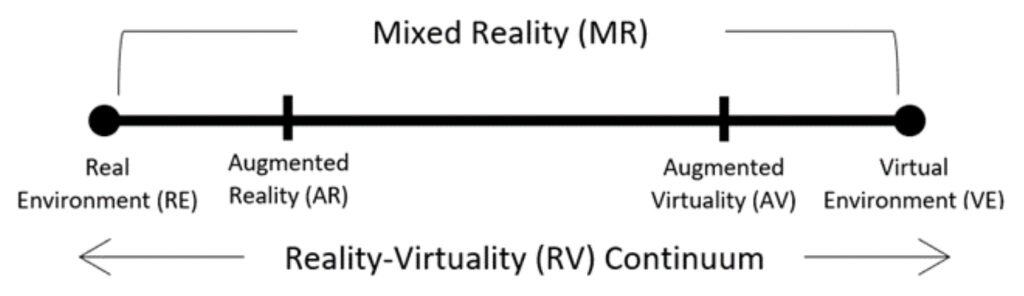
I invite you to read the paper to find out more, but the concept we need to take into account is that total immersion is a problem.
Immersive cinema
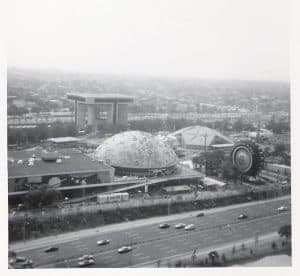
We have already covered the history of fulldome cinema in detail (article available here ), but To the Moon and Beyond is considered by many to be the first immersive film in history. The first to cover a 360° field of view, shot with the Cinerama technique using a single fish-eye lens, on 70mm film at 18 fps, and projected on the roof of a large dome approximately 30 meters high.
If its use was still in some way "didactic", we moved away from astronomical canons to instead bring greater involvement towards transport issues. The film also influenced Stanley Kubrick, who hired its creators as VFX consultants for the legendary 2001: A Space Odyssey. Lester Novros and our next protagonist: Douglas Trumbull .
Douglas Trumbull, a mission: save cinema
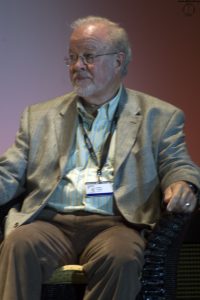
Douglas Trumbull was a man with a big idea: movies can be more realistic and more immersive than they already are.
I would have liked to meet him in person, he was a legend for me. I tried to write to him a couple of times, offering to visit him at his Trumbull Studios in the Massachusetts countryside , but unfortunately I got no response. Maybe the addresses I had were no longer current, maybe he was too busy as well as old. I don't know, the fact is that he is no longer among us except through his studies which still have time to change the history of cinema.
He was one of the world's greatest experts in special effects, first analogue and then digital. Creator of mind-blowing graphic masterpieces at the top of Hollywood production of the last century ( 2001: A Space Odyssey, Close Encounters of the Third Kind , Star Trek …). After he began to sense the decay of traditional halls, he dedicated his entire life to finding a solution. Which he also found in immersive cinema , as a true pioneer.
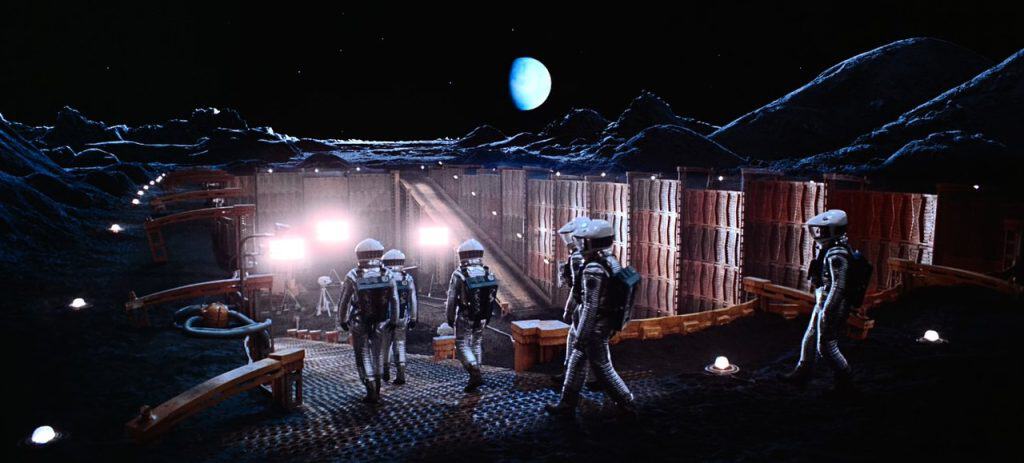
Perhaps because of his analog habit of always finding physical, real ideas rather than creating a new app or system to monetize users' time while they are alone or at home, Douglas was a multinational craftsman. He certainly had art in his DNA: his father, Donald (Pappy Trumbull to his friends) had been involved with VFX since the 1930s. Unofficially credited, he worked on The Wizard of Oz from 1939.
It was during the filming of 2001: A Space Odyssey that, at just 25 years old, Doug created the legendary psychedelic color flow “Slit Scan” based on the technique developed shortly before by John Whitney for The Woman Who Lived Twice .
Immersiveness is the future of cinema
I report part of an interview done by Filmmakermagazine.com with Trumbull himself.
If you look at the industry, it's moving more and more towards immersive experiences. Take virtual reality, for example; the problem is that people don't want to wear headsets. Immersiveness is what TV can't offer; when 3D caught on, everyone started making 3D TVs. But now no one makes them anymore.
I think the problem was miniaturization. When you look at a 3D image on the big screen, you have a 6-foot (1.82 meter) figure standing in front of you, whereas when you put it on a TV screen you have like a 6-inch (15 cm) figure. When I took the projects we were working on and played them on the TV screen to see how they looked, the effect was completely lost.
Douglas Trumbull
Magi Pod: innovating cinema
Douglas Trumbull in his later years developed a system with Trumbull Studios that combined many of the key points for renovating movie theaters. A redesign of both the camera and projection systems. At its core, 4K projection at 120fps solves a problem that Kubrick denounced over 50 years ago: blur at 24fps is unpleasant and unrealistic . This is why 2001: A Space Odyssey was already filmed at a high framerate, although almost no theater was equipped for reproduction.
Trumbull wanted to bring back the magic he himself felt when visiting the curved screens of the Cinerama in his childhood. But technically there were many problems to solve.
Troubleshooting 3D projection problems
For starters, stereoscopic projection requires halving the framerate (or doubling the projectors, which would be uneconomical). This means projection at 60 fps per eye.
Then there is another, more concrete problem: in 3D films both images (left and right) are recorded simultaneously . But they are then projected one after the other , alternately (right eye, left, right, left etc...). There is therefore a small difference that is not visually perceptible, but not negligible by our unconscious. Solution? Record the two images with a distance of 180 degrees / shutter , then alternately, as they will then be projected. This solves a second problem, which concerns the "cinematic look".
The high framerate is in fact not used in cinema because it makes the product too similar to video and TV . Trumbull therefore concluded to increase the flicker effect originally given by the cinematographic 24 fps by recording the left and right frames of the stereoscopy with a distance of 180 degrees / shutter. In addition to reducing the luminance of the screen (in the Magi equal to 14 FtL, less than 50 lux), but not reducing the gain of the screen itself.
The entire Magi patent aims to increase audience involvement: it translates into projection in the Magi Pod .
A small cinema, 70 seats all in the best viewing area; silver toroidal screen (curved both horizontally and vertically) with 3x gain to increase contrast and therefore immersion; 32 speakers for enhanced surround effect; rotating subwoofers capable of reaching 1 Hertz, creating a “4D” effect with absurd vibrations.
Trumbull's years of experience leading the technical departments of the biggest blockbusters, in a single, magical, immersive cinema. If knowledge must always move forward, it cannot be ignored in designing the cinema of the future.
Crossed reflections in fulldome cinema
When designing a fulldome cinema, the differences with the Magi Pod are many and fundamental. In fact, the Magi does not fill a dome, but only part of it. And you can't simply “widen” the field of view to make 360 degrees. There is a first big problem: crossed reflections.
Anyone who has worked with high-gain projection screens will have understood that a silver screen, amplified 3X, is a kind of mirror. Reflecting both the light coming from outside and the same image projected from one side to the other in the case of a convex screen. A problem that Steven Spielberg's 1991 production, Back to the Future: The Ride , also experienced; full-dome revival of the original Back to the Future .
By limiting the radius, and keeping spectators within an optimal viewing angle (therefore in central positions) the problem is reduced to almost zero. But a complete sphere must necessarily be a white screen with a reflection ratio less than 1, or the solution is yet to be studied. And in this case we will certainly have to do practical experiments in the near future.
Immersion in the cinema of the future
In fact, almost every previous study we talk about in this article is in some way related to the digital world. But, as you may know, I'm a firm believer in socializing and getting back to real life .
The room will have to resemble a space and time machine , where you will enter a totally new dimension for the duration of the screening, and from which you will emerge with a complete experience. Above all, in company.
The world is heading towards the conquest of space, which will initially be within the reach of a select few. Others will want to try new experiences, and will have to do so while necessarily staying on the ground.
Five senses for immersive cinema
The spectator will have to be the protagonist, so the narrative will also have to change . Let us remember well: without bothering intuition, the sixth, we still have five other senses .

Today's dual cinema can only cover two: sight and hearing . And, especially for sight, we can do a lot to improve the situation. Reading the December 2021 issue of Wired Italia (a magazine always full of interesting ideas) I found this paragraph in an article by Henry Jenkins (professor at the University of Southern California , director of the comparative media studies program at MIT in Boston for more than 10 years; not the latest arrival):
I am convinced that the metaverse will not be the future both because devices like Oculus viewers are terrible (especially for those who, like me, wear glasses), and because it is not the visual experience that guarantees the highest level of immersion, but the audio and haptic one, as demonstrated by decades of studies and pioneers such as Matthew Shifrin and Nonny de la Peña.
Henry Jenkins
Jenkins' idea, in many ways similar to mine, intrigued me to meet the musician Matthew Shifrin .
Matthew Shifrin: Lego and the cinema of the future
Matthew Shifrin is a young musician, blind since birth. Since he was a child, he has been passionate about Lego , which allows him to experiment, touch, "see" without eyes. Thanks to touch, and therefore also to Legos, he can understand how the world works; how he did it. By his eloquent example, he will never know what the Statue of Liberty is like without climbing it . And climbing the Statue of Liberty can be problematic… Therefore, a small Lego statue fulfills its function perfectly.
It is his thirteenth year of life. Lilya , a family friend, rings the doorbell. She approaches Matthew with light steps, looks at him and says cheerfully: “I have something for you!”. Matthew, confused, smiles at her as the woman hands him a package. The child opens it, touching a sheet entirely written in Braille : they are the instructions for building Lego structures by himself. . His eyes are shining, he is so happy. And he wants to get to work right away.
Lego for the blind
The story led him to found, years later, " Lego for the blind ". An association, with its website, where it is possible to download instructions like these for around thirty Lego products. And convinces the company itself to include them in new products. He also created a system to help blind people climb rocks, which is really brilliant.
Definitely an interesting character; but you may be wondering why we are talking about it in an article on the cinema of the future. I hear you, I was so taken by his story that for a moment I did too. Then I remembered where I wanted to go.
In his TEDx Talk at Suffolk University , starting at minute six, he explains it well and in a very entertaining way.
The blind in the cinema of the future
The point is: if the world can be immersive for a blind person, cinema can never be immersive in a similar or equal way to the real world if it is not immersive for a blind person . The fact that the cinema of the future can also be enjoyed better by people with disabilities can only be an excellent and stimulating side effect.
While studying voice and accordion at the New England Conservatory in Boston, he continues to look for ways to make modern life more suitable for people like him.
In the third episode of his podcastBlind Guy Travels , Matthew describes going to the movies with his friend Ben. The need to have Ben describe the visual part of every single scene, and even so not have a complete idea of everything, leads him to create with his university a tactile device for cinema.
With support from the New England Conservatory's Entrepreneurial Musicianship Department , Matt and his business partner developed a programmable vibration vest integrated with technology that mimics the sensations of flipping, flying and falling. This allows a new audience to effectively follow the Marvel saga Daredevil , a blind lawyer who becomes a superhero at night.
A few days ago I wrote an email to the conservatory asking for more details on this system, unfortunately without receiving a response. I plan to comment on this article if I hear anything in the future, it's interesting.
We will talk about experiential cinema
I have ready an analysis of the characteristics of current cinema and how they evolve into experiential cinema. How the latter is interactive, immersive, algorithmic and other important studies for the creation of our cinema of the future.
But I decided to end the article here, it was becoming too long and distracting. I have already copied the text into a new WordPress post, which I will complete as soon as possible and publish.
I renew the invitation to comment, to share doubts and criticisms, and above all to participate in this innovation if you like it. You can also write to me, my address is [email protected] . See you soon!