Introduction: The Revolution of Immersive Commercial Experiences
In fact, in the dynamic world of contemporary business, immersive events are completely transforming the commercial experience. However, this revolution is not only technological, but mainly human and relational. As such, companies are discovering how immersive events create authentic connections with customers. Furthermore, immersive events represent the future of experiential marketing.
Furthermore, this article is based on the valuable information contained in the book “Immersive Events” by Dario Riccio. In fact, the author, CEO of the usual neXt, offers a complete guide to transforming the human experience. Next, we'll explore how immersive events are redefining the modern business landscape. Above all, immersive events are becoming essential to any innovative business strategy.
We will see how these technologies overcome the traditional boundaries between physical and digital. As a result, companies can create memorable experiences that engage all the senses. As highlighted in our previous article on the state of immersive events in Italy , the national market is growing rapidly. Therefore, understanding the benefits of immersive events becomes essential for every innovative business. In fact, immersive events are revolutionizing the way of doing business in all sectors.
Collective Engagement: The New Era of Shared Experiences
In the landscape of immersive events , collective involvement represents a fundamental turning point for commerce. In fact, these technologies surpass the individual use of traditional devices. Instead, they create shared experiences that engage entire communities simultaneously.
Above all, the real revolution manifests itself through shared spaces where customers experience unique moments. Furthermore, this evolution represents an enhanced return to the social dimension of the commercial experience. Therefore, companies use technology not to isolate, but to aggregate audiences.
Subsequently, collective immersive events completely transform the way we perceive brands and products. In fact, from innovative fulldome projections to spectacular architectural video mappings, the possibilities are endless. However, the main goal always remains to create narratives that resonate emotionally with audiences.
As a result, artificial intelligence and generative systems make immersive events increasingly accessible. Likewise, sustainable technologies open up new creative possibilities for responsible companies. Mainly, these tools allow advanced customizations that increase customer engagement.
Innovations in Corporate Applications: Winning Strategies for Immersive Events
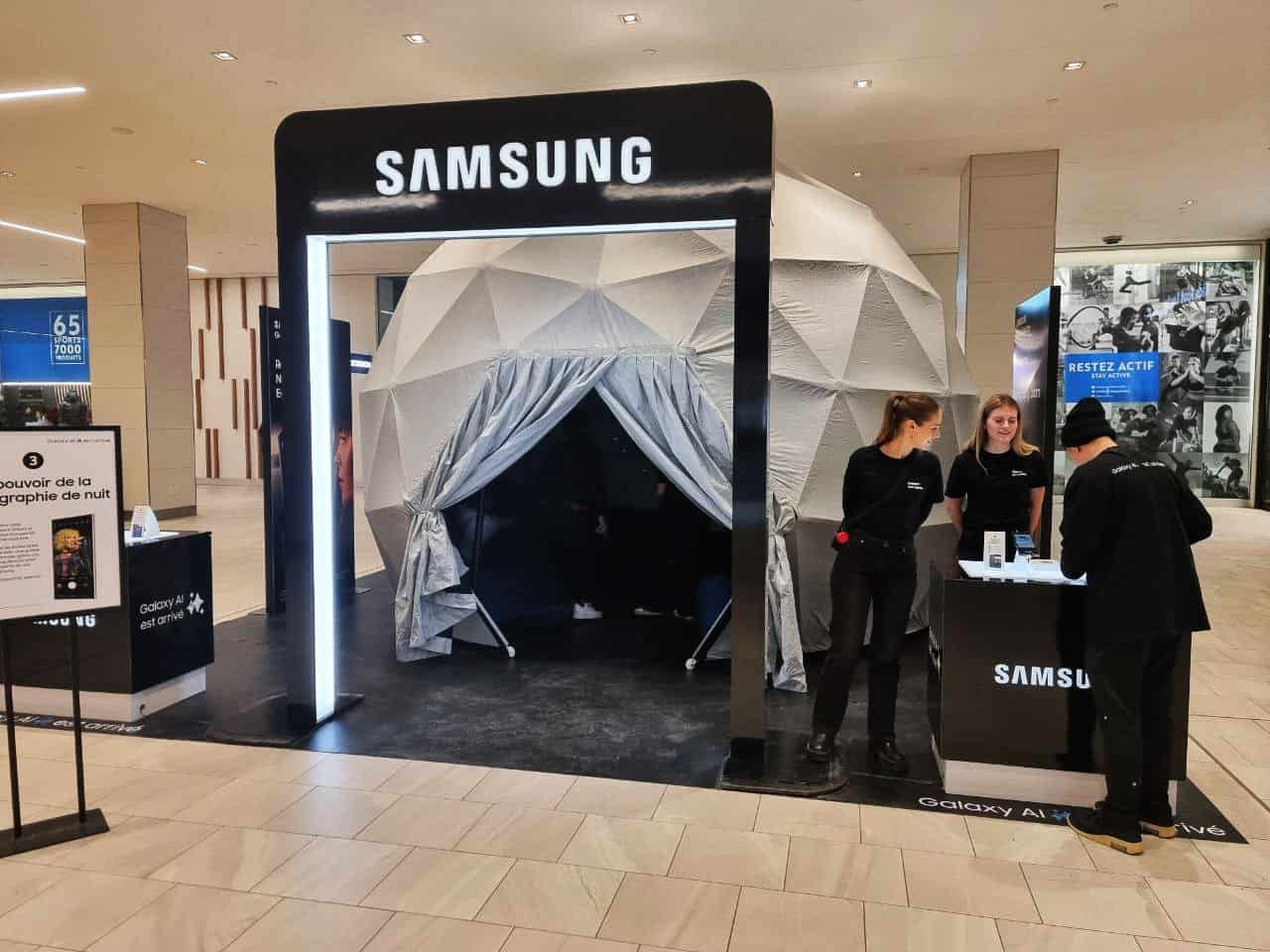
Immersive events offer multiple innovative applications specifically designed for corporate and corporate cultural events. In fact, international brands such as Audi , Samsung and Heineken use fulldome projections for groundbreaking presentations. Therefore, these hemispheric experiences allow for full-scale visualizations that create extraordinary emotional impacts.
Immersive Product Launches and Traveling Roadshows
Primarily, product launches through immersive events literally transport the audience into the creative process. Additionally, the hemispherical experience allows you to showcase supersized products with results that are impossible to replicate. However, emotional impact remains the most important element for commercial success.
Likewise, traveling roadshows bring immersive events to different cities, effectively reaching diverse audiences. Above all, modern mobile structures maintain message consistency while adapting to local contexts. Consequently, this approach is particularly effective for national campaigns that require territorial customization.
Temporary Museum Exhibitions and Cultural Partnerships
Subsequently, museums and cultural institutions use immersive events to create traveling exhibitions that expand existing spaces. In fact, the combination of educational content with a strong emotional impact makes these events particularly effective. Therefore, scientific, historical and artistic dissemination benefits enormously from these innovative technologies.
Additionally, these applications tie directly into the previously discussed experiential marketing strategies in businesses. However, integrating commercial and cultural objectives requires careful attention to user experience design.
Transformed Commercial Spaces: From Traditional Concept to Immersive Events
In the competitive trade show environment, gaining attention through immersive events has become a key strategic imperative. In fact, immersive technologies are radically transforming the concept of the traditional exhibition stand. Therefore, the approach completely overcomes static product displays by creating dynamic and engaging experiences.
From Static to Total Immersive Experience
Immersive event- based trade show stands represent a fundamental evolution in the approach to modern business presentation. Primarily, immersive environments use projections that surround the visitor on walls, floors and ceilings. As a result, a 360° experience is created that transports participants into the world of the brand.
Furthermore, the spatial narratives transform the stand into a path where the visitor progressively discovers the company values. Above all, this structured multi-sensory journey completely overcomes the physical limitations of the traditional exhibition space. However, integrating multiple technologies requires careful planning to maximize communication effectiveness.
Next, by combining video mapping, interactive projections, sound design and dynamic lighting, the immersive events stimulate multiple senses simultaneously. In fact, recent studies show that stands with immersive elements record 75% increases in dwell time. Likewise, there is a 45% increase in qualitative interactions compared to traditional stands.
Key Immersive Event Technologies for Commercial Impact Stands
Several immersive event technologies are completely redefining the possibilities of contemporary commercial exhibition spaces. Primarily, multi-wall projections use synchronization systems that cover multiple stand surfaces simultaneously. Therefore, continuous and coherent visual environments are created that completely envelop each visitor.
Furthermore, interactive floors transform surfaces into dynamic interfaces that react to the movement of participants. As a result, these systems drive visitor flow by offering contextual content based on the specific location. However, spatialized sound design complements visual experiences with immersive acoustic dimensions using directional sound systems.
Subsequently, holograms and volumetric displays create the illusion of three-dimensional objects floating in the surrounding space. Above all, these solutions are particularly effective in attracting attention in crowded and competitive exhibition environments.
Permanent Showrooms and Pop-up Experiences for Immersive Events
In addition to the temporary exhibition context, immersive events are also significantly transforming permanent showrooms. In fact, hybrid showrooms combine physical products with digital overlays allowing complete visualizations of variations and customizations. Therefore, it is no longer necessary to physically have all the models available in the exhibition space.
Digital Twin and Full Scale Configurations
Primarily, immersive event- based showrooms use 1:1 scale projections for comprehensive exploration of complex products. Furthermore, cars, industrial machinery and furniture can be displayed in different configurations without traditional logistical constraints. However, this technology requires advanced rendering systems to ensure realism and visual precision.
As a result, customers can explore every detail and customization through intuitive and engaging interfaces. Likewise, digital twins allow realistic simulations of use in different contexts. Most importantly, this technology significantly reduces setup costs while maintaining an excellent user experience.
Pop-ups and Temporary Installations for Immersive Events
Subsequently, immersive event- based pop-ups create temporary installations in strategic locations with concentrated impact. In fact, shopping centers, squares and events become stages for memorable brand experiences. Therefore, these spaces are ideal for product launches and seasonal activations that require high visibility.
Furthermore, innovative examples include “Walk-In” pop-up stores developed specifically for the contemporary fashion sector. However, visitors pass through sequences of themed rooms with 360° projections, interactive floors and augmented mirrors. As a result, they have a narrative experience that communicates the brand's identity before seeing the physical products.
Immersive Retail: Reinventing the Shopping Experience through Immersive Events
Faced with growing competition from e-commerce, immersive events are driving the evolution of traditional physical retail. In fact, the points of sale are transformed from simple shops to experiential spaces where the product becomes part of broader narratives. Therefore, these technologies create memorable environments that offer multisensory, social and deeply engaging experiences.
Retail Environments Transformed by Immersive Technology
Immersive events are redefining the retail space through narrative architectures that emotionally guide customers. In fact, the entire design of the store becomes an experiential journey where adaptive lighting, environmental projections and sound design create specific "emotional zones". Furthermore, each area is designed to arouse targeted purchasing sensations and behaviours.
Primarily, interactive shop windows transform static displays into dynamic interfaces that react to passers-by, capturing constant attention. However, these systems also work when the store is closed by inviting interaction through engaging and informative content. As a result, customer engagement extends beyond traditional opening hours.
Next, the changing spaces use projections and programmable lighting to completely change appearance based on times of day. Likewise, specific seasons and campaigns can transform the environment without significant structural investments. Above all, this flexibility allows continuous renewal of the experience while maintaining freshness and attractiveness.
Key Technologies for Immersive Retail
Various immersive event technology solutions are completely revolutionizing the in-store experience of contemporary customers. Primarily, interactive digital signage recognizes customers by personalizing content based on demographic and behavioral data. Furthermore, with your consent, use your purchase history for personalized suggestions and offers.
However, magic mirrors and virtual dressing rooms allow you to virtually "try on" clothing, accessories and cosmetics without the need to change. As a result, customers can view different options quickly increasing satisfaction and reducing decision time. Likewise, smart shelves react when a product is lifted by activating contextual information automatically.
Subsequently, notable examples include the skincare brand's “Wonder Room” that uses immersive events for microscopic visualizations of the skin. In fact, visual effects of active ingredients and natural environments transform complex scientific concepts into engaging sensory experiences.
Future Trends: Sustainability and Accessibility in Immersive Events
The immersive event landscape is rapidly evolving with innovations constantly redefining creative and application possibilities. Indeed, by looking to the future, we can identify emerging trends that will shape the evolution of the sector in the coming years. Therefore, sustainability and accessibility become fundamental pillars for the responsible development of these technologies.
Sustainability and Low Environmental Impact Technologies
Growing environmental awareness is driving significant innovations in sustainable and responsible immersive events . Mainly, scenographic components are developed made with completely biodegradable materials designed for circular reuse. Furthermore, these materials maintain aesthetic and functional quality while drastically reducing the overall environmental impact.
Subsequently, new generations of laser projectors and lighting systems offer drastically reduced energy consumption compared to previous technologies. However, advanced energy efficiency does not compromise the visual quality and emotional impact of immersive events . As a result, companies can reduce operating costs while maintaining high quality standards.
Additionally, integrated renewable energies include flexible solar panels and piezoelectric floors that partially or fully power the experiences. Above all, these innovations become an integral part of the message and aesthetics of the experience, creating coherence between form, content and corporate values.
Accessibility and Inclusive Experience for Everyone
An emerging trend in immersive events is the growing focus on accessibility for diverse and inclusive audiences. In fact, universal design creates experiences designed from the start to be accessible to people with different abilities. Therefore, sensory preferences and cultural backgrounds are considered in the initial design phase.
Primarily, adaptive interfaces recognize specific visitor needs by automatically changing parameters such as volume, brightness, and subtitles. Furthermore, content simplification occurs in real time based on individual needs identified by the system. However, this customization maintains the quality and emotional impact of the original experience.
Next, integrated assistive technologies include descriptive audio guides, sign language translation, and naturally embedded tactile paths. Consequently, inclusiveness becomes not only an ethical imperative but also a competitive advantage by allowing previously excluded segments to be reached. Likewise, this attention enriches the experience for all participants by creating universal added value.
Conclusions: Immersiveness as a Driver of Commercial Innovation
At the end of this journey through the frontiers of immersive events , it clearly emerges how these technologies represent a profound transformation. In fact, this is not simply a passing trend, but a fundamental change in business. Therefore, immersion emerges as a powerful tool for creating meaningful connections in an age of digital fragmentation.
Furthermore, this article was based on the valuable information from the book “Immersive Events” by Dario Riccio. In fact, the author offers a comprehensive guide that turns vision into concrete business reality. Subsequently, from fulldomes to video mapping, from interactive installations to reinvented retail spaces, immersive events completely redefine expressive possibilities.
Above all, the future of immersive events promises to be a territory of continuous hybridization between physical and digital. As a result, technological innovation will increasingly serve shared human experience by creating authentic value. However, the integration of artificial intelligence, generative systems and sustainable technologies converges towards a horizon where technology amplifies the social dimension.
Therefore, the deepest value of immersive events lies in the ability to create commercially effective spaces of shared wonder. In fact, this collective dimension represents not only the future of business, but a response to the human need for authentic connections through memorable and engaging experiences. Ultimately, immersive events will continue to transform the global business landscape in the coming years.