21st century. Earth. The world of influencers. If we had said 50 years ago that in a few decades there would be more speakers than listeners, someone would have smiled at us.
How marketing was born
The progressive decrease in media censorship in the Western world, which began in 1766 in Sweden and has spread to the present day (at least, until a few years ago...) has favored the birth of a large number of publishers. The number of publications increased considerably, newspapers were increasingly present and communication became a real branch of the economy.

Until the 1990s, the situation was still manageable and predictable by a marketer. There were some local publications and some national ones . First on paper , then on the radio and finally on TV . With a brief exploit of newsreels , when radio frequency imaging was still a future dream. The medium changed, but the language remained overall similar.
Advertising agencies were born during the industrial revolution, when for the first time the supply of goods exceeded the demand. It was therefore necessary to find buyers for this sea of products, to convince them that a product was better than its competitors. Initially, in the 19th century, it was still quite simple, even if there was no past to draw on. We then tried with a few short articles in the printed paper, a few posters on the corners of the cities and the product was brought to the attention of the majority.

The first publicist in history , founder of the French weekly La Gazette in 1631, was Théophraste Renaudot . A visionary close to the poor, who in addition to having founded what we can consider the first modern magazine in history, also created a sort of temporary agency to reduce the poverty of the neediest.
Finally, returning to advertising, the higher the budget, the more local newspapers could afford to advertise. Until we can afford national ones, or even better expand to other nations. Elementary.
But the cinema? How were films advertised in the last century?
Marketing for cinema in the twentieth century
Film advertisers of the early years (first French, then New York and finally Hollywood) began by copying theatrical advertising , only to realize that they had to conform to traditional industry communication.
In fact, initially the idea was to sell "an experience", not a product. The cinema was sold more as one would sponsor a nice trip, rather than as a nice car.
Last but not least, the initial film production was not very regular, with no precise predictions as to whether, and when, the film would be released. Without having great ideas about future revenues and the best duration of projections to maximize profit.
It may seem absurd today, but we must consider that at the time there wasn't much data to draw on. It was a new world, made of experimentation.
Cinema from product to lifestyle
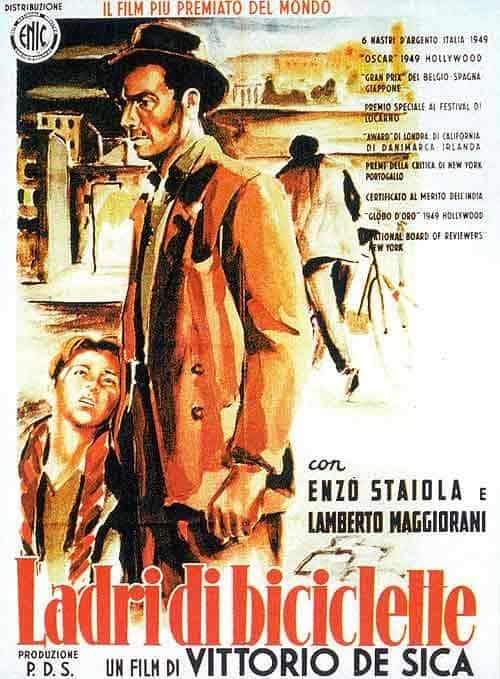
Having to sell a product that was by definition superfluous discouraged even the best advertisers. Nobody had the physiological need to see this or that film in particular, nor a film in general. After numerous experiments, and gradually, it was understood that it was necessary to sell an experience; a community had to be created . This need to see the film, it had to be somehow linked to man's primary needs .
It was necessary to create urgency, FOMO , in the public to purchase a product that could only be appreciated later.
And to do this, it was important to leave a strong and specific message to society .
Changing lifestyle , creating movements , ideologies . Having a very strong impact on the society of debt and consumerism, deliberately desired by the United States government after the Second World War to revive the fortunes of a severely tested economy.
That consumerism that managed to improve the lifestyle of Americans first, and then of Europeans, until the 80s of the last century, when the "American dream" ended. Cinema supported this dream, and those in charge of cinematographic communication wanted to enter the hearts of the population.
Collectibles and community marketing maturity

So not just living rooms, not just TV rights, not just VHS and DVD. The culture of “gadgets” developed , collecting , image rights on any object with the shape or name of your film or your protagonist.
After these first tortuous decades, film marketing finally achieved the desired results. Cinema created trends, and then followed them. Starting from the 1950s, there was a great crisis: the birth of TV caused a strong loss of turnover for cinemas. But studios were getting closer to their audiences, starting to design films that followed current trends. Rebellion movements , entertainment , fashion , rock 'n roll ... Everything to be able to conquer the public, if not in the theater, at least on TV at home.
The TV itself then went from being a disadvantage to a great advantage. Indeed, the use of motion advertising and trailers proved ideal for cinema; which then is nothing other than the precursor of that same daughter and traitor television.
Film Marketing – Recommended readings
Books in English
For more information, there are various studies on marketing in cinema. Some are more focused on the practical part, a sort of manual, such as Movie Marketing: Opening the picture and giving it legs by Tiiu Lukk (Los Angeles: Silman-James Press, 1997), Open Wide: How Hollywood Box Office Became A National Obsession: Inside the Blockbuster Movie Factory by Dade Hayes and Jonathan Bing (New York: Miramax books/Hyperion, 2004) or Marketing to Moviegoers: A Handbook of Strategies Used by Major Studios and Independents by Robert Marich (Boston: Focal Press, 2005).
Other works are more theoretical, ideological. Like Global Hollywood 2 , by Toby Miller (London: British Film Institute, 2019), which studies the influence of cinema, especially American, on global society.
Studies available free of charge in PDF
An important 2013 study by Sheldon Hall , downloadable for free from this link (website of the Sheffield Hallam University Research Archive), entitled " Jerry Pickman: The Picture Worked. Reminiscences of a Hollywood publicist" , cites classics such as The Greatest Show on Earth ( Cecil B. DeMille , 1952), The Lonely Horseman ( George Stevens , 1953) or Psycho ( Alfred Hitchcock , 1960) and famous people such as Adolph Zukor or Alfred Hitchcock , highlighting the human aspect of marketing.
It reminds us that film advertising has its uncertainties, but it is also a human endeavor involving individuals like Jerry Pickman , the great publicist who died in 2010 and dedicated over 50 years to film marketing. Whose dedication can turn even an ordinary film into an extraordinary success. Last but not least, this seemingly unique view of the film business shows us how film marketing developed on an industrial scale in the early 1980s, when the concept appeared that “they now sell films like they sell hot dogs, like everyone else does”.
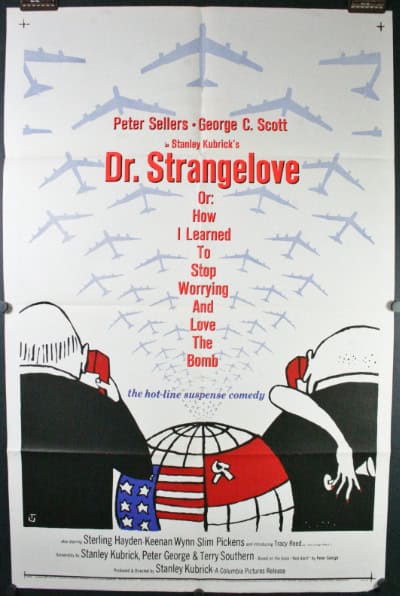
One final reading tip comes from Stanley Kubrick . It's interesting to see marketing through the eyes of a director, to understand how art and business can be reconciled. “ Stanley Kubrick and the Marketing of Dr. Strangelove ” (1964, PDF download here ). Sometimes these interests converge, often not. In this text Peter Kramer , drawing on the archives of the London University of the Arts , describes how Kubrick was directly involved in the American marketing of Doctor Strangelove, from the early stages. To the point of committing to neutralizing any competitor.
During the film's production and first promotional campaign, the famous director was very skilled at self-promotion; although the marketing materials used for the marketing campaign following the film's release had focused on common topics such as celebrity, comedy, and sex.
The beginnings of social media marketing for cinema
In 2013, the Toronto Silent Film Festival was among the first to use Instagram to promote itself. The method was studied by the Canadian marketing agency Cossette , and was very different from the usual ones: they uploaded frames of silent films to the American social network, which by scrolling the page composed the film in the eyes of the user. Original method, although it did not gain a large following due to the premature state of the social network at the time.
Out of curiosity, here are the accounts: tsff_1 , tsff_2 and tsff_3 .
Even in those early years of social media, people were looking for ways to bring traditional promotion to it. Think of the trailers, which however sometimes had to be drastically reduced given the duration limits of the videos. With today's eyes, systems are once again ineffective even if used. As if to say, “at least I'm on social media”.
The film becomes functional for marketing
Likewise, more functional campaigns began to be designed. Staying on the Instagram theme, the 2013 film about Steve Jobs saw its official account , with pieces of the film , stills , short videos and photos with significant phrases . In the same years, new aspect ratios began to be experimented with for films, at least independent ones, without giving up much-felt criticism from cinemascope purists.
All to get closer to the public , who changed habits: from TV and PC, the most used screens became those of smartphones. An attempt was made to use the square format , as Xavier Dolan did in the film Mommy . To then quickly move to the vertical format , capable of filling small portable screens as best as possible and reducing spectator distractions.
In recent years we have also moved on to real blockbusters in vertical format . Long-form vertical videos, however, can be less usable, or cause loss of concentration, given the lack of filling our peripheral vision. Similarly, the Russian director Timur Bekmambetov in 2021 made his " V2. Escape from hell " with scenes in vertical format, using the screenlife technique (shows images as if they were taken by a smartphone, even in selfie mode) [ UPDATE : this is a typo, it was just an idea that was later abandoned to make the film in vertical], and following the series distributed in 2019 exclusively on Snapchat Dead of Night .
Already a Snapchat exclusive theatrical release, it shows the many attempts that filmmakers, producers and companies were, and still are, making to approach the modern world.
The importance of human sociality
The era of influencers
What was missing in the early years of social media was, paradoxically, the social side. People want to meet other people, not see ads. They want to communicate, feel empathy for someone, feel less alone. This led to the natural evolution of social media marketing: the beginning of the era of influencers, and influencer marketing for cinema.
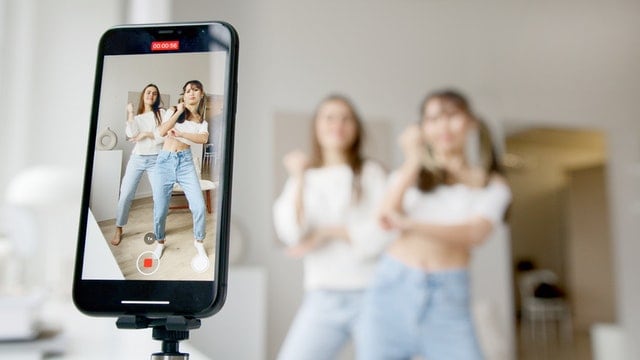
Today is the era of influencers . Which, among other things, are becoming increasingly important in the world of culture too. It is no longer a film critic, a trade magazine or an important media that establishes the success of a production; also due to the increasingly marked lack of that ancient journalist/reader trust, lost after decades of partiality (almost always economic interests) in the publishing world. And which continues to destroy itself even today, as demonstrated by the attitude of many users on issues such as the Covid-19 pandemic and the war in Ukraine.
Instead, it is the people on social networks who are listened to with trust; first of all the influencers, but also those who count less, " normofollowed " users who break into the hearts of friends and relatives with even more force.
In short, if Gianni says I have to see this film... It means I have to see it.
The actors / influencers
So is influencer marketing suitable for the film industry? Of course, reviews in traditional media such as print or television and radio still play an important role in obtaining publicity for films and television productions .
However, we have seen that the role of traditional media in film communication has diminished in favor of more genuine interpersonal communication (good old word of mouth, technologically revisited).
The most viewed "advisers" are independent cinema enthusiasts. They usually know their audience, first of all because they are similar to them and also through continuous interaction via chats, comments and quotes. The confidence given by having communicated directly, privately, with one's "legend" is unparalleled (those of you who have had dinner with a famous person can more or less understand the effect). And they often know how to offer original perspectives that no one else can.
Now, let's take it a step further. Let's imagine for a moment that the influencer we are following, with whom we are actively talking, is an actor from the same movie . Or, let's say, even just a technician. And who, like a friend, lets us follow the various phases of production, behind the scenes, even asks us for opinions on the story and, if we were experts, on the technique for making the film itself. How would it end? We would certainly have a discount or some advantage, given the "friendship" between us. Even the t-shirt, the hat, the key ring, even the possibility of being present on the set or at the premiere, or of being part of the cast perhaps with an appearance. The possibilities are endless, as is the desire to go and see "our" film . The film in which a friend participates. The film in which we ourselves took part. And what do you think, wouldn't we tell everyone? Here, this is the heart of social media marketing for cinema. The marketing of trust, the return to word of mouth and closeness between people.
The importance of engagement among influencers
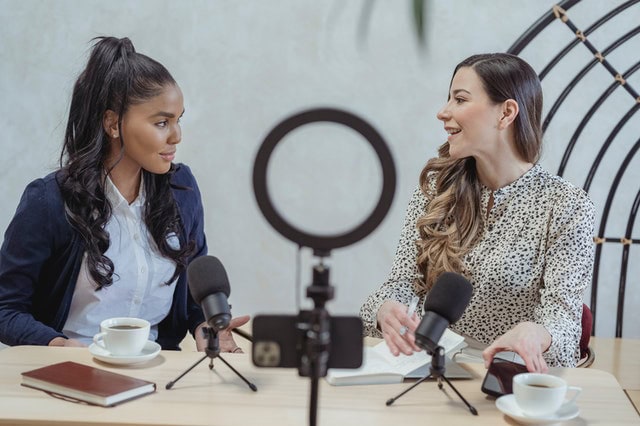
There is a lot of collaboration in the influencer community. First of all, they are colleagues, and colleagues understand each other. Then there is a mutual convenience in getting to know each other, especially in being seen together. Fans of one become fans of the other, the possibilities for earning and growth become more numerous.
So, once you have plenty of influencers in your production, it becomes almost automatic to involve external people. Other people who also need to be emotionally involved. Then, invitations to the VIP area and front rows at the previews, dinners with the crew. As for fans, but the activities must obviously be more "personalized". The influencer is used to being considered important, and it is therefore more complex to make him feel "better" than others.
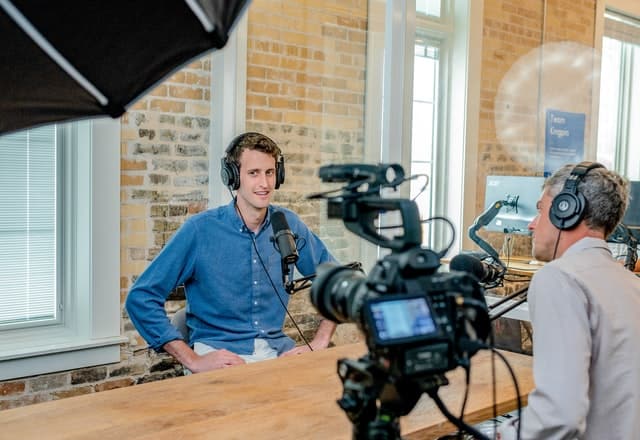
It's important to have your actors interviewed by other influencers , similar to the old press. Also target cinema expert bloggers , podcasters and Youtubers . They too will be happy to be able to create interesting content, and at the same time make themselves known to the fans of their little stars.
Of course, personalities connected to the film industry are important, but we absolutely must not limit ourselves to them . There are many people, many influencers, even small ones, who adapt for various reasons to that particular product we are creating. And, as a result, their audience will be targeted.
Another advantage is that all of this is cheaper than advertising in the past . It requires more effort, mental but also physical, but with the choice of the right people upstream, the results can be unimaginable.
Only one ethical doubt remains: a good actor, but little capable of socially engaging an audience, may no longer have the possibilities he had in yesterday's world .
Does influencer marketing for cinema have a future?
This is just a final parenthesis... Because here we are planning the future, and it is right to be critical. I'm not here to sell you social media, but to think together.
By now the Elites have understood the importance of social media very well. This could perhaps be a bad thing, because those in charge always have an ancient idea in mind: the people are idiots . For goodness sake, I could almost say it's true. We let ourselves be twisted like socks every day by various propaganda (just think of this period, I am writing during the invasion/special operation in Ukraine, the name changes depending on the interlocutor).
What's the problem, aka luck, in all this? That among billions of people, every now and then someone drinks one glass too many and starts thinking. And an article comes out in some strange blog or semi-unknown social media profile. That others, even just 10 people, read. And if something is patently absurd, and that article calls it out… These people agree with it. And then again, and again, in a logarithmic scale of shares that fills the web in a few days.
I was saying, problem and luck. Luckily , because the popular myopia of the past no longer exists. In the end, many things become clear even if the politics of political correctness leads to not reacting. We are silent, but at least we know. Problem , because this pattern is artificially reproducible. And those who deal with political propaganda know this well... We therefore arrive at the paradox that it is no longer the journalists financed by the System who tell us what the System wants us to know, but our own friends. Reporting fake news, or rejecting news that is true but which is not good to disclose.
Will this be a problem for social media? I'm afraid so, in the future. It will take time, but like yesterday's print and TV, online friends will one day lose our trust. Socially, it is worrying on multiple fronts. But from a business perspective, let's start thinking about what comes after the influencer era.
And we maintain quality . Which, beyond any marketing, is the key to success.