
During a break from work in the Swiss mountains, under the gray sky of early February, I get lost thinking about modern cinema . What he sees in the empty theaters (and no, Covid has only part to do with it). The one that sees series work more than feature films. Hollywood , like Bollywood or our Cinecittà , focuses everything on this. But can modern cinema really go on like this? Or, at least, do we really want to lose a place of entertainment, socialization, as important as cinema was in the last century?
A brief history of modern cinema
When Rossellini was at "modern cinema"
I fondly remember when my father told me about the "Patini" cinema in Castel di Sangro , our hometown, during his childhood. Born in 1937, immediately after the Second World War the situation in Europe was anything but rosy. There was a lot to rebuild, we lived in a climate of constant tension due to the Cold War.
The United States was the only power in shape, and mass cinema could only come from there. True, we were in the period of McCarthyism with not very clear rules. This name comes from Senator Joseph McCarthy , who persecuted and imprisoned hundreds of progressives in 1953/54. In a climate of collective political hysteria, every innovative idea was associated with the Communists. Figures such as actor Charlie Chaplin , directors Jules Dassin and Joseph Losey were forced into exile. The rebels, above all the " Hollywood Ten " (10 screenwriters who appealed to American freedom of expression), rightly ended up in jail. Walt Disney and others saved themselves by denouncing their colleagues... If you can dream it, you certainly can do it (which after all, this phrase is from Disney Imagineer Tom Fitzgerald , not from Walt as is commonly thought).
United States cinema conquers the world
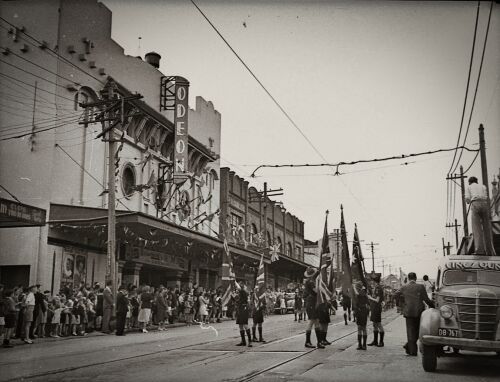
Despite this, America emerged with its head held high. The history of cinema teaches us that the major film producers joined forces under the MPEAA (Motion Picture Export Association of America) to subdue their opponents in the international market, and the country's government led by Roosevelt first and then Truman took advantage of its hegemonic power to circumvent foreign protectionist laws.
But was it all easy? Actually, no. In any case, the public had to be convinced , they had to be given serious reasons to reach the theaters. TV grew in importance every year, and for this reason attention focused on technological and stylistic innovation . Among these, color was a cinematic exclusive. This Italian article by Domenico Palattella is interesting, from which I quote:
Color must in fact be understood as the natural evolution of black and white and of Cinema as an art, because if Cinema is the art of reality, color also had to necessarily rise to enhance the emotions that only this Art can offer in such a penetrating way, yesterday as today.
Domenico Palattella
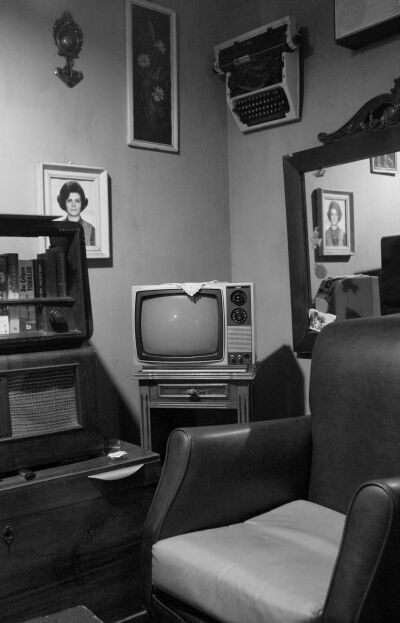
Color films went from 20 to 50% of productions in the early 1950s, becoming almost all in the 1960s. Kodak Eastman Color film (and, before that, Ferraniacolor in Italy), which reduced costs, came to the rescue due to its cheapness; but it was only a consequence of what the market was asking for at that time.
Another innovation was the change in format . The 4:3 ratio of TV gave way to the more attractive widescreen format. Then again, young people were attracted to the new drive-ins . There was a real competition, TV vs Cinema. The baby boom convinced filmmakers to look for every valid way to seduce young people, obviously also producing TV series: they have always been popular. But the cinema, understood as a hall, was not left to itself.
Attendance at Italian cinemas throughout history
I was saying, my father... He was dying to go to the cinema, and Italy wasn't America . There was very little money, and 100 lire for a child was really a lot. This way we saved money, and yes... Sometimes you could enter the Patini Cinema for free by winking at the owner. But what a desire to go to the cinema!
Is it still like this today? How is cinema attendance rate evolving around the world? For Italy, Istat comes to our rescue. A 2018 report photographs the situation from 1993 to 2017. In this period, the percentage of people who went to the cinema more than 7 times in a year fell by almost 20%. On the contrary, the percentage of those who went at least once increased. Maybe, just to remember if the place hasn't changed a bit. This increase has been aided by the increase in female audiences (who, strangely, previously seemed less fascinated by the big screen).
Other important data? More and more over 65s go to the cinema : from 6.3% in 1993 to 15.2% in 2017. Positive or alarming data? I'm honest, I can't convince myself of the answer. To close this quick overview (if you're curious, read the report ), the main reason why people don't go to the cinema is (coincidentally): "I prefer to watch films at home".
Modern cinema costs too much
And sadly now it's boring.
But let's go back a bit. Let's enter our virtual time machine, and go to the first half of the 20th century. Even in Italy, in 1940 on average every inhabitant went to the cinema 8 times a year . In 1950 thirteen, to reach a peak of about 17 times in 1955. From there, a steady decline. 10 admissions per year in 1970, 4 in 1980 to stabilize at around two or less in the last 30 years. Causes? TV (and followed by the internet), but also ticket prices constantly increasing until 1990. And, I would add, the lack of real innovation in an increasingly innovative world. Don't get me wrong: in production there are, and many. It is in the use that innovations are missing , and perhaps this is even more important.
Movie theaters in the United States from 1930 to today

A look overseas? The US market is certainly more authoritative than the Italian one , if only for the numbers. But it's no different… In the early 1930s (about 35 years after the first movie theater opened in 1894), over 70% of the population went to the movies at least once a week . 70%! This percentage dropped to around 40% in 1935, and then exceeded 60% again in 1944. Since then, a continuous loss of spectators: in 1950 it was 30%, in 1960 less than twenty. And 1964 was the year that, in the US market, marked the stabilization of regular cinema goers at around 10% of the population.
One clear reason, even in the United States, was ticket price . Hollywood has always been an industry whose rulers celebrate themselves as superior to the “plebs,” no matter what anyone thinks. And in lean times, they would never give up part of their millionaire earnings. If there were fewer spectators, the price goes up. Simple. Too bad he's a dog chasing his tail.
Cinemas create sociality and sharing
Money wasn't the only reason, however: there was also a social reason (which returns cyclically): during the Great Depression, in the 1930s, cinema was a way to escape the cold, the heat and the loneliness . Movie theaters brought together strangers, side by side sharing the only social moment available to everyone.
3D films, the only real innovation of recent years
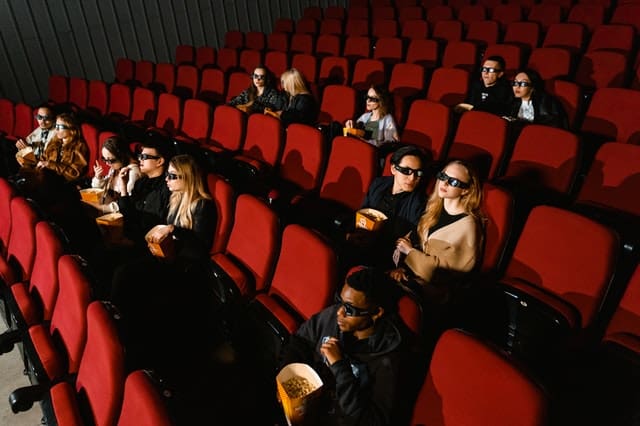
I remember the time when stereoscopic cinema , “3D movies”, came back into vogue for the last time . Not many years ago, I was in the middle of my film academy (2011, good times😊). Here, it could have been a small breath of fresh air. But the idea was rejected, officially because it didn't work. However, between the need to accustom the public and the time needed to update theaters and productions, the real reason for the failure to achieve results was (once again) the desire of the cinema world to speculate on customers .
Stereoscopy, all things considered, was not a way to offer more to users. It was a way to drastically increase the cost of the ticket. And I myself, as much as I loved seeing some films in 3D, often preferred the 2D version in order to avoid the 12/13 euro entrance fee. How many like me?
The final solution: unique and economical experience
So, is there a solution? In my opinion, yes, and there are those who support me with more authority. Well, I get off the pedestal: I support him. I'll talk to you about it in the next few days, my break is over, but ultimately it's about returning to making cinema a unique, unrepeatable, fun, social and, last but not least, economic experience.
Do we want to reform cinema? Let's make a revolution together? Great things always start from the bottom... And we are in the period in which it is easier to do so.
Article FAQ
This name comes from Senator Joseph McCarthy , who persecuted and imprisoned hundreds of progressives in 1953/54. In a climate of collective political hysteria, every innovative idea was associated with the Communists. Figures such as actor Charlie Chaplin , directors Jules Dassin and Joseph Losey were forced into exile. The rebels, above all the " Hollywood Ten " (10 screenwriters who appealed to American freedom of expression), rightly ended up in jail. Walt Disney and others saved themselves by denouncing their colleagues... If you can dream it, you certainly can do it (which after all, this phrase is from Disney Imagineer Tom Fitzgerald, not from Walt as is commonly thought).
The history of cinema teaches us that the major film producers joined forces under the MPEAA (Motion Picture Export Association of America) to subdue their opponents in the international market, and the country's government led by Roosevelt first and then Truman took advantage of its hegemonic power to circumvent foreign protectionist laws.
The public had to be convinced , they had to be given serious reasons to reach the theaters. TV grew in importance every year, and for this reason attention focused on technological and stylistic innovation . Among these, color was a cinematic exclusive.
Domenico Palattella: “Colour must in fact be understood as the natural evolution of black and white and of Cinema as an art, because if Cinema is the art of reality, color also had to necessarily rise to enhance the emotions that only this Art can offer in such a penetrating way, yesterday as today”.
But let's go back a bit. Let's enter our virtual time machine, and go to the first half of the 20th century. Even in Italy, in 1940 on average every inhabitant went to the cinema 8 times a year . In 1950 thirteen, to reach a peak of about 17 times in 1955. From there, a steady decline. 10 admissions per year in 1970, 4 in 1980 to stabilize at around two or less in the last 30 years. Causes? TV (and followed by the internet), but also ticket prices constantly increasing until 1990. And, I would add, the lack of real innovation in an increasingly innovative world. Don't get me wrong: in production there are, and many. It is in the use that innovations are missing , and perhaps this is even more important.
The idea was officially rejected because it didn't sell. However, between the need to accustom the public and the time needed to update theaters and productions, the real reason for the failure to achieve results was (once again) the desire of the cinema world to speculate on customers .
Stereoscopy, all things considered, was not a way to offer more to users. It was a way to drastically increase the cost of the ticket. And I myself, as much as I loved seeing some films in 3D, often preferred the 2D version in order to avoid the 12/13 euro entrance fee. How many like me?
The first cinema opened in 1895 in Paris, France, by the Lumière Brothers.