Introduction
Light installations are revolutionizing our cities, transforming them into extraordinary artistic stages. These events create immersive experiences that involve thousands of people at the same time, as explored in detail in the book “Immersive Events” by Dario Riccio . Light installations represent one of the most democratic forms of urban contemporary art.
The Revolution of Light Installations in Festivals
First of all, it's important to understand how light festivals bring art directly to the streets. They also make art accessible to everyone, often for free. As a result, light becomes the universal language for communicating with the general public.
At the same time, artists use projections, video mapping and interactive light installations. Meanwhile, the International Light Festivals Organization facilitates collaborations between global festivals. This, in fact, testifies to how globally recognized the format has become.
In particular, these events temporarily redesign the perception of urban space. At the same time, they create magical atmospheres that invite discovery and sharing. Therefore, the city becomes canvas and stage simultaneously.
The International Giants of Lighting Installations
To better understand this phenomenon, let's examine some emblematic examples worldwide.
Fête des Lumières – Lyon, France
First of all, the Fête des Lumières is considered the most emblematic festival in the world. Historically, it began in 1852 as a local tradition with candles on windowsills. However, it has evolved into the most prestigious planetary luminous event.
Currently, every December Lyon becomes an open-air museum. At the same time, international artists use historical monuments and buildings as creative support. As a result, the event attracts millions of visitors annually.
Vivid Sydney – Australia
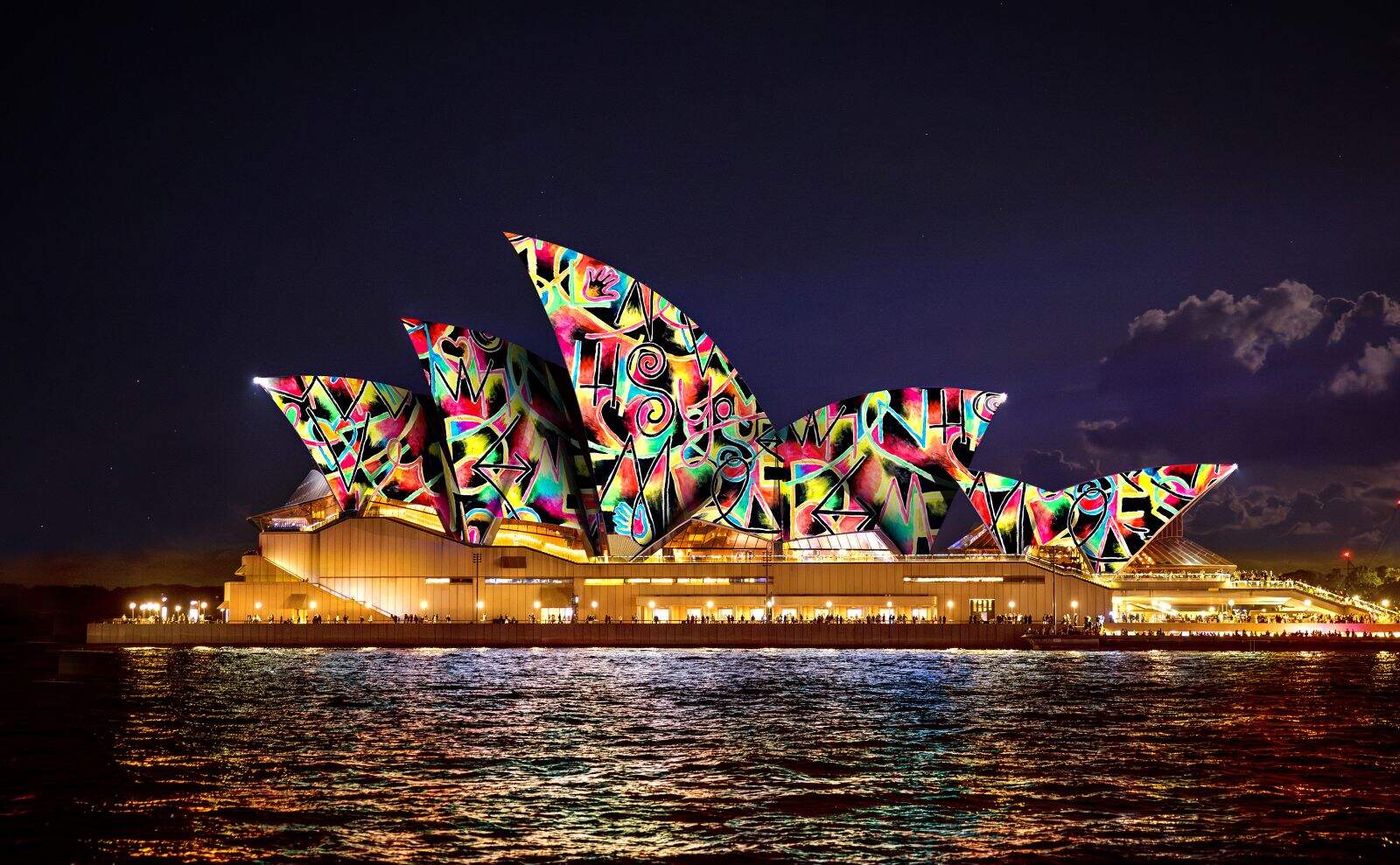
Similarly, Vivid Sydney, opened in 2009, transforms urban identity through light. Remarkably, the festival lights up the iconic Opera House and Harbor Bridge. Furthermore, it creates discovery paths that involve lesser-known areas.
Significantly, the event combines light art, music and innovative ideas. Ultimately, it transforms Sydney into an international creative laboratory.
Italian and European Excellence in Lighting Installations
On the other hand, Italy has been able to transform light installations into powerful territorial marketing tools at zero cost. As detailed in the article "How to promote a city without a budget" , events such as the Alberobello Light Festival demonstrate the direct impact between light technologies and an increase in tourist arrivals.
Specifically, Italy boasts excellent examples such as “Luci d'Artista” in Turin and Salerno, and “RGB Light Experience” in Rome. These events represent the new frontier of experiential marketing, where light installations become "instagrammable by design". Consequently, architectural video mapping transforms historic facades into engaging spectacles, creating spontaneous digital word of mouth.
Finally, the Berlin Festival of Lights completes the European panorama, transforming monuments into gigantic canvases. National and international artists address relevant social and cultural themes, demonstrating how light installations can communicate profound messages beyond pure spectacularity.
The Multidimensional Value of Lighting Installations
After examining international examples, it is essential to analyze the broader impact of these phenomena. Indeed, light festivals are not simple entertainment shows, but represent complex phenomena with significant impacts:
- Urban Regeneration : First of all, festivals redevelop previously neglected urban areas, attract attention and stimulate investment and local development
- Economic Impact : Furthermore, they constitute powerful tourist attractors with significant economic repercussions, benefiting hotels, restaurants, transport and local commerce
- Social Cohesion : Likewise, they create unique opportunities to strengthen the sense of community, offering shared experiences that unite different people
- Democratization of Art : Finally, they take contemporary art out of traditional museums, making it accessible to a huge audience
Emerging Trends in Lighting Installations
Looking to the future, the world of light festivals is continually evolving, driven by a few key trends that are redefining the industry:
- Environmental Sustainability : Firstly, environmental sensitivity pushes towards more sustainable solutions, with low consumption LED technologies and sustainable mobility as priorities
- Social Integration : In parallel, festivals incorporate educational programs and inclusive community initiatives, with workshops and school projects as essential components
- Growing Interactivity : At the same time, passive installations give way to interactive works, where sensors and smartphone controls allow visitors to influence the art
- Local Storytelling : Finally, festivals use projections to tell local cultural stories, strengthening the link between event and territory
The Art That Responds: Interactive Light Installations
Delving further into the topic of interactivity, let's examine some particularly significant examples.
Rain Room
To start, Random International's “Rain Room” creates a user-controllable perpetual rain environment. Specifically, the installation stops wherever a human body is detected through advanced sensors. Therefore, it uses a complex sensing system to control the water flow in real time, bringing you the experience of controlling natural elements.
TeamLab Planets
Similarly, TeamLab Planets Tokyo represents the pinnacle of contemporary interactive digital art with over twenty new innovative installations. Remarkably, it includes digital forests that change as visitors pass by, fields of bouncing spheres, and greenhouses with immersive digital orchids. As the founder Toshiyuki Inoko explains: “capturing and collecting are fundamental educational acts for humanity”. As a result, the “body immersive” concept transforms visitors into active co-creators of the overall artistic experience.
The Technology Behind Lighting Installations
At this point, it is crucial to understand the technologies that make these experiences possible. Interactive installations are based on sophisticated sensing and actuation technologies that create immersive experiences:
- Visual tracking systems : Primarily, cameras and computer vision software that track visitors' movements in real time
- Proximity sensors : Additionally, infrared, ultrasonic or laser detectors that identify presences and movements with millimeter precision
- Environmental sensors : In parallel, devices that measure temperature, humidity, sound and other parameters that can be influenced by human presence
- Tangible interfaces : Also, surfaces and physical objects that visitors can directly manipulate to interact with the work
- Feedback systems : Finally, actuators that produce immediate visual, audible and tactile responses to participants' actions
The Future of Lighting Installations in Cities
Looking towards tomorrow, the evolution of festivals is redefining the relationship between citizens and urban space. In particular, art temporarily transforms the everyday environment by creating collective wonder.
Simultaneously, the boundary between observer and work progressively thins. As a result, each visitor becomes a co-creator of unique, personalized experiences.
Furthermore, festivals are no longer simple temporary events. Rather, they are catalysts for urban change and tools for regeneration. Substantially, they represent laboratories of artistic and technological experimentation.
Finally, they constitute a new form of universal public art. Therefore, the city of the future will be an increasingly interactive light stage.
Conclusion
In summary, light installations are silently transforming the way we experience urban space. As detailed in the book “Immersive Events” by Dario Riccio , these phenomena represent the meeting between art, technology and community. Ultimately, the light installations of the future will create unforgettable experiences where every citizen will become an active protagonist of their city.